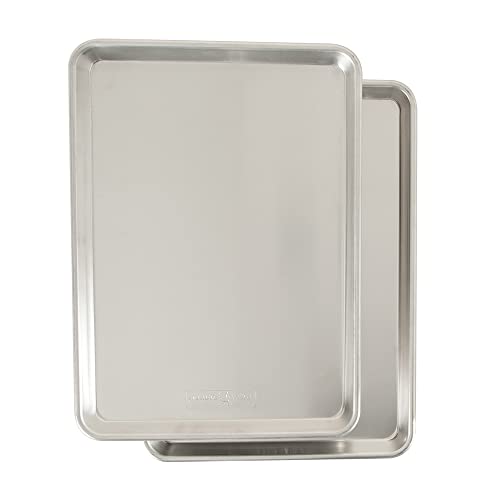
Aluminum heats evenly and is lightweight, ideal for cookies and pastries.
- Steel is heavier, more durable, and resists warping, best for high-heat roasting and broiling.
- Choose aluminum for everyday baking and steel for heavy-duty tasks.
- Consider thickness, coating, and weight when selecting a baking sheet.
What to look for in a baking sheet
Start with material thickness. Thicker sheets distribute heat better and resist warping. Check the gauge; lower numbers mean thicker metal. Look for rolled edges to prevent bending. A nonstick coating is convenient but can scratch. Uncoated sheets allow for better browning. Size matters; standard half-sheet pans fit most ovens. Consider handles for easy gripping.
Aluminum baking sheets: pros and cons
Aluminum is an excellent heat conductor. It heats up quickly and spreads heat evenly. This reduces hot spots that cause uneven browning. Aluminum is lightweight, making it easy to handle. However, it can warp under high heat or sudden temperature changes. Uncoated aluminum reacts with acidic foods like tomatoes. This can affect flavor and cause discoloration. Many aluminum sheets have a nonstick coating to prevent sticking.
Steel baking sheets: pros and cons
Steel is heavier and more durable than aluminum. It resists warping even at high temperatures. Steel sheets are ideal for broiling and roasting. They can withstand high heat without bending. However, steel heats less evenly than aluminum. It may require longer preheating to avoid hot spots. Steel is prone to rust if not dried properly. Some steel sheets come with a coating to prevent rust.
Which material is best for different baking tasks
For cookies and pastries, aluminum is the better choice. Its even heat distribution produces consistent browning. For roasting vegetables or meats, steel offers better durability. It can handle high heat without warping. For broiling, steel is safer due to its strength. For delicate tasks like macarons, aluminum provides reliable results. For heavy use in a busy kitchen, steel lasts longer.
How to choose between aluminum and steel for your kitchen
Consider your baking frequency. If you bake often, aluminum is versatile and affordable. If you need a sheet for high-heat cooking, steel is worth the investment. Think about storage space; steel sheets are heavier and bulkier. Check your oven's capacity; half-sheet pans fit most home ovens. Read reviews from other bakers to see real-world performance. Ultimately, having both types covers all baking needs.