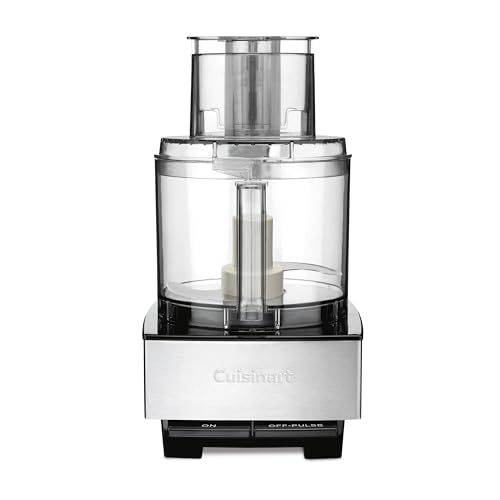
A food processor is worth it if you regularly chop, shred, or puree in volume.
- Match the machine to your cooking habits; a blender may suffice for liquid-only tasks.
- Look for a motor with at least 600 watts and a bowl size that fits your household.
- Common problems like leaking or uneven chopping are avoidable with correct use.
- Budget models work, but mid-range processors offer better durability and features.
What Does a Food Processor Actually Do?
A food processor uses interchangeable discs and blades to chop, slice, shred, puree, and knead. It handles dry and wet ingredients, from nuts to dough. Unlike a blender, it works with less liquid, making thicker mixtures like pesto or hummus. Most models include a work bowl, lid, and feed tube. You can buy additional discs for julienne or french fries.
Food Processor vs Blender: Which Do You Need?
Blenders excel at liquids and smoothies, but struggle with dry or thick mixes. Food processors chop nuts, slice vegetables, and make dough without added liquid. For soups, a blender is better; for salsa or coleslaw, a processor wins. Many kitchens own both, but a processor can replace a blender for many tasks. Consider what you cook most often before choosing.
Key Features to Look For in a Food Processor
Motor power ranges from 400 to 1200 watts; higher wattage handles tough dough and dense vegetables. Bowl capacity from 3 to 14 cups suits different household sizes. Look for a feed tube wide enough for whole tomatoes or onions. Dishwasher-safe parts simplify cleanup. Safety interlocks prevent operation without a locked lid. A pulse function gives control over texture.
Best Food Processors for Different Needs
For most households, a mid-size 7-cup model like the Cuisinart DFP-7BCP is a solid all-rounder. Budget shoppers can choose the Hamilton Beach 70730, which is lightweight and simple. If you bake bread, the KitchenAid KFP0718 has a dough blade and strong motor. For large batches, the Cuisinart DFP-14BCN offers 14 cups. Professional chefs often prefer the Breville BFP800 for its power and precision.
Common Food Processor Problems and How to Avoid Them
Owners report that some processors leak from the center post, especially with thin liquids. Overfilling the bowl causes uneven chopping; work in batches instead. Blades can dull over time, so replace them if you notice tearing. Some models are loud, which may matter in small kitchens. Read reviews for specific model quirks before buying.