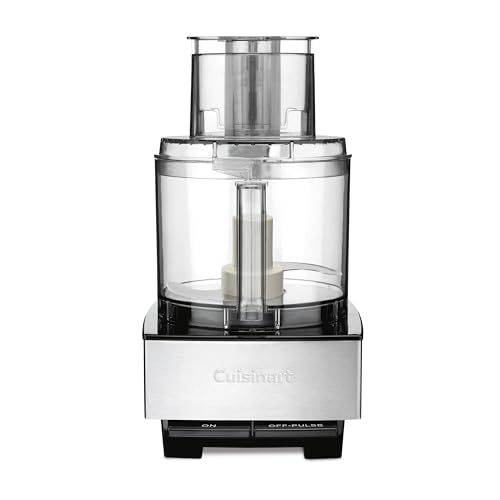
A food processor excels at chopping, shredding, and kneading in large batches.
- It is not a replacement for a blender when it comes to liquids and smoothies.
- Consider your cooking frequency and storage space before purchasing.
- A mid-sized model with a powerful motor offers the best balance of versatility and convenience.
What Does a Food Processor Actually Do?
A food processor is a countertop appliance with a motor and interchangeable blades and discs. It chops, slices, shreds, purees, and kneads dough. Unlike a blender, it works with dry and thick mixtures. Most models have a feed tube for adding ingredients while running. The result is consistent, fast prep work for large quantities.
How Does a Food Processor Compare to a Blender?
Blenders are designed for liquids and soft foods, making smoothies and soups. Food processors handle thicker, drier tasks like chopping nuts or shredding cheese. Blenders typically have a tall jar, while processors use a wide bowl. For pureeing soups, a blender works well. For dough or coleslaw, a processor is better. Many kitchens benefit from having both, but if you only do liquids, a blender suffices.
Which Food Processor Tasks Are Worth the Cost?
The most valuable tasks are slicing vegetables for salads, shredding cheese, and making pie dough. These jobs take minutes by hand but seconds with a processor. Hummus, pesto, and nut butters come out smooth and quick. Large batch cooking, like meal prep for the week, becomes faster. Owners report that the appliance shines when processing more than two cups of ingredients.
When Is a Food Processor Not Worth It?
If you cook for one or two, a small knife and cutting board may be enough. Cleaning the bowl, lid, and discs takes time and storage space. Some models are bulky and heavy, making them awkward to pull out for small jobs. Also, processors can over-process soft foods, turning them to mush. For occasional use, the cost and counter space may not justify the benefits.
What Size and Features Should You Look For?
Capacity ranges from 3 to 16 cups. A 7 to 10 cup model suits most households. Look for a powerful motor, at least 500 watts, to handle tough dough. A wide feed tube reduces pre-cutting. Dishwasher-safe parts simplify cleanup. Pulse control gives you precision. Some models include multiple discs for slicing and shredding, which add versatility.