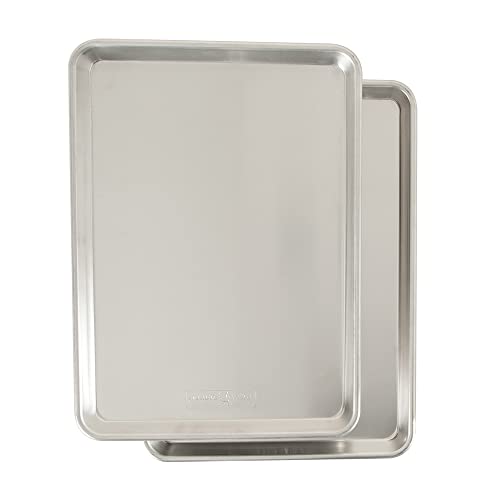
Smoke comes from leftover grease, food particles, or polymerized oil on the sheet.
- Wash sheets thoroughly after each use and dry completely to prevent buildup.
- Use parchment paper or silicone mats to protect the sheet and reduce smoke.
- Replace warped, rusted, or flaking sheets to avoid uneven heating and safety risks.
Why do baking sheets smoke in the oven?
Smoke from a baking sheet usually means something is burning on its surface. The most common culprit is leftover grease or oil from previous uses. Food particles, like crumbs or cheese, can also char and produce smoke. Another cause is polymerized oil, a sticky residue that forms when oil is heated repeatedly. This residue can smoke even on a clean-looking sheet. High oven temperatures, especially above 425°F, can trigger smoking. Also, some new sheets have a protective coating that burns off on first use.
How to fix a smoking baking sheet right now
First, remove the sheet from the oven and let it cool completely. Then, wash it thoroughly with hot, soapy water and a stiff scrub brush. Use a non-abrasive cleaner if the sheet is non-stick. Rinse and dry it fully before using again. For stubborn polymerized oil, make a paste of baking soda and water, apply it, and let it sit for 15 minutes. Scrub gently, then rinse. If the sheet still smokes, try using parchment paper or a silicone mat to create a barrier. Alternatively, lower the oven temperature by 25°F and see if that helps.
How to prevent baking sheets from smoking in the future
Always wash your baking sheets after every use, even if they look clean. Dry them thoroughly, as water can cause hot spots and steam. Use parchment paper or a silicone baking mat for high-fat foods like bacon or roasted vegetables. Avoid using cooking sprays, as they leave a sticky residue that builds up over time. Instead, brush a thin layer of oil or use a paper towel dipped in oil. Also, avoid broiling directly on the sheet, as the intense heat can burn residue. Store sheets with a paper towel between them to absorb any moisture.
When should you replace a baking sheet?
If your sheet is warped, it may not heat evenly, causing hot spots and burning. Deep scratches or rust are signs it's time to replace it. A sheet that smokes even after thorough cleaning might have a damaged non-stick coating. Also, if you notice flaking or peeling, stop using it immediately. Most baking sheets last several years with proper care. If you're unsure, check for a warped bottom by placing it on a flat surface. If it rocks, replace it.
Is it safe to use a smoking baking sheet?
Smoke from a baking sheet can be irritating and may contain harmful compounds. It's best to avoid inhaling it, especially if it's from burning grease or polymerized oil. Open a window or turn on the exhaust fan to ventilate the kitchen. If the smoke is heavy or acrid, turn off the oven and let it cool. Once the sheet is cleaned, it should be safe to use again. However, if the sheet is coated with a non-stick material that is flaking, discard it. Always prioritize your safety and air quality.