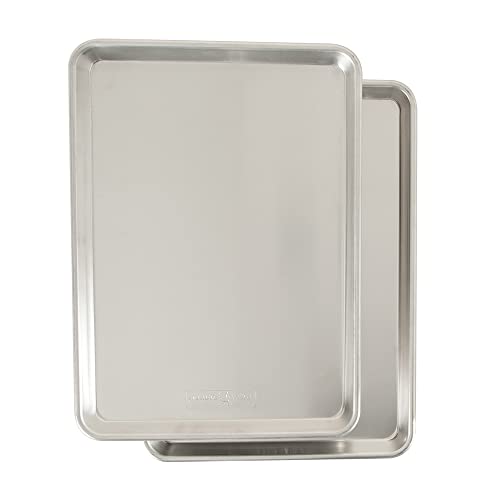
Dry baking sheets thoroughly after every wash to prevent rust.
- Remove rust with baking soda or vinegar, then re-season with oil.
- Hand-wash and avoid acidic foods to extend the life of your sheets.
- Replace sheets with deep pitting, holes, or severe warping.
Why do baking sheets rust?
Rust forms when bare steel is exposed to moisture and oxygen. Most baking sheets have a protective coating, but scratches or wear expose the metal. Acidic foods like tomatoes or lemon juice can strip the coating. Salt also accelerates rusting by breaking down the protective layer. Humidity in the kitchen speeds up the process. Dishwasher detergents are harsh and often cause pitting that leads to rust.
How to remove rust from baking sheets (step by step)
First, scrub the rusted area with a paste of baking soda and water. Use a non-abrasive scrubber to avoid scratching the metal. For stubborn rust, make a paste with white vinegar and salt, apply it, and let it sit for 30 minutes. Rinse thoroughly and dry completely with a towel. After drying, rub a thin layer of vegetable oil over the entire sheet. Heat the sheet in an oven at 350°F for about an hour to polymerize the oil. This creates a protective seasoning layer that resists moisture.
How to prevent rust on baking sheets
Always hand-wash baking sheets with mild soap and warm water. Dry them immediately with a clean towel; never let them air-dry. Store them in a dry cabinet, preferably with a paper towel between sheets to absorb moisture. Apply a light coat of oil after each wash to maintain the seasoning. Avoid using metal utensils that scratch the surface. Keep baking sheets away from humid areas like near the stove or sink. If you use parchment paper or silicone mats, they protect the surface from food acids.
When should you replace a rusted baking sheet?
If rust has caused deep pitting or flaking, replace the sheet. Rust that has eaten through the metal creates uneven heating and can contaminate food. Small surface rust can be removed and the sheet reused. Check for sharp edges or holes that could harbor bacteria. If the sheet is warped, it won't bake evenly, so consider replacing it. Nonstick coatings that are peeling should also be discarded. According to the USDA, rust itself is not toxic, but it can indicate metal degradation that affects performance.
Which baking sheet materials resist rust best?
Aluminum baking sheets are naturally rust-resistant, but they can warp and react with acidic foods. Stainless steel sheets are the most rust-resistant, though they conduct heat less evenly. Carbon steel sheets are prone to rust if not seasoned, but they are durable and heat well. Ceramic-coated sheets offer a nonstick surface that resists rust, but they can chip. Silicone baking mats provide a protective layer over any sheet. For the best rust prevention, choose stainless steel or aluminum with a nonstick coating.