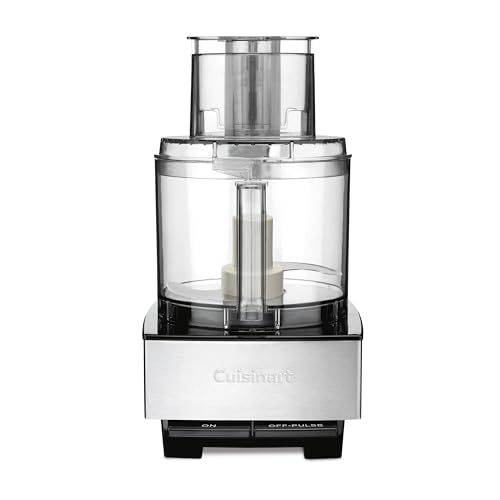
Our editorial team compared specifications, buyer feedback, and key decision factors to help you choose the right food processor. This guide covers motor power, bowl capacity, blade types, attachments, ease of cleaning, and brand reputation so you can find a model that fits your cooking style and budget.
Motor Power
The motor is the heart of a food processor. Power is measured in watts, and higher wattage generally means more ability to handle tough ingredients. For basic tasks like chopping vegetables or making salsa, a motor in the 300-500 watt range is adequate. For heavy-duty jobs such as kneading dough, grinding nuts, or shredding hard cheese, look for 600-800 watts or more. Some high-end models offer up to 1200 watts. However, power alone isn't everything. A motor with good torque at low speeds is important for tasks like emulsifying dressings or chopping soft herbs without turning them into a paste. Consider the types of recipes you make most often and choose accordingly. Check the current price on Amazon for models with the power you need.
Bowl Capacity
Bowl size determines how much food you can process at once. Mini food processors with 3-5 cup capacity are great for small batches, chopping garlic, or making dips. Full-size processors range from 7 to 14 cups. A 7-cup bowl works well for a small family, while 11-14 cups are ideal for large families or meal prepping. Keep in mind that the stated capacity is often the total volume, but the working capacity (for chopping or pureeing) is usually less, around two-thirds of the total. If you often make large batches of dough or soup, a larger bowl is better. Also consider the bowl's shape: wider bowls are easier to load and clean. Check the current price on Amazon for processors with your preferred size.
Blade Types
Most food processors come with a standard S-shaped chopping blade (also called a Sabatier blade) that handles chopping, pureeing, and mixing. Many also include a shredding and slicing disc, which is reversible for different thicknesses. Some models offer additional blades like a dough blade (usually plastic to avoid overworking dough), a julienne disc, a french fry cutter, or a citrus juicer. The quality of the blades matters: stainless steel blades stay sharp longer and resist rust. Look for blades that are easy to insert and remove, preferably with a central stem that locks securely. If you plan to do a lot of grating or slicing, a model with multiple disc options can save time. Check the current price on Amazon for processors with the blade variety you want.
Attachments
Beyond basic blades, many food processors offer attachments that expand their functionality. Common attachments include a citrus press, a mini bowl (for small quantities), a whisk attachment for whipping cream or egg whites, and a pasta maker. Some high-end models even have a spiralizer or a grain mill. Attachments can reduce the need for separate appliances, but they also add to the cost and storage requirements. Consider which attachments you would actually use. For example, if you make fresh juice, a citrus press is handy. If you bake often, a dough blade and a whisk might be worth it. Check compatibility: attachments from one brand may not fit another. Check the current price on Amazon for models that include the attachments you need.
Ease of Cleaning
Cleaning a food processor can be a chore, so look for features that simplify it. Removable parts that are dishwasher safe save time. Bowls and lids that are free of crevices prevent food buildup. Some models have a seal that is easy to remove and clean. Blades with a non-stick coating can reduce sticking, but they may require hand washing to preserve the coating. The feed tube should be wide enough to easily add ingredients without making a mess. Also check if the base has a smooth surface that wipes clean easily. A pulse button that is easy to press and clean around is a plus. Check the current price on Amazon for models that are known for easy cleanup.
Brand Reputation
Brand reliability matters for long-term performance. Cuisinart is a pioneer in food processors and offers a wide range of models with good customer support. KitchenAid is known for durable construction and powerful motors, often with a metal drive system. Breville offers innovative designs with smart features like auto-reverse for discs. Magimix (by Robot-Coupe) is a professional-grade brand with a strong warranty. Hamilton Beach and Black+Decker provide budget-friendly options that are adequate for light use. Read buyer feedback on Amazon to see common complaints about noise, durability, or parts availability. A reputable brand often means easier access to replacement parts and accessories. Check the current price on Amazon for models from trusted brands.
In summary, the right food processor balances motor power, bowl size, blade variety, useful attachments, easy cleaning, and a reliable brand. Identify your primary cooking tasks and choose a model that excels in those areas. For most households, a 7-11 cup processor with a 600-800 watt motor and a few key blades is a versatile choice. Check the current price on Amazon to find the best value for your needs.