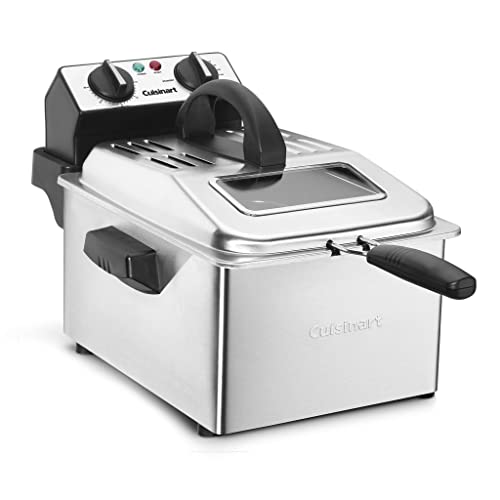
Smoking usually means oil is breaking down, you're using the wrong oil, or the fryer is overfilled. Lower the temperature, change the oil, or reduce oil level.
Why Does My Deep Fryer Smoke?
Smoke from a deep fryer is a sign that something is off. Our editorial team compared specifications, buyer feedback and key decision factors to identify the three most common causes: oil breakdown, wrong oil choice, and overfilling. Understanding these will help you prevent smoke and extend the life of your oil and fryer.
1. Oil Breakdown (Reusing Oil Too Many Times)
Every time you heat oil, its chemical structure changes. Free fatty acids increase, lowering the smoke point. Old oil that has been used multiple times will start smoking at lower temperatures. For example, fresh canola oil may smoke at 400°F, but after three uses it might smoke at 350°F. Signs: dark color, off smell, foaming. Solution: change oil after 3-5 uses or when it shows these signs. If you fry battered foods often, the batter particles accelerate breakdown, so change oil sooner.
2. Wrong Oil for the Temperature
Different oils have different smoke points. Using extra virgin olive oil (smoke point ~375°F) in a fryer set to 400°F will cause immediate smoking. Best oils for deep frying: peanut (450°F), canola (400°F), vegetable (400-450°F), sunflower (440°F). Always match oil smoke point to your frying temperature. If you like to fry at 375°F, choose an oil with a smoke point of at least 400°F to give a safety margin. Avoid butter, lard, or unrefined oils as they smoke at low temperatures.
3. Overfilling the Fryer
When you add food to oil that is too full, the oil expands and can bubble over the heating element. This causes smoke from burning oil on the element. Also, too much food lowers oil temperature, causing the thermostat to keep heating, leading to smoke. Fill oil to the max line and never add more than the recommended food load. For example, if your fryer holds 4 quarts of oil, do not add more than 1 pound of food at a time. Overfilling also increases the risk of hot oil splashing.
How to Fix a Smoking Deep Fryer
Follow these steps in order to resolve smoking issues:
- Turn off the fryer and let it cool completely. Do not add cold oil or water to hot oil. Wait at least 30 minutes for the oil to cool below 200°F.
- Check oil level. If above the max line, remove some oil with a ladle or turkey baster. Discard or store properly. If below the min line, add fresh oil of the same type.
- Inspect oil quality. If oil is dark, smells bad, or has foam, replace it with fresh oil. Use a high-smoke-point oil like peanut or canola. Pour the old oil into a sealed container and dispose of it in the trash (never down the sink).
- Clean the fryer. Old food particles stuck to the heating element or basket can burn and cause smoke. Wash all removable parts with hot soapy water and dry thoroughly. Wipe the interior with a paper towel to remove residue. For stubborn buildup, use a non-abrasive scrub pad.
- Reduce temperature. If your recipe allows, lower the temperature by 25°F. Many foods fry perfectly at 350°F instead of 375°F. For example, french fries cook well at 350°F and produce less smoke than at 375°F.
- Test with a small batch. Fry a small amount of food (like a few fries) to see if smoke returns. If it does, the oil may still be bad or the fryer needs deeper cleaning. If no smoke, continue with normal use but monitor oil quality.
Preventing Smoke in the Future
To avoid smoking issues, adopt these habits: Always use fresh oil with a smoke point above your frying temperature. Strain oil after each use to remove food particles. Store oil in a cool, dark place. Do not mix old and new oil. Keep the fryer clean by wiping the heating element after each use. Use a thermometer to verify the fryer's thermostat accuracy; if it reads 50°F off, recalibrate or replace the thermostat. Finally, avoid frying wet or icy foods as they cause oil splatter and rapid temperature drops.
When to Replace Your Deep Fryer
If you have tried fresh oil, proper fill level, and correct temperature, but the fryer still smokes heavily, the thermostat may be faulty. A malfunctioning thermostat can cause overheating even at lower settings. For example, if the fryer is set to 375°F but the oil reaches 450°F, smoke is inevitable. Also, if the heating element is coated with burnt-on residue that cannot be cleaned, it will smoke. In these cases, consider replacing the fryer. Look for a model with adjustable thermostat and high-smoke-point oil recommendations. Check the current price on Amazon for a new model that fits your needs.