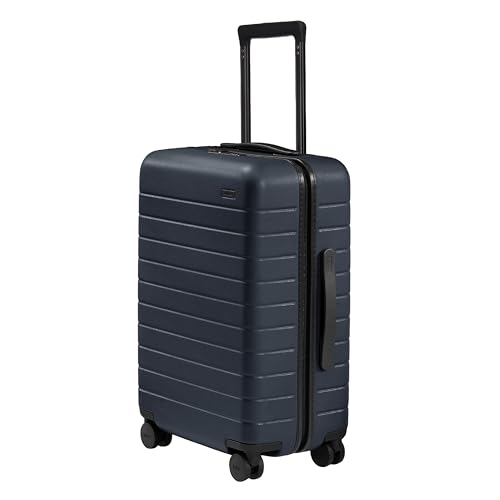
Our editorial team compared specifications, buyer feedback and key decision factors to create this carry-on luggage size guide. Knowing the exact size limits for your airline can save you time, money, and the hassle of gate checking your bag. This guide covers standard carry-on dimensions for major US and international airlines, how to measure your luggage correctly, and smart packing strategies to keep your bag overhead bin ready.
Why Size Matters
Carry-on size limits exist because overhead bins have fixed dimensions. Airlines design bins to fit bags within a specific range. Exceeding those dimensions can delay boarding and create safety issues. Many airlines now use sizer bins at the gate to check bag size. If your bag does not fit, you may have to check it, often for a fee. Knowing the limits helps you choose the right luggage and avoid surprises.
Major US Airlines
The three largest US airlines have nearly identical carry-on size limits. Here are the standard dimensions for each:
- American Airlines: 22 x 14 x 9 inches (56 x 36 x 23 cm). Personal item must fit under the seat, typically 18 x 14 x 8 inches.
- Delta Air Lines: 22 x 14 x 9 inches (56 x 36 x 23 cm). Personal item dimensions are 18 x 14 x 8 inches.
- United Airlines: 22 x 14 x 9 inches (56 x 36 x 23 cm). Personal item should be 17 x 10 x 9 inches.
Budget carriers like Spirit Airlines and Frontier Airlines have smaller limits. Spirit allows only a personal item (18 x 14 x 8 inches) unless you pay for a carry-on (22 x 18 x 10 inches). Frontier's personal item is 18 x 14 x 8 inches; a carry-on (paid) is 24 x 16 x 10 inches. Always check the airline's website before booking.
International Airlines
International carriers often use metric measurements. The most common limit is 56 x 36 x 23 cm (22 x 14 x 9 inches). However, some airlines vary:
- British Airways: 56 x 36 x 23 cm (22 x 14 x 9 inches).
- Lufthansa: 55 x 40 x 23 cm (21.7 x 15.7 x 9 inches).
- Emirates: 55 x 38 x 20 cm (21.7 x 15 x 7.9 inches).
- Singapore Airlines: 56 x 36 x 23 cm (22 x 14 x 9 inches).
- Ryanair: Personal item 40 x 20 x 25 cm (15.7 x 7.9 x 9.8 inches); paid carry-on 55 x 40 x 20 cm (21.7 x 15.7 x 7.9 inches).
Some Asian and European low-cost carriers have stricter limits. For example, AirAsia allows 56 x 36 x 23 cm but weight is also restricted (7 kg). Always verify both size and weight limits for your specific flight.
How to Measure Your Bag
To ensure your bag meets airline requirements, measure it correctly. Follow these steps:
- Place your bag on a flat surface with wheels and handles fully extended.
- Use a flexible tape measure. Measure the length (height from bottom to top of handle), width (front to back), and depth (side to side). Include all protruding parts like wheels and handles.
- Compare each dimension to your airline's limits. If any dimension exceeds the limit, the bag is too big.
- Check the weight limit if applicable. Many international airlines enforce a 7 kg (15.4 lb) weight limit for carry-on.
- Test your bag in an airline sizer bin if available at the airport. If it does not fit easily, consider checking it.
Packing Tips to Avoid Gate Checks
Even if your bag meets size limits, overpacking can make it bulge and fail the sizer test. Here are tips to keep your bag overhead bin ready:
- Use packing cubes to compress clothing and organize items. They help you fit more without increasing volume.
- Wear your bulkiest items (jacket, boots) on the plane to save space.
- Limit hard souvenirs or heavy items that may cause the bag to exceed weight limits.
- Choose a bag with a hard shell that does not expand. Soft-sided bags with expansion zippers can easily exceed size limits if overstuffed.
- Keep your personal item small and under the seat. Use it for valuables, medications, and items you need during the flight.
- If your flight is full, volunteer to gate check your bag for free. Many airlines offer this service at no charge when bins are full.
Frequently Asked Questions
What is the standard carry-on size for most airlines?
Most airlines allow carry-on luggage up to 22 x 14 x 9 inches (56 x 36 x 23 cm) including handles and wheels. However, some budget carriers have smaller limits. Always check your airline's specific requirements before flying.
Can I take a slightly larger carry-on if it's not full?
No. Airlines enforce size limits strictly using sizer bins at the gate. Even if your bag is not full, if it exceeds the dimensions, it may be checked. Buy a bag that meets the strictest airline you fly.
What happens if my carry-on is too big at the gate?
If your bag is too large, the gate agent will tag it for gate checking. It will be placed in the cargo hold and you will retrieve it at the jet bridge upon arrival. Some airlines charge a fee for gate checking.