Circular Saws
Best Circular Saws: 7 Corded Picks for Clean, Straight Cuts
7 picks compared
9 min read
ProductPickly is reader-supported. When you buy through links on our site, we may earn an affiliate commission at no extra cost to you. It never changes our picks.
The short answerThe best circular saw for most people is the DEWALT DWE575SB, a corded 7-1/4 inch saw that bevels all the way to 57 degrees so one tool handles framing, decking, and angled cuts. For a lighter 15 amp sidewinder the SKILSAW SPT67WL-01 is our pick, the magnesium Makita 5007Mg is built for all day use, and the SKIL 5280-01 is an easy starter with a laser guide. The 13 amp Skil 5080-01 covers light DIY, the compact DEKOPRO adds a guide rail for straight cuts, and the 4-1/2 inch DOVAMAN mini suits thin stock. Every saw here is corded, and below we explain corded versus cordless, blade size and cut depth, sidewinder versus worm drive versus compact, and how bevel, guides, and the guard work so you can choose the right saw for your cuts.
?How we pickedWe compare published specifications, safety certifications and thousands of verified owner reviews, and we do not physically test every unit. Read the full process in our review methodology.
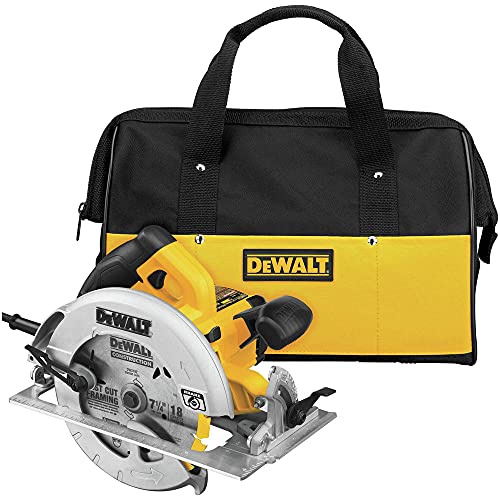
DEWALT 7-1/4 Inch Circular Saw, Corded, Bevels to 57 Degrees (DWE575SB)
★★★★★ 4.8 / 5 Editor's pick
This DEWALT took our top spot because it pairs the standard 7-1/4 inch blade with a bevel that pivots all the way to 57 degrees, wider than most saws on this list, so steep angle cuts are on the table. It runs on a corded plug, which means steady power for framing, decking, and sheet goods without watching a battery.
Blade size 7-1/4 inBevel Up to 57 degreesPower CordedModel DWE575SB
- Bevels up to 57 degrees, wider than most saws here for angled cuts
- Corded power runs as long as the job without a battery to swap
- The 7-1/4 inch blade is the standard size for framing and sheet goods
- Corded, so you work within reach of an outlet or extension cord
- A single bevel scale means checking the angle each time you reset it
Best for: A do everything corded saw for framing, decking, and sheet goods
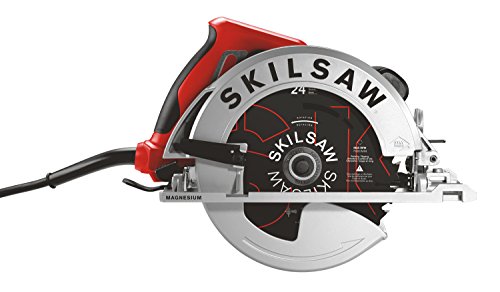
SKILSAW SPT67WL-01 15 Amp 7-1/4 Inch Sidewinder Circular Saw
★★★★★ 4.7 / 5 Best light sidewinder
If you want pro muscle in a saw you can swing one handed, this SKILSAW is our sidewinder pick, matching a 15 amp motor to the full 7-1/4 inch blade. The sidewinder layout keeps the motor beside the blade so the saw stays light and balanced through a long day of cuts.
Motor 15 ampBlade size 7-1/4 inType SidewinderModel SPT67WL-01
- 15 amp motor drives the full 7-1/4 inch blade through framing lumber
- Sidewinder layout keeps the saw light and balanced in one hand
- Standard 7-1/4 inch blades are cheap and stocked everywhere
- Corded, so an extension cord is part of the kit on a big site
- No onboard laser or light, you follow the blade and baseplate notch
Best for: Carpenters who want a light, powerful corded sidewinder
Makita 5007Mg Magnesium 7-1/4 Inch Circular Saw
★★★★★ 4.6 / 5 Best for all day use
This Makita is the pick for people who have the saw in hand all day, built with magnesium components to shed weight while still spinning a full 7-1/4 inch blade. It is a corded saw with a long track record among trades, so the motor holds steady power for run after run.
Blade size 7-1/4 inBuild Magnesium componentsPower CordedModel 5007Mg
- Magnesium components keep weight down without giving up a 7-1/4 inch blade
- Corded motor holds steady power for long cutting runs
- Established Makita model with a long track record among trades
- Corded, so you plan around an outlet or cord
- No laser or light guide, you cut to the baseplate notch
Best for: Pros who want a lighter full size saw for all day use
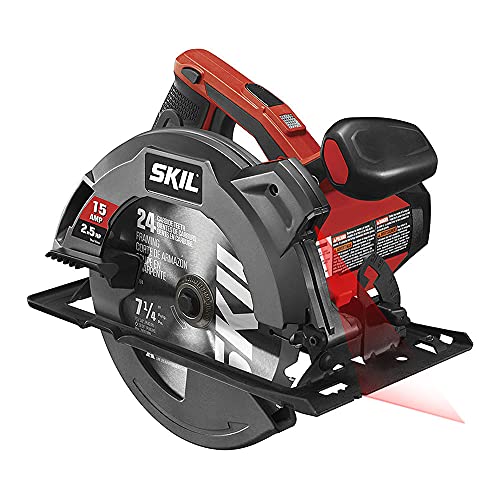
SKIL 15 Amp 7-1/4 Inch Circular Saw with Single Beam Laser Guide (5280-01)
★★★★★ 4.5 / 5 Best starter
For a first full size saw, this SKIL is our starter pick, pairing a 15 amp motor and the standard 7-1/4 inch blade with a single beam laser guide to help you track a straight line. It is a widely owned corded saw that covers the common cuts around a home project.
Motor 15 ampBlade size 7-1/4 inGuide Single beam laserModel 5280-01
- 15 amp motor spins a full 7-1/4 inch blade for common cuts
- Single beam laser guide helps you track a straight line
- A widely owned starter saw for home projects
- Corded operation keeps you near a power source
- The laser wants a check against the blade before you trust it
Best for: First time buyers who want a laser guide and full size blade
Skil 5080-01 13 Amp 7-1/4 Inch Circular Saw
★★★★★ 4.3 / 5 Best for light DIY
This Skil is the simple, light duty pick, running a 13 amp motor on the same full 7-1/4 inch blade so it handles plywood, trim, and softwood framing. It is a plain corded saw with little to go wrong, aimed at the occasional project rather than all day use.
Motor 13 ampBlade size 7-1/4 inPower CordedModel 5080-01
- 13 amp motor is enough for plywood, trim, and light framing
- Full 7-1/4 inch blade uses the same cheap, common discs
- Simple corded saw with little to go wrong
- 13 amps is a step below the 15 amp saws for dense hardwood
- No laser or light, you line up by the baseplate notch
Best for: Occasional DIY cuts in plywood, trim, and softwood
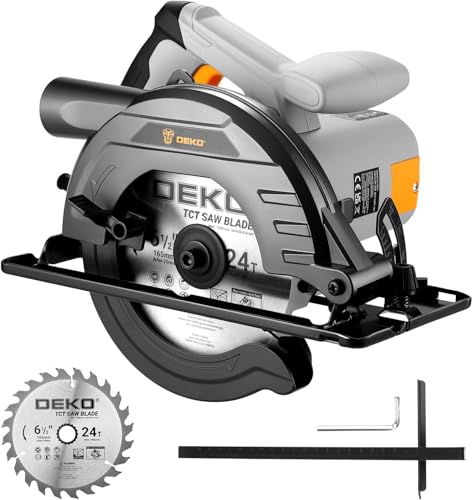
DEKOPRO 1200W Circular Saw, 165mm Blade with Guide Rail
★★★★★ 4.3 / 5 Best compact with rail
This DEKOPRO is our compact pick for people who want a smaller, lighter saw that still comes with a guide rail for straighter long cuts. Its 165mm blade cuts up to 55mm deep at 90 degrees and 33mm deep when tilted to a 45 degree bevel, enough for wood and PVC.
Motor 1200WBlade 165mm (6.5 in), 24TSpeed 4800 RPMCut depth 55mm at 90 degrees, 33mm at 45 degrees
- Includes a guide rail for straighter long rip cuts
- 165mm blade cuts up to 55mm deep at 90 degrees
- Tilts for a 45 degree bevel with 33mm of depth
- 165mm (6.5 inch) blade cuts shallower than a 7-1/4 inch saw
- 6.5 inch blades are less common than the 7-1/4 inch size
Best for: Compact rip and crosscut work with a guide rail
DOVAMAN 4-1/2 Inch Compact Circular Saw with Laser and Auxiliary Handle
★★★★★ 4.2 / 5 Best mini saw
When a full size saw is too much tool, this DOVAMAN is our mini pick, a compact 4-1/2 inch saw with a 5.8 amp motor you can steer one handed. A laser guide and an auxiliary handle help you keep thin stock cuts straight and steady in tight spots.
Motor 5.8 ampBlade size 4-1/2 inGuide LaserHandle Auxiliary handle
- Compact 4-1/2 inch body is easy to control one handed
- Laser guide and auxiliary handle help with straight, steady cuts
- Small size suits tight spots a full saw cannot reach
- 4-1/2 inch blade limits maximum cut depth to thin stock
- 5.8 amp motor is sized for light material, not framing lumber
Best for: Small, thin material cuts and tight spaces
A circular saw is the workhorse that rips sheet goods and crosscuts framing lumber, and the right one comes down to a few choices: how it is powered, how big a blade it spins, the style of the saw, and how it bevels. Every saw in this lineup is a corded model, and the picks were chosen to cover the real range of that decision, from a do everything 7-1/4 inch DEWALT we rank first to a 4-1/2 inch mini saw for thin stock, so you can match the saw to the cuts you actually make rather than to a spec sheet.
Corded versus cordless power
Every saw on this list is corded, which gives steady full power for long cutting sessions without watching a battery gauge. That matters for a circular saw, because ripping sheet goods and powering through 2x framing draws a lot of current, and a wall outlet never fades partway through a cut. The trade is the cord itself: you work within reach of an outlet or an extension lead, and on a big site that cord has to be managed so it does not snag or cross the cut line. Cordless circular saws do exist and are genuinely useful where there is no power nearby, but they tie you to one brand battery platform, so none of the picks here are battery tools. If you want battery freedom, shop a tool platform separately and do not assume any saw in this guide ships with a battery.
Blade size and cut depth
Blade diameter drives both how deep the saw cuts and how common the blades are. The 7-1/4 inch size on the DEWALT, SKILSAW, Makita, and both SKIL picks is the standard for a reason: it cuts clean through 2x lumber in a single pass at 90 degrees, and replacement blades are cheap and stocked in every hardware aisle. Step down to the 165mm (6.5 inch) DEKOPRO and the saw is smaller and lighter but cuts shallower, with the listing stating 55mm of depth at 90 degrees and 33mm once tilted to 45 degrees. The 4-1/2 inch DOVAMAN mini cuts shallower still, which is exactly why it is a thin stock and tight space tool rather than a framing saw. Whatever the size, set the depth so the blade clears the bottom of the workpiece by about a single tooth, which keeps the cut cleaner and safer.
Sidewinder versus worm drive versus compact
Layout changes how a saw feels in the hand. Every full size pick here is a sidewinder, meaning the motor sits beside the blade, which keeps the saw light, well balanced, and quick to spin up, and the SKILSAW SPT67WL-01 is a clear example of that light one handed feel. A worm drive saw, by contrast, mounts the motor behind the blade and gears it for extra torque and a longer, nose heavy balance that many framers like for vertical cuts, but it is heavier and none of our picks use that layout, so seek one out specifically if you need it. The compact saws are their own category: the DEKOPRO and the DOVAMAN trade blade size and depth for light weight and control, which is the right call for shorter cuts, thin material, and awkward positions where a full size saw is simply too much tool.
Bevel, guides, and using the guard safely
Most circular saws tilt the baseplate to bevel the edge of a board, and the DEWALT DWE575SB stands out by pivoting all the way to 57 degrees, wider than the usual 45 to 50, while the DEKOPRO states a 45 degree setting. To bevel, loosen the lever, set the angle on the scale, lock it, and confirm on a test piece before committing. Guides help with straight cuts: the SKIL 5280-01 and the DOVAMAN carry a laser, though a beam can drift and should be checked against a real cut, and for dead straight long rips a clamped straightedge or the DEKOPRO guide rail beats any laser. The safety habits are the same on every saw and they are not optional. Let the blade reach full speed before it touches wood, support the offcut so it cannot pinch the blade and kick back, never wedge the spring loaded lower guard open, unplug before changing a blade, and wear eye and ear protection. A circular saw is only as safe as the person running it.
Questions people ask
What size circular saw blade do I need?
The 7-1/4 inch blade is the standard size, and it is what the DEWALT, SKILSAW, Makita, and both SKIL picks here use, because it cuts through 2x framing lumber in a single pass and the blades are cheap and sold everywhere. A 165mm (6.5 inch) saw like the DEKOPRO cuts a little shallower, and a 4-1/2 inch mini saw like the DOVAMAN is for thin stock only. Match the blade size to the thickest material you cut most.
Are any of these circular saws cordless?
No, every saw on this list runs on a standard corded plug, which gives steady full power for long cutting sessions without watching a battery. Cordless circular saws do exist and are handy on a job site with no outlet nearby, but none of the saws in this lineup are battery tools. If you need battery freedom, look at a brand battery platform separately rather than assuming any pick here includes a battery.
What is the difference between a sidewinder and a worm drive saw?
A sidewinder, which is the style of every saw on this list, mounts the motor directly beside the blade, so the saw is lighter and spins the blade faster. A worm drive saw places the motor behind the blade and uses gears for more torque and a different balance that some framers prefer, but it is heavier. None of our picks are worm drive saws, so if that layout is a must, you will need to shop for it specifically.
How deep can a circular saw cut?
Cut depth depends on blade diameter. A full 7-1/4 inch saw cuts deep enough for 2x lumber in one pass at 90 degrees, which covers most framing. The compact DEKOPRO states 55mm of depth at 90 degrees and 33mm at a 45 degree bevel with its 165mm blade, and the 4-1/2 inch DOVAMAN cuts shallower still, which is why it suits thin material. Always set the depth so the blade clears the bottom of the stock by about a tooth.
Is a laser guide on a circular saw worth it?
A laser or single beam guide, found on the SKIL 5280-01 and the DOVAMAN here, projects a line ahead of the blade to help you follow a mark. It can help, but the beam can drift out of true, so check it against an actual cut before you rely on it. Many users still line up by the baseplate notch, and for dead straight long cuts a clamped straightedge or the DEKOPRO guide rail beats any laser.
What does 15 amps versus 13 amps mean for a corded saw?
Amps describe how much current the corded motor draws, which is a rough stand in for power. The 15 amp saws here, the DEWALT, SKILSAW, and SKIL 5280-01, have more headroom for dense hardwood and thick stock, while the 13 amp Skil 5080-01 is sized for plywood, trim, and softwood. For occasional DIY the difference is small, but for all day or heavy cutting the extra amps help the saw hold speed under load.
Can a circular saw make bevel cuts?
Yes, most circular saws tilt the baseplate to cut an angle through the edge of a board. The DEWALT DWE575SB stands out here because it pivots up to 57 degrees, wider than the usual 45 to 50, and the DEKOPRO states a 45 degree bevel setting. Loosen the bevel lever, set the angle on the scale, and lock it before cutting, then confirm the angle on a test piece.
How do I use a circular saw safely?
Let the blade reach full speed before it touches the wood, keep both hands on the saw and away from the blade path, and support the offcut so it does not pinch the blade and cause kickback. Never wedge the spring loaded lower guard open, unplug the saw before changing a blade, and wear eye and ear protection. A circular saw is only as safe as the person running it, so set the depth, clamp the work, and clear the cut line first.
The bottom lineSo which one?
For most people the DEWALT DWE575SB is the circular saw to get, because it combines the standard 7-1/4 inch blade with a bevel that reaches 57 degrees and the steady power of a corded motor, so one saw covers framing, decking, and sheet goods. The SKILSAW SPT67WL-01 is our light sidewinder pick for carpenters who want 15 amps in a one handed saw, the magnesium Makita 5007Mg suits all day use, and the SKIL 5280-01 is a friendly starter with a laser guide. The 13 amp Skil 5080-01 handles occasional DIY, the compact DEKOPRO brings a guide rail for straight cuts, and the 4-1/2 inch DOVAMAN mini reaches thin stock and tight spots. Every pick here is corded, so match blade size, motor power, and bevel range to the cuts you make most and keep the guard working on every one.