If you want a genuine 12V circular saw, our pick is the Milwaukee M12 Fuel 5-3/8 inch. It stands out because its larger 5-3/8 inch blade cuts noticeably deeper than most pocket size 12V saws while staying light enough to run in one hand. Choose it when your work is trim, plywood, sheet goods, and quick breakdown cuts rather than all day framing. If you honestly need full depth and nonstop power, skip 12V and buy a full size corded saw instead.
The short answer: which 12V circular saw to buy
For most people searching for a 12V circular saw, the honest starting point is that 12V means compact and convenient, not powerful. The two real 12V saws in this guide are the Milwaukee M12 Fuel 5-3/8 inch and the Makita SH02R1 12V max CXT 3-3/8 inch. Between the two, we would choose the Milwaukee for its deeper cut and more usable blade. The Makita wins only when you want the smallest, lightest saw you can hold comfortably in one hand.
There is also a third option here that answers the question many 12V shoppers are really asking. If your actual job is ripping framing lumber or cutting full depth again and again, neither compact saw is the right tool, and the corded Skil 5080-01 7-1/4 inch will serve you far better. We include it on purpose so you can size up honestly instead of forcing a small saw to do heavy work.
When each pick is the better choice
Our pick for a true 12V saw is the Milwaukee. It is the most capable compact option here, with a brushless Fuel motor and the biggest blade of the two cordless saws, so it has the most usable cut depth in its class. It suits finish carpenters, remodelers, and serious do it yourself users who break down plywood, cut trim and paneling, and want one handed convenience without jumping to a full size tool. Confirm on the listing whether your order includes a battery or is a bare tool, so you are not caught out at the till.

Milwaukee M12 Fuel 5-3/8 inch Circular Saw
Our pick for a 12V circular saw. The 5-3/8 inch blade gives the deepest cut of the compact saws here, and the brushless motor holds up for plywood, trim, and sheet goods.
Check price on AmazonThe Makita is the choice when size and weight matter most. With a 3-3/8 inch blade it is the smallest and lightest saw in this group, which makes it easy to control one handed for drywall, laminate, thin plywood, paneling, and awkward or overhead positions. It is listed as a kit with a 2.0Ah battery and a charger, so it is ready to run out of the box. The tradeoff is shallow cut depth, so it is not the saw for thick stock.

Makita SH02R1 12V max CXT 3-3/8 inch Circular Saw Kit
We would choose this for the lightest one handed work. It ships as a kit with battery and charger, but the small 3-3/8 inch blade limits you to thin material.
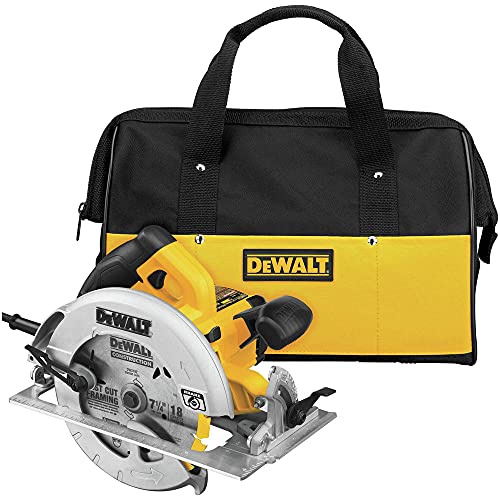
Check price on AmazonThe Skil is the better buy when you need full power and full depth. It is a corded 7-1/4 inch saw with a 13 amp motor, built to cut 2x lumber and thicker in a single pass, and it never runs out of battery. You give up cordless freedom and carry a cord, but for framing, decking, and heavier projects that is a fair trade. If the 12V saws feel underpowered for what you cut, this is the honest upgrade.

Skil 5080-01 13-Amp 7-1/4 inch Circular Saw
The full power option. Corded 7-1/4 inch with a 13 amp motor for deep cuts in 2x lumber. Pick it when a compact 12V saw simply is not enough.
Check price on AmazonWhat actually matters in a 12V circular saw
Blade size and cut depth. Blade diameter sets your maximum cut depth more than anything else. A 7-1/4 inch blade cuts thick material in one pass, a 5-3/8 inch blade handles most sheet goods and a single pass through 2x stock, and a 3-3/8 inch blade is for thin material only. Match the blade to the thickest thing you cut on a regular basis, not the occasional job.
Voltage and power, 12V against 20V. This is the heart of the 12V versus 20V question. A 12V saw is lighter and more compact, but it has less sustained power and usually a smaller blade, so it slows down in dense or thick wood. A 20V or 18V cordless saw adds power and a bigger blade at the cost of extra weight and a different battery. A corded saw like the Skil skips the battery tradeoff entirely and gives steady full power. If you only ever make light cuts, 12V is plenty. If you cut thick stock often, step up to a larger cordless platform or go corded.
Battery platform. The battery system you already own often matters more than small spec differences. The Milwaukee runs on the M12 line and the Makita runs on Makita 12V max CXT, so if you already own one of these platforms, staying in it saves money on spare batteries and chargers. A corded saw sidesteps platforms completely, which is a quiet advantage if you do not want to manage batteries.
Bare tool against kit. Cordless saws sell two ways. A bare tool is the saw alone with no battery, meant for people who already own compatible packs, while a kit includes a battery and charger. The Makita here is listed as a kit, so it is ready to use. Always check the listing before you buy, especially on the Milwaukee, so you know whether a battery is in the box.
What to ignore. Do not treat a voltage number on its own as a measure of real cutting power, and do not pay for flashy color or headline maximum rpm claims. For the cuts you actually make, blade quality, blade diameter, and whether the saw fits the task matter far more than a bigger number on the box. Spend a little on a good blade for your material and you will see a bigger difference than chasing specs.
How the three compare
The Milwaukee and the Makita are both compact 12V cordless saws, so they compete directly. The Milwaukee has the larger blade and the deeper, more usable cut, while the Makita is smaller, lighter, and easier to control one handed on thin material. The Skil sits in a different class altogether. It is corded and full size, built for depth and steady power rather than portability. That means the real decision is a two step one. First decide whether you need compact convenience or full capacity, and only then choose which saw fits the way you work.
Put simply, if the words light, one handed, and plywood describe your work, a 12V saw is right and the Milwaukee is our pick, with the Makita as the lighter alternative. If the words 2x, framing, and all day describe your work, the corded Skil is the honest answer and a compact 12V would frustrate you.
Our honest verdict
For a dedicated 12V circular saw, we would choose the Milwaukee M12 Fuel 5-3/8 inch as the best all round compact pick, thanks to its deeper cut and brushless motor. Choose the Makita SH02R1 12V max CXT kit if you want the lightest one handed saw and a ready to run kit for thin material. If you are honestly cutting thick lumber or want power that never fades, skip 12V entirely and buy the corded Skil 5080-01 7-1/4 inch.
Whatever you pick, work safely. Follow the maker's instructions, keep the blade guard clean and working rather than wedging it open, let the blade reach full speed before it meets the wood, and wear eye and hearing protection. For bigger builds, check any local codes or permits that apply to your project before you start.
For more choices, see our full circular saws guide, and if you are also cutting angles, trim, and crown, our miter saws guide is the natural next read.