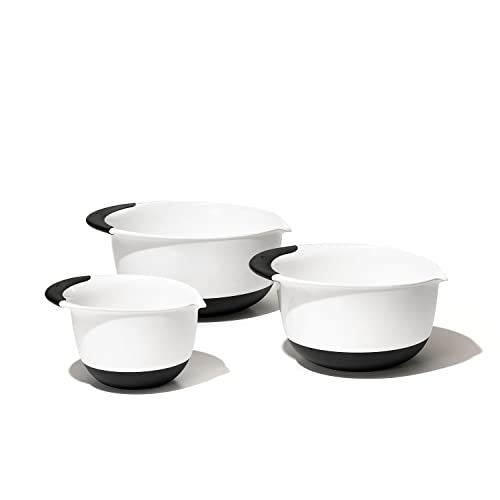
Use a damp cloth or silicone mat for instant grip.
- Choose bowls with non-slip bases or heavier materials.
- Replace bowls that are cracked, warped, or have worn grips.
Why do mixing bowls slide and spin when whisking?
A smooth base on a smooth counter offers little friction. The force of whisking pushes the bowl sideways. Lightweight bowls, like thin plastic or aluminum, move easily. A small base also reduces stability. The shape of the bowl matters too. Rounded bottoms tip more readily. Even the whisk's motion can create a turning force. Most bowls lack any grip feature, so they slide freely.
How can I stop my mixing bowl from moving?
First, place a damp kitchen towel under the bowl. The moisture creates suction and grip. Alternatively, use a silicone mat or a rubber shelf liner. These add friction without moisture. Choose a bowl with a non-slip silicone base if you mix often. Heavier bowls, like ceramic or thick glass, resist movement naturally. You can also hold the bowl with one hand while whisking. For electric mixers, use a bowl with a locking lid or a mixer with a stable base.
What are the best ways to prevent bowls from slipping?
Invest in a bowl set with a non-slip bottom. Many brands offer silicone rings or bases. Use a mixing bowl with a wide, flat base for better stability. Keep your work surface clean and dry. Wipe up spills immediately. Consider a bowl holder or a stabilizing ring. These are cheap and effective. For heavy tasks, use a bowl with a handle for a secure grip. Always place your bowl on a non-slip surface before starting.
When should I replace my mixing bowls?
Replace bowls that are cracked, chipped, or warped. Cracks can harbor bacteria. Warped bases cause rocking and sliding. If your bowl tips over easily, it's too small or too light. Consider upgrading if you whisk thick doughs often. A heavier bowl or one with a grip base is worth it. Also, replace any bowl with a worn non-slip coating. That coating stops working over time. New bowls are affordable and safer.
Is it worth buying expensive non-slip mixing bowls?
Expensive bowls often use thicker materials and better grip features. They last longer and perform better. But you don't need to spend a lot. A simple damp cloth fixes most sliding issues. For occasional bakers, a budget bowl with a silicone base works well. For daily use, a heavy stainless steel bowl is a good investment. Compare features like base width and material weight. Read reviews from other buyers. Choose what fits your budget and needs.