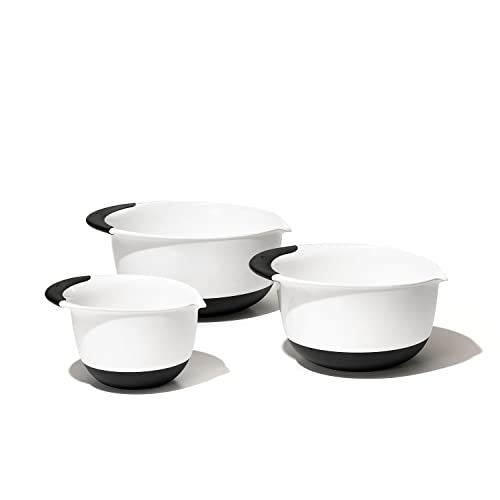
Wash plastic bowls immediately after use to prevent stains from setting.
- Use baking soda paste or diluted bleach to remove existing stains.
- Avoid heat and abrasive scrubbers to reduce porosity and scratching.
- Replace bowls if they are cracked, cloudy, or retain odors.
Why do plastic mixing bowls stain?
Plastic is porous at a microscopic level, so pigments from foods like tomato sauce, turmeric, and berries seep into tiny scratches and pores. Heat accelerates the process, opening the plastic's surface and allowing stains to set deeper. Acidic foods, such as citrus or vinegar, can also etch the surface, making it rougher and more stain-prone. Greasy foods leave a film that traps pigments, and over time, repeated use without thorough cleaning builds up discoloration. Even dishwasher detergents can react with certain plastics, causing yellowing or cloudy patches.
How do you remove stains from plastic mixing bowls?
Start by washing the bowl with hot, soapy water and a non-abrasive sponge to remove surface residue. For stubborn stains, make a paste of three parts baking soda and one part water, then rub it into the stain with a soft cloth. Let the paste sit for 15 to 30 minutes before rinsing. Alternatively, fill the bowl with a solution of one part bleach to ten parts water and soak for up to two hours, then rinse thoroughly. For turmeric or curry stains, apply lemon juice or white vinegar directly to the stain and let it sit in sunlight for a few hours. If stains persist, try a commercial plastic cleaner or a magic eraser, but test on a small area first to avoid scratching.
How can you prevent plastic mixing bowls from staining?
Wash bowls immediately after use, as dried-on food is harder to remove and more likely to leave a stain. Use a plastic-safe scrubber that won't create micro-scratches, which trap pigments. Avoid using plastic bowls for hot liquids or foods, as heat opens the pores and makes staining more likely. If you must use them for hot items, let the food cool slightly before transferring. Regularly polish the bowls with a mixture of baking soda and water to keep the surface smooth and less porous. Store bowls with the lids off in a dry, ventilated area to prevent moisture buildup, which can encourage yellowing.
When should you replace stained plastic mixing bowls?
Replace bowls if the stain is accompanied by a lingering odor that doesn't wash out, as this may indicate bacteria in deep scratches. If the plastic becomes cloudy, brittle, or cracked, it can harbor germs and leach chemicals, so it's time to toss it. Discoloration that doesn't respond to multiple cleaning attempts is a sign the plastic has degraded. Also, if you notice a sticky or tacky texture on the surface, the plastic is breaking down and should be replaced. For heavy-duty use, consider switching to glass or stainless steel bowls, which resist staining and last longer.