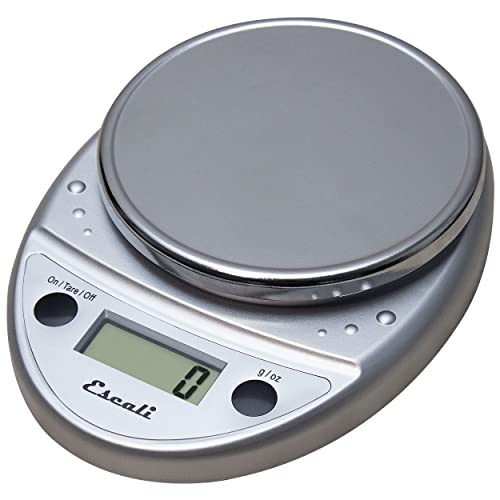
Digital scales offer higher precision with 1-gram readings, while analog scales are less precise.
- Analog scales are battery-free and often cheaper, but lack features like tare and unit conversion.
- Choose digital for baking and nutrition tracking, analog for basic weighing and emergency use.
What Sets Digital and Analog Kitchen Scales Apart?
Digital scales rely on a strain gauge load cell to measure weight. They display results on an LCD or LED screen. Analog scales use a coiled spring that compresses under weight, moving a needle on a dial. Digital models typically measure in 1-gram increments, while analog scales often show 5-gram divisions. This makes digital scales more precise for small quantities. Analog scales are mechanical, so they never need batteries. Digital scales require power, but many have auto-off features to save it.
How Do Accuracy and Readability Compare?
Digital scales provide exact numbers, eliminating guesswork. Analog dials can be hard to read, especially between markings. Most digital kitchen scales have a resolution of 1 gram or 0.1 ounce. Analog scales usually have a resolution of 5 grams or 0.25 ounces. For baking, where a few grams matter, digital is superior. Analog scales can drift out of calibration over time. Digital scales maintain accuracy until the battery dies.
Which Features Do Digital Scales Offer That Analog Don't?
Digital scales commonly include a tare function, which zeroes out the container weight. Many have unit conversion buttons for grams, ounces, pounds, and milliliters. Some digital models offer a hold function to lock the reading. Analog scales have none of these features. Digital scales often have a slim, compact design with a flat surface. Analog scales have a bulkier construction due to the spring mechanism. Digital displays are backlit on many models, aiding visibility in low light.
What Are the Practical Differences in Everyday Use?
Digital scales respond instantly and show the weight as you add ingredients. Analog scales require you to wait for the needle to settle. Digital scales are easier to clean because many have a smooth glass or stainless steel surface. Analog scales have crevices where food can get stuck. Digital scales can handle a wider range of weights, often up to 11 pounds or 5 kilograms. Analog scales typically max out around 5 pounds. For portion control, digital scales are more straightforward.
Which Scale Type Should You Choose for Your Kitchen?
For serious bakers, a digital scale is essential for consistent results. If you only need to weigh occasional items, an analog scale may suffice. Digital scales are better for people who need to track nutrition precisely. Analog scales are a good choice for camping or power outages since they don't rely on electricity. Consider your budget: analog scales are usually more affordable. Digital scales offer more features for a slightly higher price. Think about storage space, as digital scales are often more compact.
Are There Any Edge Cases or Limitations?
Analog scales can be affected by gravity, which varies slightly by location. Digital scales can be affected by temperature and humidity. Very small weights, under 2 grams, are hard to measure on analog scales. Digital scales may struggle with very heavy items if they exceed the capacity. Some digital scales have a minimum weight requirement to turn on. Analog scales are more durable and can survive drops that would break a digital sensor. For precise scientific measurements, neither type is suitable; you'd need a lab balance.