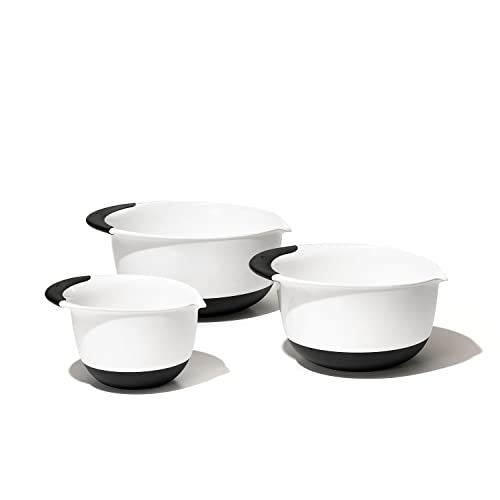
Place a damp towel under your mixing bowl to instantly stop slipping. For a permanent fix, choose bowls with silicone bases or use non-slip pads.
You are whisking eggs for an omelet, and suddenly the bowl spins across the counter, flinging batter everywhere. This frustration is common in kitchens everywhere. Mixing bowls slip because their smooth bottoms do not grip smooth countertops. The problem worsens when you whisk vigorously or use a hand mixer. Fortunately, there are simple, low-cost fixes that require no special tools. Our editorial team compared specifications, buyer feedback and key decision factors to bring you reliable solutions.
Why Mixing Bowls Slip on Countertops
Understanding the cause helps you choose the right fix. Most mixing bowls are made of glass, stainless steel, ceramic, or plastic. These materials have hard, smooth bases that create minimal friction on typical countertop surfaces like granite, marble, quartz, laminate, or stainless steel. When you apply a sideways force, the bowl slides because there is little resistance.
Moisture or grease on the counter reduces friction even further. A few drops of water from washed vegetables can make the surface slick. Dust and tiny food particles can act like ball bearings under the bowl. Also, the shape of the bowl matters: wide, shallow bowls tend to slide more than tall, narrow ones because the force is distributed over a larger area.
Another factor is the type of mixing action. Whisking creates a circular motion that tends to rotate the bowl. Stirring thick dough or batter requires more force, which can push the bowl forward. Using an electric mixer adds vibration, which can cause the bowl to walk across the counter.
How to Fix a Slipping Mixing Bowl
Here are proven methods to stabilize your bowl, from quick DIY hacks to permanent product solutions. Try these in order of convenience and cost.
- Use a damp towel. Fold a clean kitchen towel, run it under water, and wring it out so it is just damp, not soaking. Place it flat on the counter and set your bowl on top. The moisture creates suction and friction, holding the bowl firmly in place. This works for any bowl material and is the most common chef trick.
- Try a non-slip pad or mat. Many kitchen stores sell silicone or rubber pads specifically designed to keep bowls in place. These are often round, textured mats that sit under the bowl. They are reusable, easy to clean, and provide a strong grip. Some are made of a gel-like material that adheres to both the counter and the bowl.
- Choose bowls with silicone bases. Several brands now offer mixing bowls with a silicone ring or base molded onto the bottom. This rubbery material grips the counter without slipping. These bowls are often sold in sets and are dishwasher safe. Look for options with a wide silicone ring for maximum stability.
- DIY grips with rubber bands. If you need a quick fix, wrap a thick rubber band around the base of the bowl, near the bottom. The rubber band adds friction and prevents sliding. This works best on smooth surfaces but may not be as stable as a damp towel.
- Use a suction base bowl. Some bowls have a suction cup on the bottom that sticks to the counter. Press down to activate the suction, and the bowl stays put. This is effective but may not work on textured surfaces.
- Place a silicone trivet under the bowl. A common silicone trivet used for hot pots can double as a non-slip base. Its textured surface grips the counter and the bowl. This is a versatile option if you already own one.
When to Replace Your Mixing Bowls
If your bowls are old, warped, or have scratches on the bottom, they may slip more easily. Warped plastic bowls can rock, making them unstable. Scratched glass or metal surfaces can lose their smoothness, but they also may not grip well. If you find yourself constantly fighting with your bowls, it might be time to invest in a new set with non-slip features.
Consider replacing your bowls if they are cracked, chipped, or if the silicone base has peeled off. A worn-out silicone base can actually make slipping worse. Also, if you have tried multiple fixes and still face issues, a new bowl with an integrated non-slip base is a worthwhile upgrade.
Tips for Stable Mixing
Even with a non-slip bowl, you can improve stability by adjusting your technique. Use a deep bowl to minimize splashing. When whisking, hold the bowl with your non-dominant hand, placing your thumb on the rim and fingers around the side. This provides extra control. For heavy mixtures, use a stand mixer if available, or ask someone to hold the bowl. Also, make sure the counter is clean and dry before you start.
Frequently Asked Questions
Why does my mixing bowl slide on the counter?
Most bowls have smooth bottoms that create little friction on smooth surfaces like granite, quartz, or stainless steel. When you apply lateral force while whisking or stirring, the bowl moves. Moisture or dust on the counter can also reduce grip.
What is the best way to keep a mixing bowl from slipping?
The most effective and affordable method is placing a damp kitchen towel under the bowl. The moisture increases friction. For a permanent solution, choose bowls with silicone bases or use non-slip pads designed for mixing bowls.
Can I use a rubber band to stop my bowl from slipping?
Yes, a thick rubber band stretched around the base of the bowl can add grip. This DIY hack works best on smooth surfaces. However, it may not be as stable as a damp towel or a silicone-bottom bowl.