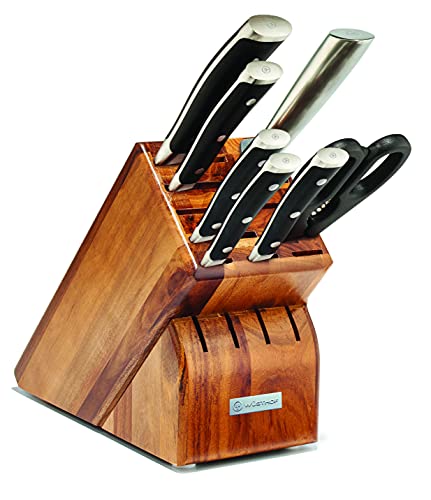
Dull knives are usually caused by poor steel, improper cutting surfaces, lack of honing, and bad storage. Fix it by using a honing steel weekly, sharpening with a whetstone or electric sharpener every few months, switching to wood or plastic cutting boards, and storing knives in a block or on a magnetic strip.
Why Your Knife Set Gets Dull Quickly
Our editorial team compared specifications, buyer feedback and key decision factors to understand why knife sets lose their edge faster than expected. The main culprits fall into three categories: the steel quality, how you use the knife, and how you care for it.
Poor quality steel. Many budget knife sets use soft stainless steel that cannot hold a sharp edge. Harder steels like high carbon stainless or VG-10 hold an edge longer but are more expensive. If your knives dull after just a few uses, the steel may be too soft. For example, a set labeled as "stainless steel" without specifying the grade often uses 420 or 440A steel, which has low hardness (around 52-54 HRC). In contrast, German X50CrMoV15 steel (about 56-58 HRC) or Japanese VG-10 (60-61 HRC) will stay sharp much longer. Check the product description for steel type and hardness rating.
Improper cutting surfaces. Glass, granite, ceramic, and stone cutting boards are the fastest way to dull a knife. Even bamboo boards can be hard on edges. The best surfaces are wood (maple, walnut) or soft plastic (polyethylene). Always cut on a board that gives slightly. For instance, a glass board can dull a knife after just a few slices, while an end grain maple board will preserve the edge for dozens of uses. Avoid hard composite boards as well; they are often made with resins that are abrasive.
Lack of regular honing. Honing does not sharpen; it realigns the microscopic teeth on the blade edge. Without honing, the edge folds over and feels dull. Use a honing steel before each use or at least weekly. Many home cooks skip this step because they think honing is the same as sharpening. But honing is quick and easy: just 5-10 strokes per side at a 15-20 degree angle. If you do not own a honing steel, buy one; it is the most cost effective way to keep knives sharp between sharpenings.
Bad storage. Tossing knives loosely in a drawer lets them bang against metal utensils, chipping and dulling the edge. Store knives in a block, on a magnetic strip, or in a knife roll with individual slots. Even a simple blade guard can prevent damage. For example, a magnetic strip mounted on the wall not only protects edges but also saves counter space and keeps knives accessible. Avoid knife blocks that have slots where the blade rubs against wood; some blocks are designed with soft plastic inserts to prevent this.
Dishwasher abuse. The high heat, harsh detergents, and banging against other items in a dishwasher dull and corrode blades. Always hand wash with mild soap and dry immediately. Dishwasher detergents are alkaline and can etch the steel, while the high heat can soften the handle material. Even if a knife is labeled "dishwasher safe", hand washing is strongly recommended to preserve the edge and appearance.
How to Fix Dull Knives: A Step by Step Plan
- Start honing regularly. Use a honing steel (or ceramic rod) at a 15-20 degree angle. Draw the blade across the steel from heel to tip, alternating sides, about 5-10 times per side. Do this before each use or at least once a week. For best results, hold the steel vertically with the tip on a counter and swipe the knife down. A ceramic rod is more gentle than steel and works well for harder blades.
- Sharpen when honing no longer works. When honing does not restore the edge, it is time to sharpen. Use a whetstone (1000/6000 grit is a good starter), an electric sharpener (like Chef'sChoice or Work Sharp), or a pull through sharpener (like AccuSharp). Follow the tool's instructions carefully to avoid damaging the blade. For whetstones, soak the stone in water for 10-15 minutes, then sharpen at a 15-20 degree angle using consistent pressure. Start with the coarse side (1000 grit) to set the edge, then finish with the fine side (6000 grit) to polish. If you are new to sharpening, consider an electric sharpener with angle guides to ensure consistency.
- Switch to proper cutting boards. Replace glass, stone, or ceramic boards with wood or soft plastic. End grain wood boards are the most knife friendly. Avoid bamboo if possible as it can be hard on edges. For plastic boards, choose polyethylene (PE) or polypropylene (PP) that are at least 1/2 inch thick. Thinner boards can warp and are less forgiving. If you must use a bamboo board, look for one made from vertical grain strips, which are softer than horizontal grain.
- Improve storage. Get a knife block, magnetic strip, or blade guards. Never store knives loose in a drawer. For travel or compact storage, use a knife roll or magnetic sheath. A magnetic sheath is a slim plastic cover with magnets that holds the blade securely; it is ideal for storing in a drawer without a block. If you use a knife block, ensure the slots are lined with soft material to avoid scratching the blade.
- Hand wash only. Wash knives by hand with mild soap and a sponge. Dry immediately with a towel. Never put them in the dishwasher. Use a separate sponge for knives to avoid cross contamination, and rinse them right after use to prevent food acids from staining the blade. For carbon steel knives, dry them thoroughly to prevent rust.
When to Replace Your Knife Set
Even with proper care, knife sets eventually wear out. Signs it is time to replace include: the blade is chipped or bent, the edge cannot hold a sharpening, the handle is loose or cracked, or the knife feels unbalanced. If you have a very cheap set with soft steel, upgrading to a set with harder steel (like German or Japanese high carbon stainless) will make a big difference in edge retention. Check the current price on Amazon for quality sets from brands like Wusthof, Zwilling J.A. Henckels, or Victorinox. For example, a Wusthof Classic set uses X50CrMoV15 steel with a hardness of 58 HRC, while a Zwilling Pro set uses a similar steel but with a different heat treatment. Both are excellent choices that will hold an edge for months with proper care.
Recommended Sharpening Tools
To keep your knives sharp, consider these tools. A honing steel is essential for daily maintenance. For sharpening, a whetstone offers the most control and best edge, but requires practice. Electric sharpeners are faster and easier. Pull through sharpeners are convenient but remove more metal. A good sharpening system like the Lansky or Spyderco Sharpmaker can also help. Check the current price on Amazon for top rated options. For a beginner, a combination whetstone (1000/6000 grit) is a good investment; it costs around $30-50 and can last for years. If you prefer electric, the Chef'sChoice Trizor 15 is a popular model with three stages: coarse, fine, and stropping. It uses diamond abrasives and has angle guides for consistent results.
Storage Habits That Help
Store knives in a way that protects the edge. A knife block keeps blades separated and safe. A magnetic strip mounted on the wall is space saving and keeps knives visible. Blade guards are cheap and protect knives in a drawer. Avoid storing knives in a drawer without protection. Also, never store knives wet or in a damp environment as moisture can cause rust. For long term storage, apply a light coat of mineral oil to the blade to prevent corrosion. If you have a magnetic strip, make sure it is strong enough to hold the knives securely; a weak magnet can cause knives to fall and get damaged. For knife blocks, periodically clean the slots to remove food debris and dust that can scratch blades.
Common Mistakes That Ruin Knife Edges
Beyond the basics, there are several common mistakes that accelerate dulling. One is using a knife as a can opener or screwdriver; this can chip the blade and ruin the edge. Another is cutting on metal or ceramic surfaces, such as a metal baking sheet or a ceramic plate. Even a single cut on a hard surface can microchip the edge. Also, using a dull knife is more dangerous than a sharp one because it requires more force and can slip. Many people also store knives in a drawer without blade guards, causing them to rub against each other. Finally, some home cooks use a steel incorrectly: they scrape the blade sideways or use too much pressure, which can damage the edge. Always use light pressure and maintain the correct angle.