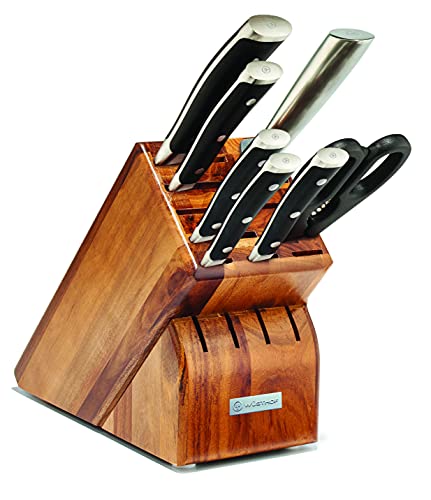
Buying your first knife set can feel like navigating a maze of steel, handles, and jargon. Our editorial team compared specifications, buyer feedback and key decision factors to create this guide. Whether you are a home cook or just starting out, understanding blade materials, handle types, knife styles, storage, and maintenance will help you choose a set that lasts.
Blade Materials: Stainless Steel vs. Carbon Steel
The blade is the heart of any knife. Two main materials dominate the market: stainless steel and carbon steel.
Stainless steel is the most common choice for modern knife sets. It resists rust and stains, requires less maintenance, and is generally more affordable. High-carbon stainless steel blends the best of both worlds: it holds a sharp edge longer than standard stainless while still being easy to care for. Most quality sets use this material.
Carbon steel is favored by professional chefs for its exceptional sharpness and edge retention. However, it is prone to rust and discoloration if not dried immediately after washing. It also reacts with acidic foods, which can alter flavors. For first-time buyers, stainless steel is usually the safer, more practical choice.
When comparing knives, look for terms like "German steel" (often X50CrMoV15) or "Japanese steel" (such as VG-10). Both are excellent, but Japanese steel tends to be harder and holds a finer edge, while German steel is more durable and easier to sharpen.
Handle Types: Wood vs. Synthetic
The handle affects comfort, grip, and durability. Two primary categories are wood and synthetic materials.
Wood handles offer a classic, warm feel and excellent grip, especially when wet. Common woods include walnut, rosewood, and pakkawood (a resin-impregnated wood that is more durable). However, wood requires occasional oiling to prevent cracking and is not dishwasher safe. It can also absorb moisture and bacteria if not properly sealed.
Synthetic handles are made from materials like polypropylene, nylon, or rubberized composites. They are lightweight, slip-resistant, and virtually maintenance-free. Many are dishwasher safe (though hand washing is recommended to preserve the blade). Synthetic handles are ideal for busy kitchens and first-time buyers who want low upkeep.
Ergonomics matter: look for a handle that feels balanced in your hand. A full tang (metal extending through the handle) adds weight and stability. Many quality sets offer a full tang with rivets for durability.
Essential Knives in a Set
A knife set can include dozens of pieces, but you only need a few for everyday cooking. Focus on these core knives:
- Chef's knife (8-inch): The workhorse of the kitchen. Use it for chopping, slicing, dicing, and mincing. An 8-inch blade is versatile for most hands.
- Paring knife (3-4 inch): For peeling, trimming, and detailed work like deveining shrimp or hulling strawberries.
- Serrated bread knife (8-10 inch): Cuts through crusty bread, tomatoes, and soft fruits without crushing them. A scalloped or wavy edge works best.
- Utility knife (5-6 inch): A mid-size knife for tasks too large for a paring knife but too small for a chef's knife, such as slicing sandwiches or cheese.
Additional knives like a boning knife, santoku, or carving knife are nice to have but not essential. Avoid sets with many specialty knives (like tomato or steak knives) unless you know you will use them. A quality 3-5 piece set often outperforms a large, cheap set.
Storage Options: Blocks vs. Magnetic Strips
Proper storage protects your knives and keeps your kitchen safe. Two popular options are knife blocks and magnetic strips.
Knife blocks are traditional and convenient. They keep knives organized, protect blades from dulling, and are safe around children. However, they take up counter space and can collect crumbs and bacteria if not cleaned. Some blocks have universal slots that fit various knife sizes, while others are custom-molded for specific sets.
Magnetic strips mount on the wall, saving counter space and allowing knives to air dry. They also display your knives, making them easy to grab. The downsides: knives can fall if not properly placed, and strips may scratch blades over time. Ceramic magnets are gentler than steel ones. Magnetic strips are ideal for small kitchens or if you prefer a minimalist look.
Other options include in-drawer knife trays (great for hiding knives) and knife guards (for individual blade protection). Choose based on your kitchen layout and safety preferences.
Maintenance Tips for Longevity
Even the best knife set will dull quickly without proper care. Follow these steps to keep your knives sharp and safe:
- Hand wash only: Dishwashers can damage blades and handles. Wash knives with mild soap and warm water, then dry immediately with a towel.
- Use a cutting board: Always cut on wood or plastic boards. Avoid glass, stone, or metal surfaces, which dull blades rapidly.
- Hone regularly: Use a honing steel (often included in sets) to realign the blade edge. Do this before each use or at least weekly.
- Sharpen periodically: When honing no longer restores sharpness, use a whetstone or send knives to a professional. Electric sharpeners remove more metal than necessary.
- Store properly: Never toss knives loose in a drawer. Use a block, magnetic strip, or blade guards to prevent nicks and accidents.
- Oil wooden handles: If your set has wood handles, apply mineral oil every few months to prevent drying and cracking.
By following these guidelines, your knife set will stay sharp and functional for years. Remember: a good set is an investment in your cooking experience. Take time to choose wisely, and you will enjoy every slice.