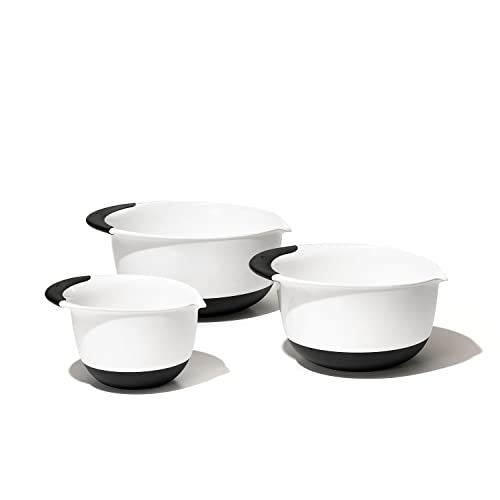
Choosing the right mixing bowls can feel overwhelming with so many materials, sizes, and features on the market. Our editorial team compared specifications, buyer feedback, and key decision factors to help you make an informed choice. Whether you are a seasoned baker, a daily cook, or just starting out, this guide covers everything from material pros and cons to budget-friendly options.
Material Pros and Cons
The material of your mixing bowls affects durability, heat resistance, weight, and maintenance. Here is a breakdown of the most common options.
Stainless Steel
- Pros: Lightweight, durable, resistant to stains and odors, dishwasher safe, and often comes with non-slip silicone bases.
- Cons: Not microwave safe, can react with acidic ingredients (though most are food-grade and safe), and may dent if dropped.
Glass
- Pros: Microwave safe, non-reactive, see-through for easy monitoring, and often oven safe up to certain temperatures.
- Cons: Heavy, breakable, and may be more expensive. Some glass bowls are not tempered for high heat.
Plastic
- Pros: Lightweight, affordable, available in many colors, and usually dishwasher safe.
- Cons: May stain or retain odors, can warp in the dishwasher, and not microwave safe unless labeled.
Ceramic
- Pros: Attractive, heavy for stability, non-reactive, and can go from oven to table.
- Cons: Heavy, prone to chipping, and often not dishwasher safe (check manufacturer).
Silicone
- Pros: Flexible, collapsible for storage, heat resistant, and non-slip.
- Cons: May not be sturdy for heavy mixing, and some have a strong odor initially.
Consider how you plan to use the bowls. For everyday cooking, stainless steel is a top choice. For baking, glass or ceramic may be better for melting chocolate or proofing dough. Plastic is fine for simple tasks.
Size and Sets: Nesting vs Individual
Mixing bowls come in individual sizes or as sets. Nesting sets save space and are convenient, but individual bowls offer flexibility.
Nesting Sets
Most sets include 3 to 7 bowls that stack inside each other. Common sizes range from 1.5 quarts to 5 quarts. Nesting sets are ideal for small kitchens because they store compactly. They often come with lids, which is a bonus. However, you may not use all sizes, and the largest bowl may not be big enough for large batches.
Individual Bowls
If you have specific needs, buying individual bowls can be better. For example, a large 8-quart bowl is perfect for proofing bread dough or mixing big salads. Smaller 1-quart bowls are useful for prep work. Individual bowls allow you to choose the material and size that suits each task.
How Many Bowls Do You Need?
For most home cooks, a set of 3 to 5 bowls is sufficient. If you bake often, you might want a larger set with more sizes. Beginners can start with a basic 3-piece set. Remember to consider the depth and width: deep bowls prevent splashing, while wide bowls are easier for whisking.
Features That Matter: Lids, Handles, Non-Slip Bases, Dishwasher Safety
Beyond material and size, small features can make a big difference in daily use.
Lids
Lids are useful for storing leftovers, marinating, or proofing dough. They keep food fresh and prevent spills in the fridge. Look for airtight lids, especially if you plan to use them for fermentation or storage. Some lids have a vent for microwave use, but not all bowls are microwave safe.
Handles
Handles provide a secure grip, especially when the bowl is heavy. They are helpful for pouring batters or transferring bowls. However, handles can make nesting less efficient and may get in the way when whisking. Consider your grip strength and the weight of the bowl.
Non-Slip Bases
A non-slip silicone base keeps the bowl steady while you whisk or mix. This is a valuable feature for one-handed mixing. It also protects countertops from scratches. Many stainless steel bowls come with a silicone bottom, but glass and ceramic may not.
Dishwasher Safety
Not all bowls are dishwasher safe. Stainless steel and most plastic are dishwasher safe, but check for warping. Glass is generally dishwasher safe, but sudden temperature changes can cause cracking. Ceramic may have decorative glazes that fade. If you prefer hand washing, any material works.
Spouts and Measurement Marks
Some bowls have pouring spouts for mess-free transfer. Measurement marks inside the bowl are handy for mixing and measuring in one vessel. These features add convenience but are not essential.
Budget and Checklist for Different Users
Mixing bowls range from under $20 to over $100. Determine your budget and prioritize features that matter to you.
Budget-Friendly Options
Plastic and basic stainless steel sets are the most affordable. You can find a decent 3-piece set for a low price. Look for sales on glass sets. Avoid cheap ceramic that may chip easily.
Mid-Range
Stainless steel with non-slip bases and lids are a good mid-range choice. Tempered glass sets are also popular. Expect to pay a bit more for durability and extra features.
Premium
High-end ceramic or heavy-gauge stainless steel sets with multiple features can be pricey. These are often used by professional bakers. Consider if the extra cost is justified by your usage.
Checklist for Bakers
- Choose stainless steel or glass for durability and easy cleaning.
- Look for a set with at least 5 sizes, including a large bowl for dough.
- Opt for bowls with measurement marks and pouring spouts.
- Ensure the bowls are dishwasher safe if you prefer machine cleaning.
- Consider a non-slip base for stable mixing.
Checklist for Cooks
- Select stainless steel or plastic for lightweight use.
- Choose a set with lids for storing leftovers.
- Look for handles for easy pouring.
- Check if the bowls are microwave safe for reheating.
- Prioritize dishwasher safety for quick cleanup.
Checklist for Beginners
- Start with a 3-piece stainless steel set with non-slip bases.
- Choose sizes between 1.5 and 3 quarts for versatility.
- Ensure they are dishwasher safe.
- Add a glass bowl for microwave tasks.
- Buy a set with lids to save money.
Remember to check the current price on Amazon before purchasing. Read customer reviews to see how bowls hold up over time. With this guide, you can confidently choose mixing bowls that fit your cooking style and budget.