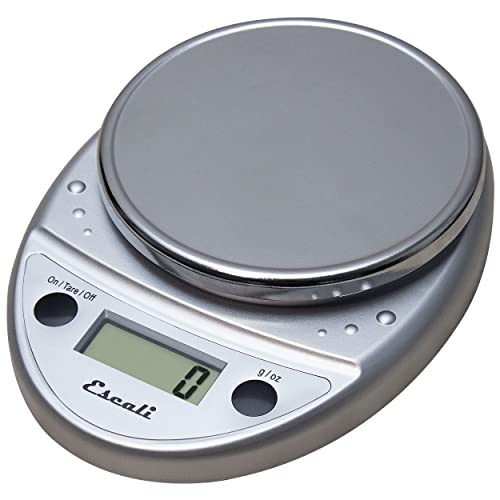
Kitchen scales work by measuring the deformation of a load cell under weight.
- Digital scales convert electrical resistance changes into precise weight readings.
- The tare function is crucial for weighing ingredients in containers.
- Mechanical scales use springs or balances and are less precise but battery-free.
- Accuracy and capacity vary by model, so choose based on your cooking needs.
What is the basic principle behind a kitchen scale?
Kitchen scales measure force, not mass directly. They rely on a component called a load cell. A load cell is a metal bar that deforms minutely when weight is applied. This deformation changes the electrical resistance of attached strain gauges. The scale's microprocessor converts this resistance change into a weight reading. This is the same technology used in many industrial and medical scales.
How do digital kitchen scales work?
Digital scales use a load cell with strain gauges wired in a Wheatstone bridge circuit. When you place an item on the platform, the load cell bends, causing the strain gauges to stretch or compress. This alters the electrical signal, which an analog-to-digital converter processes. The microprocessor then calculates weight and displays it on an LCD or LED screen. Most digital scales are powered by batteries or USB.
What is the tare function and how does it work?
The tare function zeroes out the scale's reading. This lets you weigh ingredients in a bowl or container without including its weight. Pressing tare sets the current load as the zero point. You can then add ingredients and see only their weight. This is essential for baking and cooking where precision matters. Some scales allow multiple tares in a single session.
How do mechanical kitchen scales work?
Mechanical scales use a spring or a balance mechanism instead of electronics. A spring scale compresses a spring proportional to the weight applied. A needle moves across a dial to indicate the weight. Balance scales compare the unknown weight to known counterweights. Mechanical scales are less precise than digital ones but require no batteries. They are still sold for their durability and simplicity.
What are the common features and accuracy of kitchen scales?
Digital kitchen scales typically measure in 1-gram increments, with some high-end models offering 0.1-gram precision. They often have a capacity of 5 to 10 kilograms. Many include unit conversion buttons for grams, ounces, pounds, and milliliters. Some models have a built-in timer or a backlit display. Accuracy depends on the quality of the load cell and calibration.