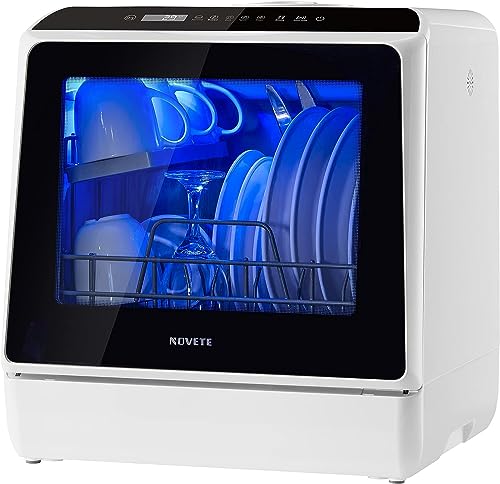
Installation requires only a faucet adapter, drain hose, and power outlet.
- Always check for leaks before running a full cycle.
- Measure your space and verify faucet compatibility before buying.
What You Need Before Installing a Countertop Dishwasher
Check your kitchen for a standard faucet with threaded aerator. Most countertop dishwashers connect directly to the faucet. You'll need an adjustable wrench and plumber's tape. Some models include a Y-adapter for sink use. Ensure your countertop can support the dishwasher's weight, typically 40 to 60 pounds. Verify you have a grounded outlet within reach of the unit's power cord.
How to Connect a Countertop Dishwasher to Your Faucet
Remove the faucet aerator and attach the provided adapter. Wrap plumber's tape on the threads to prevent leaks. Screw the adapter onto the faucet hand-tight, then use a wrench for a snug fit. Connect the dishwasher's inlet hose to the adapter. Turn on the water slowly to check for drips. Tighten connections if needed. Some models have a quick-connect feature that snaps into place.
How to Set Up the Drain Hose for a Countertop Dishwasher
Locate the drain hose at the back of the dishwasher. Attach it to the sink drain using the included clip or suction cup. Ensure the hose forms a high loop to prevent backflow. Place the hose end into the sink basin, not down the garbage disposal. Secure the hose so it doesn't kink. Test the drain by running a short cycle. Adjust the hose position if water pools.
How to Run Your First Cycle and Check for Leaks
Plug the dishwasher into a grounded outlet. Add detergent and load your dishes. Select a normal or quick cycle and start the machine. Watch the connections for the first few minutes. Look for water at the faucet adapter and drain hose. If you see leaks, turn off the dishwasher and tighten the fittings. Run a rinse cycle to clear any debris. Check under the unit for moisture after the cycle.
Common Installation Mistakes and How to Avoid Them
One mistake is forgetting to remove the aerator, which blocks water flow. Another is over-tightening the adapter, which can crack the faucet. Avoid using a damaged or worn-out hose. Ensure the drain hose is not submerged in standing water. Some owners place the dishwasher too far from the faucet, causing strain. Always measure the hose length before positioning. If you have a pull-out faucet, check compatibility first.