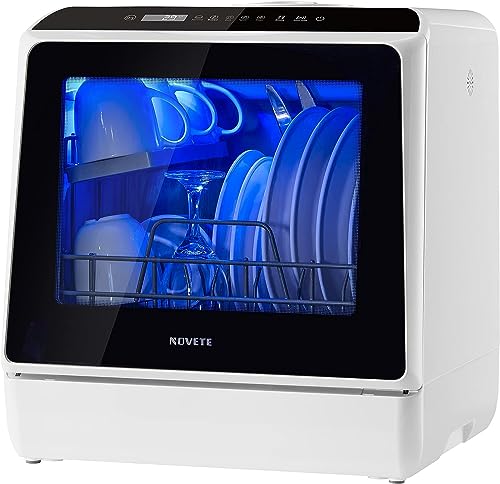
Clean the spray arms and filter regularly to prevent clogs.
- Use the correct detergent and rinse aid for best results.
- Load dishes properly to allow water circulation.
- Run a cleaning cycle monthly with vinegar or a dishwasher cleaner.
- If problems persist, check the pump and consider replacement.
What causes a countertop dishwasher to leave food on dishes?
Clogged spray arms block water jets. A dirty filter traps food particles that redeposit on dishes. Hard water minerals can coat the heating element and reduce cleaning power. Overloading the basket blocks water circulation. Using too little detergent or the wrong type also causes poor results. A failing wash pump or worn seals reduce water pressure.
How to fix a countertop dishwasher that is not cleaning dishes
Unplug the dishwasher and remove the bottom rack. Take out the spray arms and rinse them under running water. Use a toothpick to clear the spray holes. Remove the filter assembly and wash it with warm soapy water. Check the water inlet hose for kinks or debris. Add rinse aid to the dispenser and use a high-quality detergent tablet. Run a hot water cycle with a dishwasher cleaner or a cup of white vinegar placed on the top rack. If dishes still come out dirty, inspect the wash impeller for damage and replace it if cracked.
How to prevent countertop dishwasher cleaning problems
Scrape off large food scraps before loading. Load dishes at an angle, facing the spray arms. Do not overload the basket. Run the dishwasher at least every other day to prevent grease buildup. Use a water softener if your tap water is hard. Clean the filter and spray arms monthly. Check the detergent dispenser for clogs and wipe it dry after each cycle.
When should you replace or call a professional?
If the dishwasher still fails after cleaning all parts, the wash motor may be faulty. A buzzing noise with no water movement points to a seized pump. Leaks around the door or base indicate worn gaskets. Compare repair costs to a new unit; many countertop models cost less than a service call. If the unit is over five years old, replacement is often more practical. Contact the manufacturer for warranty service before hiring a technician.
What are common mistakes that make cleaning worse?
Using regular dish soap creates excessive foam and can damage the unit. Placing bowls upside down traps water and food. Forgetting to pre-rinse heavily soiled pans leaves baked-on residue. Choosing a short cycle for tough messes saves time but sacrifices cleaning. Ignoring error codes on the display can hide a blocked sensor. Always consult the user manual for cycle recommendations.