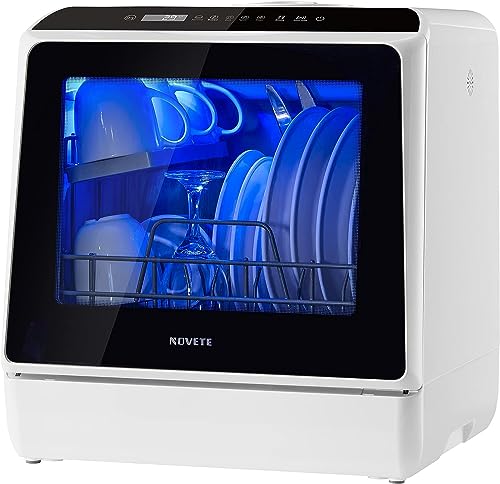
A countertop dishwasher does not require a garbage disposal; it drains via a hose clipped to the sink rim.
- The dishwasher's built-in filter catches food particles, so you don't need a disposal to grind waste.
- Whether you have a disposal or not, the installation is the same: connect to the faucet and clip the drain hose.
- Regular filter cleaning is essential to prevent clogs and odors, regardless of disposal presence.
How Does a Countertop Dishwasher Drain?
Countertop dishwashers are designed for easy installation. They connect directly to your kitchen faucet with a diverter valve. The drain hose attaches to the sink's edge, letting water flow down the drain. This setup works with or without a garbage disposal. The hose clips over the sink rim, so it doesn't need a disposal connection. Water simply runs through the sink drain, just like hand-washing water. No special plumbing is required for the drain.
What If You Have a Garbage Disposal?
Having a garbage disposal doesn't complicate the countertop dishwasher hookup. The drain hose still clips to the sink rim, not the disposal. Water flows into the sink and then down the disposal. The disposal can be running or off; it doesn't affect the dishwasher. Some users worry about backflow, but the hose is above the sink rim, preventing that. You can use the disposal normally while the dishwasher drains. Just ensure the hose is secure to avoid splashing.
What If You Don't Have a Garbage Disposal?
Without a disposal, the countertop dishwasher still works fine. The drain hose clips to the sink rim, and water goes down the regular drain. Food particles are caught by the dishwasher's filter, not the disposal. You'll need to clean the filter regularly, perhaps every few days. Owners report that pre-rinsing dishes reduces filter clogs. The sink drain may need occasional cleaning, but that's routine. No disposal is necessary for operation.
Do Countertop Dishwashers Filter Food Waste?
Countertop dishwashers have a built-in filter that traps food particles. This filter is similar to those in full-size dishwashers. It catches debris before water drains. You must empty the filter after each cycle or daily. If you don't, the dishwasher may smell or drain slowly. The filter is easy to remove and rinse. This design eliminates the need for a garbage disposal to grind food. The dishwasher handles solid waste on its own.
Can You Hardwire a Countertop Dishwasher to a Disposal?
Some people ask if you can connect the drain to a disposal. It's possible but not recommended. The countertop dishwasher's drain hose is low-pressure and not designed for that. You'd need an air gap and special fittings. Most manufacturers advise against it. The faucet connection is simpler and safer. If you want a permanent install, consider a full-size dishwasher. Countertop models are meant for temporary or rental use. Stick with the sink rim method.