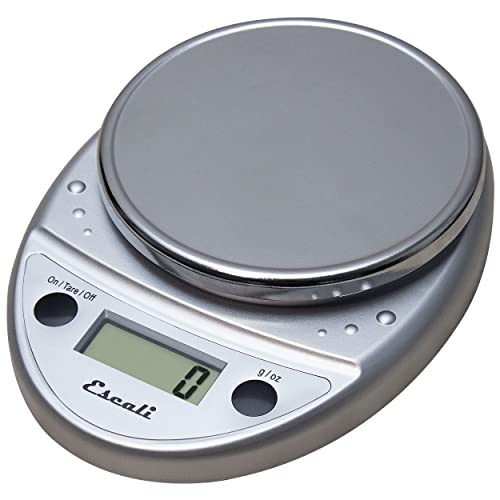
Kitchen ScalesGuide
Can Kitchen Scales Weigh in Ounces and Grams?
Yes, most digital kitchen scales weigh in both ounces and grams. A simple button press toggles between units. Mechanical scales often show both on one dial. Check the product listing to confirm unit options before buying.
5 min read
Most digital kitchen scales can switch between ounces and grams with a button.
- Check the unit options and accuracy before buying a scale.
- Grams offer finer precision for small measurements.
- Mechanical scales often display both units on one dial.
- Tare function is essential for accurate measuring in containers.
How do kitchen scales switch between ounces and grams?
Most digital scales have a unit button labeled MODE or UNIT. Press it to cycle through grams, ounces, pounds, and milliliters. Some scales require holding the button for a few seconds. The display shows the active unit with a symbol like g or oz. Mechanical scales often have a single dial with both scales printed on it.
Which kitchen scales support ounces and grams?
Nearly all modern digital kitchen scales support both units. Even budget models include unit switching. High-end scales may add more units like troy ounces or fluid ounces. Analog scales with a rotating dial usually display both grams and ounces. Always verify the unit list in the product description before purchasing.
Why does accuracy matter when measuring in ounces and grams?
Grams offer finer precision than ounces for small amounts. A scale accurate to 1 gram is better for baking. For ounces, look for increments of 0.1 or 0.05 ounces. Digital scales are generally more accurate than mechanical ones. Calibration and proper placement on a flat surface improve consistency.
What should you check before buying a dual-unit kitchen scale?
Confirm the unit switch is easy to access. Check the maximum weight capacity, often 5 to 11 pounds. Look for a tare function to zero out containers. Read reviews for unit switching reliability. Consider the power source, batteries or USB, and display readability.
Are there kitchen scales that only measure grams?
Some specialty scales, like coffee or jewelry scales, measure only grams. These often have high precision but lack ounce mode. For general cooking, a dual-unit scale is more versatile. If you only need grams, a gram-only scale may be cheaper. But most home cooks prefer both options.
Common questions
Can kitchen scales weigh in both ounces and grams?
Yes, most digital kitchen scales can switch between ounces and grams with a button press. Mechanical scales often show both on the same dial.
How do I change my kitchen scale from grams to ounces?
Look for a button labeled UNIT, MODE, or a weight icon. Press it to cycle through units until you see oz. Some scales require holding the button for a few seconds.
What is the difference between fluid ounces and weight ounces on a scale?
Fluid ounces measure volume, while weight ounces measure mass. Kitchen scales typically measure weight ounces. Some digital scales include a water or milk mode to convert to fluid ounces.
Are digital kitchen scales more accurate than analog ones?
Digital scales generally offer higher precision, often to 1 gram or 0.1 ounces. Analog scales are less precise and can drift over time. For baking, digital is recommended.
Can I use a kitchen scale for weighing ounces in cooking?
Yes, that is a primary use. Switch the scale to ounces and place your ingredient on the platform. Use the tare function to zero out the container first.
Which kitchen scale is best for measuring both grams and ounces?
Look for a digital scale with a unit button and a capacity that suits your needs. Popular models include the OXO Good Grips and Etekcity food scales, both of which support grams and ounces.
Is it worth buying a scale that measures both units?
Yes, if you follow recipes from different countries. Many recipes use grams, while others use ounces. A dual-unit scale saves time and reduces conversion errors.
Do all kitchen scales have a tare function?
Most digital scales have a tare or zero button. It subtracts the weight of your container. Analog scales rarely have tare, so you must account for container weight manually.