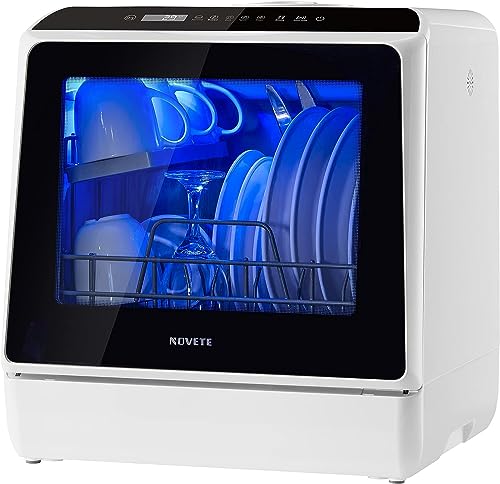
Countertop dishwashers are portable by design; permanent installation voids warranties.
- Hardwiring and direct plumbing are possible but often violate codes and require costly modifications.
- For a permanent setup, choose a built-in or portable dishwasher instead.
What Does Permanent Installation Mean for a Countertop Dishwasher?
Permanent installation usually means hardwiring the electrical supply and connecting water and drain lines directly. Countertop dishwashers are designed as portable appliances. They plug into a standard outlet and attach to the kitchen faucet. Their internal pump expects a low drain loop, not a high permanent drain line. Most manufacturers specify portable use only in the manual.
Can You Hardwire a Countertop Dishwasher?
Hardwiring is possible but not recommended. The power cord is factory-attached and cannot be removed without breaking the seal. Removing it voids the UL listing and the warranty. Local electrical codes may require a dedicated circuit and a junction box. A licensed electrician can do the work, but the cost often exceeds the dishwasher's price. Owners report that portable models trip breakers when wired to shared circuits.
Can You Connect a Countertop Dishwasher to a Water Line?
Yes, with a T-fitting and a shutoff valve. The inlet hose has a standard 3/4-inch thread. You can connect it to a cold water line under the sink. The drain hose can go into a disposal or standpipe. However, the drain pump is not designed for long vertical runs. Most units require the drain to be no higher than the countertop. A permanent connection may cause siphoning or leaks.
Countertop vs Built-In vs Portable Dishwashers: Which Is Best for Permanent Use?
Built-in dishwashers are the only true permanent option. They are hardwired or direct-wired and plumbed to the water supply and drain. Portable dishwashers, on wheels, connect to the faucet and plug into an outlet. They offer more capacity than countertop models but still are not permanent. Countertop units suit renters or small kitchens where portability matters. For a permanent setup, choose a built-in model.
What Do Building Codes and Warranties Say About Permanent Installation?
Building codes often require an air gap or high loop for a permanent drain connection. Countertop dishwashers do not include an air gap. Their drain hose is short and flexible, not rated for under-sink routing. Installing one permanently may violate local plumbing codes. Warranties typically state that misuse, including permanent installation, voids coverage. Check the manual before modifying the unit.