Spiral notebooks, loose-leaf filler paper and graph pads all do one job well: they hold your writing in a format that fits how you work. The trick is matching the format to the task. Spiral books keep everything bound together for a single class or project. Loose-leaf filler paper lets you add, remove and reorder pages inside a three-ring binder. Graph and grid ruling gives you a scaffold for math, diagrams, plans and neat columns. This guide gathers strong spiral, loose-leaf and graph options for school and office, so you can pick the right one without guessing. If you specifically want the bound, sewn format with marbled covers, see our separate composition notebooks guide instead.
How we chose these notebooks and paper
These are editorial picks based on current Amazon listings, not a hands-on lab writeup. We read the product pages for each item and compared the details that actually change daily use: the ruling (wide, college or graph), the sheet count, the page size, whether pages are bound or three-hole punched for a binder, and what each one is built for. We favored formats that match real needs, a durable spiral for one heavy subject, bulk filler paper for binder users, and dedicated graph paper for STEM work. Features such as reinforced holes, ink-bleed resistance and water-resistant covers are claims from the listings, so treat them as the manufacturer describes them rather than as measured results. We left out anything that drifts into the composition-notebook format, since that style has its own guide.
Our top picks
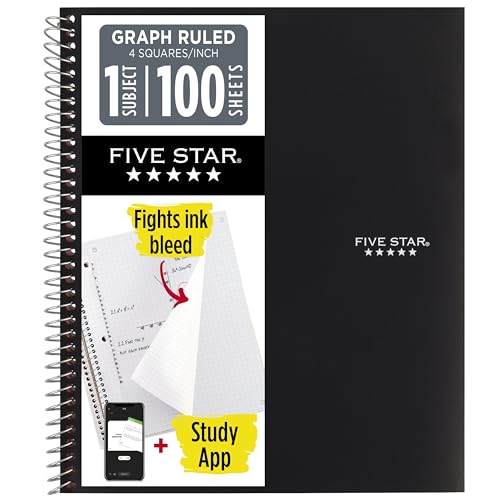
1. Five Star 1-Subject Spiral Notebook, Graph Ruled (Top Pick)
The Five Star 1-subject spiral is our overall pick because it packs a useful format into a tough package. You get 100 graph-ruled sheets at a full letter size, which is enough to carry one subject through a term. The listing highlights a water-resistant, sturdy cover, so it is built to survive a backpack better than a plain paper cover. Graph ruling makes it flexible: it handles equations, charts, sketches and tidy notes equally well. If you want a single reliable spiral that covers most situations, this is the one to reach for.
2. Mead 1-Subject Spiral Notebook, Graph Ruled (Best Spiral)
If you want a simple, no-frills spiral, the Mead 1-subject graph notebook keeps things straightforward. It offers 100 graph-ruled sheets in a slightly more compact 7.5 by 10.5 inch size, which fits smaller bags and desks. There is nothing fancy here, and that is the appeal: it is easy to find, easy to replace and does exactly what a class or desk notebook should. The cover is lighter than a premium spiral, so it is best for everyday note duty rather than rough handling.
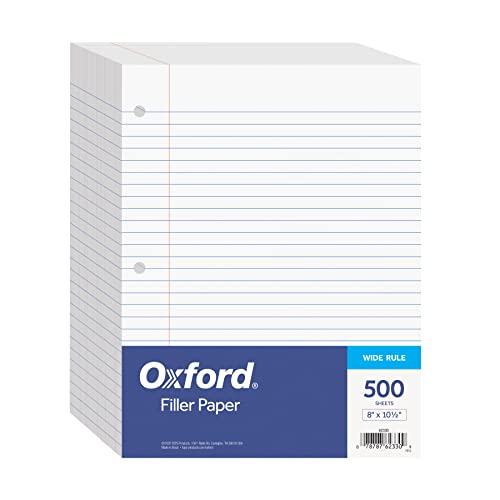
3. Oxford Wide-Ruled Filler Paper, 500 Sheets (Best Loose-Leaf)
For binder users, the Oxford wide-ruled filler paper is a workhorse. A single pack holds 500 sheets with a standard three-hole punch, so one purchase can cover most of a school year or a long office project. Wide ruling suits younger writers and anyone who likes more room between lines. Because it is loose-leaf, you can add handouts, reorder notes and pull pages for assignments without tearing anything out of a bound book. You will need a three-ring binder to keep it organized, which is the only real trade-off.
4. AHGXG A5 Graph Grid Notebook, 160 Pages (Best Graph/Grid)
When you want a dedicated grid notebook you can carry anywhere, the AHGXG A5 graph notebook is a tidy choice. Its compact A5 footprint, roughly 5.7 by 8.3 inches, slips into a bag or jacket, and 160 grid pages give you plenty of room for sketches, layouts, bullet-style journaling and quick diagrams. Because it is bound, the pages stay in order and cannot be reshuffled the way loose-leaf can, and there are no binder holes. For idea capture and grid-based planning on the go, that fixed order is usually a feature, not a drawback.
5. Five Star Graph-Ruled Loose Leaf Filler Paper (Best for School)
Math and science students often need graph paper that lives inside the same binder as their other subjects, and the Five Star graph-ruled filler paper is built for exactly that. It comes with 80 graph sheets at letter size, and the listing describes reinforced holes designed to resist tearing out of a three-ring binder. Keeping graph paper loose means you can file a few sheets behind each class divider instead of carrying a separate pad. The smaller sheet count means you may refill more often than with bulk packs, which is the usual compromise for a specialty ruling.
6. Mead Wide-Ruled Loose Leaf Filler Paper, 200 Sheets (Best Value)
For plain, get-it-done binder paper, the Mead wide-ruled filler paper is a sensible value pick. Two hundred wide-ruled, three-hole-punched sheets give you a healthy stack of everyday note paper for a binder without any extras to pay for. It is thinner than premium filler paper and loose sheets can scatter if you leave them out of a binder, but for a basic refill that keeps a student or an office stocked, it covers the essentials and little else, which is the point.
How to choose a notebook or filler paper
Spiral vs loose-leaf vs bound. Spiral notebooks keep one subject together and lie flat, but torn-out pages leave a ragged edge. Loose-leaf filler paper is the most flexible: you add, remove and reorder pages in a binder, which is ideal when you juggle many classes or projects. Bound notebooks, including the composition format, keep pages permanently in order, which is great for a journal or a record you do not want reshuffled. Match the binding to how often you need to move pages around.
Ruling: wide, college or graph. Wide ruling has more space between lines and suits younger writers or larger handwriting. College ruling fits more lines per page and is the office default. Graph or grid ruling adds a square scaffold that helps with math, engineering, charts, neat columns and sketching. Pick the ruling around the kind of writing you do most, and keep graph paper on hand if you take STEM or design notes.
Subjects and dividers. A 1-subject spiral is light and focused, while binder paper plus tabbed dividers lets one binder cover every class. If you prefer a single book per subject, buy a spiral per class; if you prefer one carry-all system, go loose-leaf with dividers.
Paper weight and bleed. Heavier paper resists show-through and bleed from markers, gel pens and fountain pens, while lighter paper keeps a pack slim and affordable. Some listings advertise ink-bleed resistance; if you write with wet inks, lean toward those and toward higher paper weight.
Perforation and binder holes. If you need to hand pages in, look for perforated spiral sheets that tear cleanly. If you file notes, choose three-hole-punched filler paper, and reinforced holes if you flip pages often, so they do not rip free of the rings.
Size. Letter size, about 8.5 by 11 inches, is the standard for school and office and fits binders and scanners. Compact sizes such as A5 are easier to carry but hold less per page. Think about where the notebook will live before you choose a size.
School vs office vs quick notes. For school, a tough spiral or a binder stocked with filler paper handles a full year. For office work, college-ruled loose-leaf or a grid notebook keeps meetings and planning organized. For quick notes and ideas on the move, a compact bound grid notebook is hard to beat.
The bottom line
There is no single best notebook, only the best format for the task in front of you. The Five Star 1-subject graph spiral is our top all-rounder, the Oxford 500-sheet pack is the loose-leaf standby for binder users, and the AHGXG A5 grid notebook is the pick for portable graph work. If you decide the classic sewn, marbled format is what you actually want, head over to our composition notebooks guide, which covers that style in detail.