Reader-supported: we earn a commission on some links, at no extra cost to you. It never changes our picks. How this works
Digital Cameras

Best Cheap 4K Video Cameras for Vlogging and YouTube

ProductPickly is reader-supported. When you buy through links on our site, we may earn an affiliate commission at no extra cost to you. It never changes our picks.

The short answer

The Sony ZV-E10 is our top pick for the best cheap 4K video camera for vlogging and YouTube. It offers interchangeable lenses, excellent autofocus, and a flip-out screen, all at a budget-friendly price. For a fixed-lens option, the DJI Osmo Pocket 3 is a close second.

?
How we picked

We compare published specifications, safety certifications and thousands of verified owner reviews, and we do not physically test every unit. Read the full process in our review methodology.

At a glance

ModelBest forKey specScore
Sony ZV-E10Interchangeable lens vloggingAPS-C sensor, 4K 30p4.7
DJI Osmo Pocket 3Portable all-in-one1-inch sensor, gimbal4.6
Canon PowerShot V10Ultra-compact vlogging1-inch sensor, built-in stand4.4
Panasonic Lumix G100Creator-focused MFTMicro Four Thirds, 4K 30p4.3
GoPro Hero 12 BlackAction and outdoor vlogs5.3K video, HyperSmooth 6.04.5
BEST
OVERALL
1
Sony ZV-E10
Sony ZV-E10
★★★★★ 4.7 / 5 Best overall
Check price on Amazon

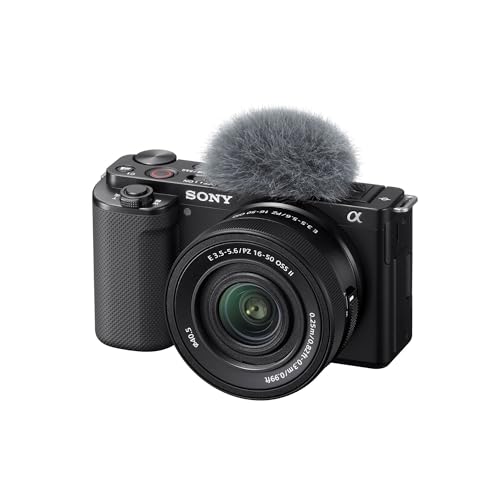
The Sony ZV-E10 is a mirrorless camera designed for vloggers. It has a large APS-C sensor, excellent autofocus with eye tracking, and a flip-out touchscreen. It records 4K video with no crop and includes a directional microphone.

Sensor APS-C (24.2 MP)Video 4K 30p, 1080p 120pScreen 3.0" vari-angle touchMic input 3.5mm
  • Interchangeable lenses for flexibility
  • Real-time Eye AF for humans and animals
  • No recording time limit
  • Great image quality in low light
  • No in-body stabilization (only electronic)
  • Battery life is modest
Best for: Vloggers who want to upgrade lenses later
Buy it if: Creators planning to grow their channel and invest in lenses
Skip it if: Those who need built-in stabilization without a gimbal
Alternative to consider: Sony ZV-1F (fixed lens, cheaper)
2
DJI Osmo Pocket 3
DJI Osmo Pocket 3
★★★★★ 4.6 / 5 Best portable
Check price on Amazon

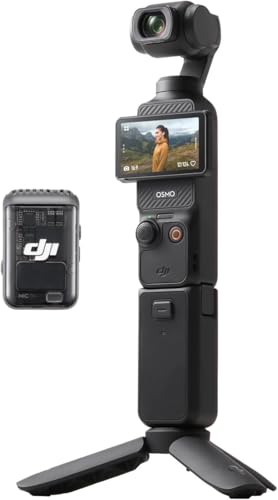
The DJI Osmo Pocket 3 is a pocket-sized camera with a built-in gimbal and a 1-inch sensor. It records 4K 120p and has excellent stabilization, making it perfect for travel and run-and-gun vlogging.

Sensor 1-inch CMOSVideo 4K 120p, 10-bit D-Log MStabilization 3-axis mechanical gimbalScreen 2.0" rotatable touch
  • Built-in gimbal for silky smooth footage
  • Compact and easy to carry
  • Fast autofocus with subject tracking
  • Great low-light performance for its size
  • Fixed lens, no zoom
  • Small screen may be hard to see outdoors
Best for: Travel vloggers and content creators on the go
Buy it if: Those who want a pocketable camera without extra gear
Skip it if: Vloggers who need interchangeable lenses or a larger screen
Alternative to consider: DJI Osmo Pocket 2 (cheaper, smaller sensor)
3
Canon PowerShot V10
Canon PowerShot V10
★★★★ 4.4 / 5 Best ultra-compact
Check price on Amazon

The Canon PowerShot V10 is a unique vlogging camera with a built-in stand and a vertical grip. It has a 1-inch sensor, 4K video, and a flip-up screen. It is incredibly easy to use and fits in a pocket.

Sensor 1-inch CMOSVideo 4K 30p, Full HD 60pScreen 2.0" flip-up touchMic input None (built-in stereo)
  • Built-in stand and grip
  • Very lightweight (approx. 180g)
  • Easy to use for beginners
  • Good image quality for vlogs
  • No external mic input
  • Fixed wide-angle lens
  • No image stabilization (digital only)
Best for: Beginners who want a simple, pocketable vlogging camera
Buy it if: Casual vloggers and social media creators
Skip it if: Those who need professional audio or zoom capability
Alternative to consider: Sony ZV-1F (has mic input, similar size)
4
Panasonic Lumix G100
★★★★ 4.3 / 5 Best for creators
Check price on Amazon

The Panasonic Lumix G100 is a Micro Four Thirds camera aimed at content creators. It features a 4/3 sensor, 4K video, and a built-in microphone with tracking. It also has a flip-out screen and compact body.

Sensor Micro Four Thirds (20.3 MP)Video 4K 30p, 1080p 60pScreen 3.0" vari-angle touchMic input 3.5mm
  • Interchangeable lenses (MFT system)
  • Good audio with tracking feature
  • Compact and lightweight
  • Affordable price point
  • No in-body stabilization
  • Autofocus can hunt in low light
  • 4K crop (slight)
Best for: Vloggers who want a small interchangeable-lens camera
Buy it if: Creators who already own MFT lenses or want a budget ILC
Skip it if: Those who need reliable autofocus in all conditions
Alternative to consider: Sony ZV-E10 (better AF, similar price)
5
GoPro Hero 12 Black
GoPro Hero 12 Black
★★★★★ 4.5 / 5 Best action
Check price on Amazon

The GoPro Hero 12 Black is a rugged action camera that records up to 5.3K video. It has HyperSmooth 6.0 stabilization, a waterproof design, and excellent mounting options. It is perfect for adventure vlogs.

Sensor 1/1.9" CMOSVideo 5.3K 60p, 4K 120pStabilization HyperSmooth 6.0Waterproof 33ft (10m)
  • Outstanding stabilization
  • Durable and waterproof
  • High frame rate options for slow motion
  • Wide ecosystem of mounts
  • Small sensor, less low-light performance
  • No flip-out screen (front screen is small)
  • Battery life can be short with 5.3K
Best for: Action and outdoor vlogs, travel adventures
Buy it if: Adventure creators who need a tough camera
Skip it if: Talking-head vloggers who need a flip screen and mic input
Alternative to consider: DJI Osmo Action 4 (similar performance, lower price)

Finding a cheap 4K video camera for vlogging and YouTube is easier than ever, but the options can be overwhelming. Our editorial team compared specifications, buyer feedback, and key decision factors to bring you the best picks under a budget. Whether you are a beginner or a growing creator, these cameras deliver solid 4K quality without costing a fortune.

What to Look for in a Budget 4K Vlogging Camera

Before you hit the buy button, consider these essential specs and features. They can make or break your vlogging experience.

Sensor Size and Low Light Performance

A larger sensor, like APS-C or 1-inch, captures more light and produces better image quality, especially in dim environments. The Sony ZV-E10 has an APS-C sensor, while the DJI Osmo Pocket 3 and Canon PowerShot V10 use 1-inch sensors. If you often film indoors or at night, prioritize a larger sensor.

Autofocus System

Reliable autofocus keeps you sharp as you move or present products. Look for cameras with face and eye tracking. Sony's Real-Time Eye AF is a standout, but DJI and Canon also offer solid AF. Avoid older models with slow contrast-detect AF.

Stabilization

Handheld vlogs can look shaky. Optical or gimbal stabilization is ideal. The DJI Osmo Pocket 3 has a built-in gimbal, and the GoPro Hero 12 Black excels with HyperSmooth 6.0. Sony and Panasonic rely on electronic stabilization, which works but may crop the image.

Flip Screen and Audio Inputs

A flip or vari-angle screen is essential for self-framing. Also, check for a 3.5mm microphone input. The Canon PowerShot V10 lacks one, which is a dealbreaker for serious audio. The Sony, Panasonic, and DJI all have mic inputs (DJI uses a wireless mic system).

Lens Options and Zoom

Interchangeable lens cameras like the Sony ZV-E10 and Panasonic G100 let you change lenses for different shots. Fixed-lens cameras are simpler but limit your reach. If you plan to do interviews or close-ups, consider a camera with a zoom lens or a wide aperture.

Common Mistakes to Avoid When Buying a Vlogging Camera

Many creators fall into these traps. Save yourself time and money by avoiding them.

Ignoring Audio Quality

Viewers forgive bad video but not bad audio. If a camera lacks a mic input, you will need to record audio separately. That adds complexity and cost. Choose a camera with a 3.5mm jack or a built-in high-quality mic, like the Panasonic G100's tracking microphone.

Overlooking Battery Life

Vlogging drains batteries fast. Check the battery life rating and buy spare batteries. The Sony ZV-E10 has average battery life, so you may need extras for a full day of shooting. The GoPro Hero 12 Black also uses power quickly in high frame rates.

Buying More Camera Than You Need

You do not need a cinema camera for YouTube. A simple setup with a flip screen and good AF is enough. Avoid spending extra on features like 8K or raw video that you will rarely use. Focus on the basics that matter for your content.

Forgetting About Editing Workflow

4K files are large and require a capable computer. If your PC is old, consider shooting in 1080p or check if the camera offers efficient codecs like H.265. The DJI Osmo Pocket 3 records in 10-bit, which gives more color grading flexibility but needs more storage.

Not Considering Future Upgrades

If you are serious about content creation, think about your growth. An interchangeable lens camera like the Sony ZV-E10 lets you upgrade lenses without changing the body. A fixed-lens camera is fine for now but may limit you later.

Our Top Picks at a Glance

Here is a quick overview of the five best cheap 4K video cameras for vlogging and YouTube.

  • Sony ZV-E10: Best overall, APS-C sensor, interchangeable lenses, excellent AF.
  • DJI Osmo Pocket 3: Best portable, built-in gimbal, 1-inch sensor, 4K 120p.
  • Canon PowerShot V10: Best ultra-compact, built-in stand, simple controls.
  • Panasonic Lumix G100: Best for creators, MFT sensor, tracking microphone.
  • GoPro Hero 12 Black: Best action, rugged, HyperSmooth 6.0, 5.3K.

Frequently Asked Questions

Here are answers to common questions from our readers.

Is 4K worth it on a budget camera?

Yes, 4K gives you more flexibility in editing and future-proofs your content. Even if you upload in 1080p, shooting in 4K lets you crop without losing quality. Many budget cameras now offer good 4K, so it is a worthwhile feature.

Can I use these cameras for live streaming?

Most of these cameras can be used for live streaming via USB or HDMI. The Sony ZV-E10 and Panasonic G100 have clean HDMI output. The GoPro Hero 12 Black can also stream, but you may need a capture card.

What is the difference between a vlogging camera and a regular camera?

Vlogging cameras are designed for self-recording. They typically have flip screens, good autofocus, microphone inputs, and compact bodies. Regular cameras may lack these features, making them less convenient for vlogging.

How much should I spend on a first vlogging camera?

You can get a solid 4K vlogging camera for under $500. The Sony ZV-E10 and DJI Osmo Pocket 3 are great options in that range. If you are just starting, consider the Canon PowerShot V10 for its simplicity.

Do I need a gimbal for vlogging?

Not necessarily. Many cameras have built-in stabilization that works well for vlogs. The DJI Osmo Pocket 3 has a gimbal built-in, so you do not need an external one. For other cameras, a gimbal can help but is not essential.

Final Verdict

After careful analysis, the Sony ZV-E10 is our best overall pick for a cheap 4K vlogging camera. It offers the best balance of image quality, autofocus, and lens versatility. For those who prioritize portability, the DJI Osmo Pocket 3 is a close second. Whichever you choose, you will be well-equipped to start creating engaging YouTube content.
Questions people ask

What is the best cheap 4K video camera for vlogging?

For most vloggers, the Sony ZV-E10 is the best cheap 4K video camera because it offers interchangeable lenses, excellent autofocus, and a flip screen at a budget price. If you prefer a pocketable option, the DJI Osmo Pocket 3 is a great alternative.

Do I need a camera with a flip screen for vlogging?

Yes, a flip screen is essential for vlogging. It lets you see yourself while recording, ensuring you are in frame and in focus. All our top picks have flip or vari-angle screens except the GoPro, which has a front screen instead.

Is 4K video necessary for YouTube?

4K is not strictly necessary, but it future-proofs your content and allows you to crop in post without losing quality. Many viewers watch on 4K TVs, so it is a nice feature to have. If budget is tight, 1080p can still look good, but 4K is becoming the standard.

Can I use a smartphone for vlogging instead of a camera?

Yes, smartphones can produce excellent video, but dedicated cameras offer better audio inputs, larger sensors, and more control over settings. If you are serious about vlogging, a camera like the Sony ZV-E10 will give you a significant upgrade in quality and flexibility.

What is the best budget camera for YouTube beginners?

For beginners, the Canon PowerShot V10 is the easiest to use due to its built-in stand and simple controls. However, the Sony ZV-E10 is a better long-term investment because it allows you to grow with interchangeable lenses.

The bottom line

So which one?

After comparing specs, buyer feedback, and key features, the Sony ZV-E10 is the best cheap 4K video camera for vlogging and YouTube. It combines a large sensor, professional autofocus, and lens flexibility at a price that won't break the bank. For those who prioritize portability, the DJI Osmo Pocket 3 is a fantastic alternative.

More in this topic

More in Digital Cameras

See the full guide →