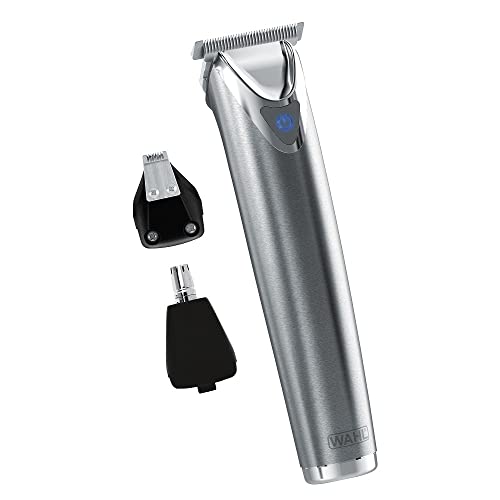
Choosing the right beard trimmer can transform your grooming routine. With so many options on the market, understanding key features like blade material, battery type, length settings, waterproofing, and ergonomics helps you pick a trimmer that fits your beard type and habits. Our editorial team compared specifications, buyer feedback and key decision factors to create this guide.
Blade Material
The blade material directly affects cutting performance, sharpness, and longevity. Common materials include stainless steel, titanium coated steel, and ceramic.
- Stainless steel: Durable, rust resistant, and easy to sharpen. Most budget to mid range trimmers use stainless steel. It works well for normal beards but may dull faster on thick hair.
- Titanium coated: Titanium coating on steel blades adds hardness and reduces friction. These blades stay sharper longer and cut smoothly through coarse hair. They are ideal for thick or dense beards.
- Ceramic: Ceramic blades are extremely sharp and stay sharp for a long time. They run cooler and are hypoallergenic. However, they are more brittle and can break if dropped. Best for sensitive skin or very thick beards.
For most users, titanium coated blades offer a good balance of durability and performance. If you have a thick beard, consider ceramic or titanium.
Battery Type
Battery technology determines runtime, charging time, and overall convenience. The main types are nickel metal hydride (NiMH) and lithium ion (Li ion).
- Lithium ion (Li ion): These batteries charge faster, hold charge longer, and have no memory effect. They provide consistent power until depleted. Most premium trimmers use Li ion. Look for at least 60 minutes of runtime.
- Nickel metal hydride (NiMH): Older technology, slower charging, and shorter lifespan. Some budget trimmers still use NiMH. They are acceptable if you trim infrequently but less reliable for daily use.
Cordless trimmers are standard today. A lithium ion battery with quick charge capability (e.g., 5 minutes for a full trim) is a great feature. Always check the current price on Amazon for models with long battery life.
Length Settings and Precision
Length settings determine how short or long you can trim. They come in two forms: adjustable dial combs and fixed guide combs.
- Adjustable dial: A single dial lets you select from 10 to 20 different lengths, often from 0.5 mm to 20 mm. This offers fine control and is convenient for fading.
- Fixed guide combs: Multiple snap on combs with specific lengths (e.g., 3 mm, 6 mm, 9 mm). They are simpler but less precise. Good for beginners.
For short beards (stubble to 10 mm), a trimmer with 0.5 mm increments is ideal. For long beards (10 mm to 20 mm or more), look for a trimmer that includes longer combs or has an extended range. Some trimmers also feature a precision dial for detail work around edges.
Waterproofing and Cleaning
Waterproofing is rated by IPX (Ingress Protection) standards. An IPX7 rating means the trimmer can be submerged in 1 meter of water for 30 minutes. IPX6 is splash proof.
- Wet/dry use: A waterproof trimmer can be used with shaving cream or gel in the shower. It makes cleaning easy: just rinse under the tap.
- Dry only: Non waterproof trimmers require careful cleaning with a brush. Hair clippings can accumulate and affect performance.
If you value convenience and want to trim in the shower, choose an IPX7 rated trimmer. For dry trimming only, a splash proof model may suffice. Self cleaning stations are available on some premium models but add cost.
Ergonomics and Build Quality
Ergonomics affect comfort and control during trimming. Key factors include grip, weight, and handle design.
- Rubberized grip: Provides a secure hold even when wet. Look for textured or silicone inserts.
- Weight and balance: A trimmer that is too heavy can cause fatigue. Lightweight models (under 200 g) are easier to maneuver. Balanced weight distribution prevents wrist strain.
- Shape: Curved or contoured handles fit the hand naturally. Some trimmers have a T shape or a straight body. Choose what feels comfortable.
- Build materials: Metal bodies (aluminum or stainless steel) are more durable than plastic. However, plastic trimmers are lighter and often cheaper.
Test the grip if possible. A trimmer that slips can cause uneven cuts or nicks. Look for models with a low center of gravity for better control.
Matching Features to Your Beard Type
Different beard types and grooming habits require different features. Use this guide to narrow down your choice.
Short Beard or Stubble (1 to 5 mm)
- Prioritize precision: fine length increments (0.5 mm) and a narrow blade for detail.
- A compact trimmer with a short blade works best. Waterproofing is optional but helpful for cleaning.
- Battery life less critical if you trim quickly.
Medium Beard (5 to 15 mm)
- Look for a trimmer with a wide range of length settings (at least 10 options).
- A titanium or steel blade handles moderate thickness. A powerful motor (over 6000 RPM) prevents pulling.
- Ergonomics matter for longer grooming sessions.
Long or Thick Beard (15 mm and above)
- Choose a trimmer with high quality blades (titanium or ceramic) and a strong motor.
- Longer guide combs (up to 20 mm or more) are essential. Some trimmers offer a dedicated long beard comb.
- Lithium ion battery with long runtime (90+ minutes) is recommended.
- Waterproofing helps clean trapped hair.
Frequent Travelers
- Compact, cordless, and lightweight. Look for a travel lock and a charging stand.
- Battery should hold charge for at least two weeks of use.
- Consider a trimmer with a storage case.
By matching these factors to your beard type and routine, you can find a trimmer that delivers consistent results. Always check the current price on Amazon for the models that fit your needs.