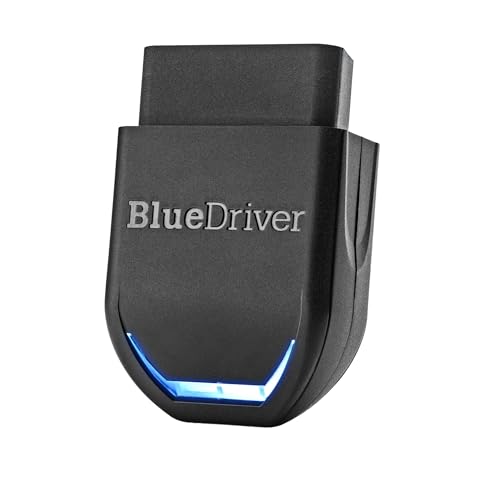
An OBD2 scanner is a device that connects to your vehicle's onboard diagnostics system to read data, identify problems, and help you understand what's happening under the hood. Whether you're a DIY mechanic or just want to know why your check engine light is on, an OBD2 scanner is an essential tool. Our editorial team compared specifications, buyer feedback and key decision factors to bring you this guide.
What Is OBD2?
OBD2 stands for On-Board Diagnostics, generation 2. It is a standardized system that allows external electronics to interface with a vehicle's computer. The system was introduced in the mid-1990s to monitor emissions and engine performance. All cars sold in the United States since 1996 are required to have an OBD2 port, usually located under the dashboard near the steering wheel. The port has 16 pins and uses a standard communication protocol. OBD2 replaced earlier proprietary systems, making it easier for mechanics and car owners to diagnose issues across different brands.
The system continuously monitors sensors and components related to emissions, engine, transmission, and other critical systems. When something goes wrong, the system stores a diagnostic trouble code (DTC) and may illuminate the check engine light. An OBD2 scanner reads these codes and provides information to help you fix the problem.
How an OBD2 Scanner Communicates with the ECU
The ECU, or Engine Control Unit, is the car's main computer. It receives data from sensors (oxygen sensors, mass airflow sensors, throttle position, etc.) and adjusts fuel injection, ignition timing, and other parameters. When you plug an OBD2 scanner into the diagnostic port, it sends a request for data using one of five standard protocols: SAE J1850 PWM, SAE J1850 VPW, ISO 9141-2, ISO 14230 KWP2000, or ISO 15765 CAN. The scanner and ECU then exchange information in a master-slave relationship: the scanner asks for specific data, and the ECU responds.
Most modern cars use the CAN (Controller Area Network) protocol because it is faster and more reliable. The scanner can request diagnostic trouble codes, freeze frame data (a snapshot of conditions when the fault occurred), live sensor data, and even perform tests like activating a fuel pump or cycling an EVAP system. Communication is bidirectional in advanced scanners, meaning you can send commands to the ECU to run tests or reset adaptations.
Bluetooth or Wi-Fi OBD2 scanners transmit this data to a smartphone or tablet, where an app interprets and displays the information. Wired scanners have a built-in screen or connect to a laptop via USB. The process is the same: the scanner acts as an interpreter between the car's computer and the user.
Common Uses of OBD2 Scanners
Check Engine Light Diagnostics
The most common use is diagnosing why the check engine light is on. When you plug in a scanner, it retrieves the stored trouble codes. For example, code P0420 indicates a catalytic converter efficiency below threshold. You can then look up the code to understand the issue and decide whether to fix it yourself or take it to a mechanic. Clearing the codes turns off the light, but if the problem persists, the light will return.
Emissions Readiness Monitoring
Before a vehicle emissions test, you can use an OBD2 scanner to check if all monitors (catalyst, oxygen sensor, EGR, etc.) are ready. If any monitor is incomplete, the car may fail the test. The scanner shows which monitors are ready or not, helping you prepare.
Live Data Monitoring
Advanced scanners display real-time sensor readings like engine RPM, coolant temperature, fuel trim, and oxygen sensor voltage. This helps diagnose intermittent issues or verify that a repair fixed the problem. For example, watching oxygen sensor readings can reveal a failing sensor or a vacuum leak.
Vehicle Performance Tuning
Enthusiasts use OBD2 scanners to log performance data during test drives. They can analyze acceleration, boost pressure (in turbo cars), and timing advance to tune their vehicles for better performance or fuel economy.
Types of OBD2 Scanners
Basic Code Readers
These are entry-level devices that read and clear diagnostic trouble codes. They usually have a small screen and simple buttons. They are affordable and perfect for the average car owner who just wants to know why the check engine light is on. They do not show live data or advanced features.
Bluetooth or Wi-Fi Scanners
These small adapters plug into the OBD2 port and connect wirelessly to a smartphone or tablet. They rely on apps like Torque, OBD Fusion, or Car Scanner to display data. They offer live data, graphing, and code lookup for a fraction of the cost of professional tools. However, the app quality varies, and some features may require in-app purchases.
Professional or Advanced Scanners
These are used by mechanics and serious DIYers. They have large color screens, can read manufacturer-specific codes, perform bi-directional tests (like opening a valve or turning on a fan), and access all modules (ABS, airbag, transmission). They support advanced functions like key programming, injector coding, and regeneration of diesel particulate filters. Brands like Autel, Launch, and Snap-on dominate this category. They are more expensive but offer comprehensive capabilities.
OBD2 Dongles with Telematics
Some devices, like those from Automatic or Mojio, plug into the OBD2 port and use cellular data to send vehicle information to a cloud service. They offer features like trip tracking, vehicle health alerts, and location tracking. These are less about diagnostics and more about connectivity and fleet management.
How to Choose the Right OBD2 Scanner
Consider your needs. If you only want to read and clear check engine light codes, a basic code reader will suffice. If you want to see live data and graph sensor readings, a Bluetooth scanner with a good app is a great value. For professional use or if you work on multiple car brands, invest in a professional scanner with wide coverage and bi-directional control. Always check compatibility with your vehicle's protocol and model year. Read user reviews and compare features before buying. Check the current price on Amazon for the model you are interested in.