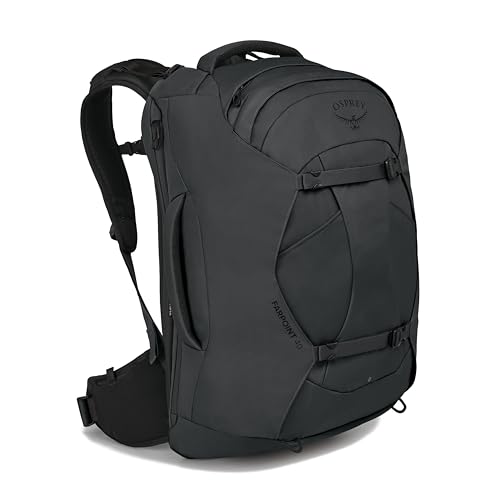
Choosing the right travel backpack can make or break your trip. Our editorial team compared specifications, buyer feedback and key decision factors across dozens of models. This guide breaks down the essential features: size, capacity, weight, harness, organization, materials, and security. By the end, you will know exactly what to look for and how to match a backpack to your travel style.
Size and Capacity
The first decision is size. For most travelers, a carry-on compliant backpack is ideal. It saves you from checked baggage fees and the risk of lost luggage. The standard carry-on limit is 22 x 14 x 9 inches (56 x 36 x 23 cm), but always verify with your airline. A backpack that fits these dimensions is usually 40 to 45 liters.
Capacity is measured in liters. Here is a general guide:
- 25 to 35 liters: Perfect for weekend trips or minimalist packing. These are often called daypacks or commuter backpacks, but many are travel-ready.
- 40 to 50 liters: The sweet spot for most travelers. Enough space for a week of clothes, toiletries, and electronics, while still fitting in the overhead bin.
- 60 liters and above: For long-term travel, camping, or those who need extra gear. These are usually too large for carry-on and must be checked.
Consider how you pack. If you use packing cubes, you can compress your clothes and fit more into a smaller pack. Some backpacks have expandable compartments that add a few liters when needed. That flexibility is a plus.
Weight and Harness System
An empty backpack's weight matters because you will carry it loaded. A heavy pack can add unnecessary strain. Look for a pack that weighs between 2 and 4 pounds (0.9 to 1.8 kg) for a 40 to 50 liter model. Ultralight options go under 2 pounds, but they may lack padding and support.
The harness system is critical for comfort. A good harness distributes weight across your hips and shoulders. Look for:
- Padded shoulder straps: Thick, contoured straps reduce pressure on your shoulders.
- Hip belt: A sturdy hip belt transfers weight to your hips, which are stronger than your shoulders. For loads over 20 pounds, a hip belt is essential.
- Adjustable sternum strap: This keeps the shoulder straps in place and prevents them from slipping.
- Back panel: A ventilated, padded back panel improves airflow and comfort. Some packs have an adjustable torso length to fit different body types.
Try on a loaded pack if possible. Walk around the store to test the fit. If you buy online, read reviews about harness comfort, as it varies by body shape.
Organization and Materials
Organization features save time and frustration. A travel backpack should have multiple compartments to separate your gear. Key features include:
- Main compartment: Large enough for clothes and gear. Some open like a suitcase (clamshell) for easy packing, while others are top-loading like a traditional hiking pack.
- Laptop sleeve: A padded, dedicated sleeve protects your computer. Check the size limit to ensure it fits your laptop.
- Pockets and organizers: Small pockets for pens, chargers, passport, and other essentials. Look for a quick-access pocket on the outside for items you need during transit.
- Water bottle pocket: A stretchy side pocket keeps a bottle within reach.
- Compression straps: These tighten the load and keep it stable.
Materials determine durability and weather resistance. Common fabrics include:
- Nylon: Strong and abrasion-resistant. Ripstop nylon has a reinforced grid that prevents tears from spreading.
- Polyester: Lighter and less expensive, but less durable than nylon. It is often coated with polyurethane (PU) for water resistance.
- Cordura: A brand of high-tenacity nylon that is extremely durable. It is used in premium backpacks.
Check the zippers. YKK zippers are a sign of quality. Look for zippers that are smooth and have sturdy pulls. Water-resistant zippers are a bonus, but a rain cover is more reliable.
Security and Travel Style
Security is a top concern for travelers. A backpack with anti-theft features gives you peace of mind. Look for:
- Lockable zippers: Two zipper pulls that can be secured with a small padlock.
- Hidden pockets: A secret pocket on the back panel or inside the pack for valuables like cash and passport.
- RFID-blocking pocket: Protects your credit cards from electronic pickpocketing.
- Cut-resistant straps: Some packs have steel cables in the straps to deter slash-and-grab theft.
Finally, match the backpack to your travel style. Are you a weekend city hopper or a long-term backpacker? Do you stay in hotels or hostels? Do you hike or stick to urban areas?
- Urban weekend traveler: Choose a 25 to 35 liter pack with a professional look, laptop sleeve, and easy access. A clamshell opening is convenient for hotel stays.
- Long-term traveler: Opt for a 40 to 50 liter pack with a sturdy harness, multiple compartments, and lockable zippers. Consider a pack with a detachable daypack for day trips.
- Outdoor adventurer: Look for a pack with a ventilated back panel, water bottle pockets, and attachment points for gear. A top-loading design is fine, but a hybrid with a front panel is easier to organize.
Remember, the best travel backpack is the one that fits your body and your itinerary. Use this guide to narrow down your options, then read reviews and check the current price on Amazon before making a decision.

