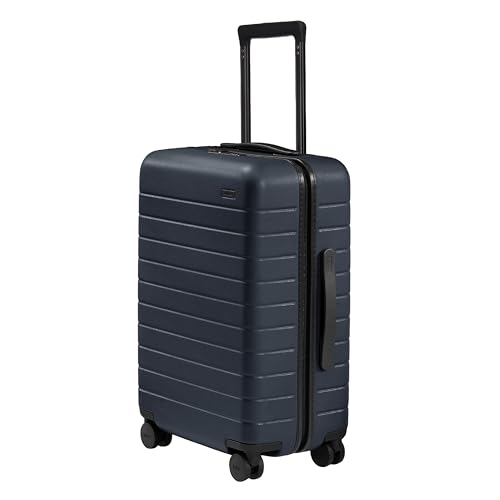
Measure your bag with wheels and handles, compare to your airline's exact limits, and pack using compression cubes to stay within size.
Why it happens
You arrive at the gate, ready to board, and the gate agent points to your carry-on. "That bag is too big," they say, and you are forced to gate-check it. This scenario happens to millions of travelers every year. The root cause is often a mismatch between the bag's advertised size and the airline's actual requirements. Many luggage brands list dimensions that exclude wheels or handles, or they measure the bag when empty and uncompressed. Airlines, on the other hand, use standardized sizers that include every protrusion. The result is a bag that looks compliant on paper but fails the test at the gate.
Another factor is the variation in size limits among airlines. A bag that fits fine on one carrier may be too large for another. For example, budget airlines like Spirit and Frontier have strict limits of 22 x 14 x 9 inches, while international carriers may allow up to 21.7 x 15.7 x 9.8 inches. If you travel with multiple airlines, you need a bag that meets the most restrictive limit, or you risk being caught out.
How to fix
Follow these steps to ensure your carry-on is never too big again.
- Measure your bag correctly. Use a tape measure and measure the length, width, and height of your bag, including wheels, handles, and any external pockets. Write down the measurements in inches and centimeters. Then, calculate the linear inches (length + width + height). Most airlines have a linear inch limit, typically 45 linear inches for carry-ons.
- Check your airline's specific size limits. Visit your airline's website or use a reliable source to find the exact carry-on dimensions. Write them down and compare them to your bag's measurements. Remember that limits can change, so always check before each trip.
- Test your bag in an airline sizer. Many airports have sizer bins near the check-in counters. Place your fully packed bag in the sizer to see if it fits. If it doesn't, you need to adjust your packing or get a smaller bag.
- Pack efficiently to minimize bulk. Use packing cubes to compress your clothes, roll your garments instead of folding, and wear your heaviest items on the plane. This helps keep your bag within size even when fully packed.
- Choose a compliant bag. If your current bag is too large, consider purchasing a new one that is specifically designed to meet the most common carry-on size limits. Look for bags that advertise "carry-on compliant" and check the dimensions carefully.
When to replace
If your bag consistently fails the sizer test, it is time to replace it. Also, if your bag is old, worn out, or has broken wheels, it may not fit properly. Look for a bag with a hard shell or soft-sided design that is slightly under the maximum limits to allow for expansion. Many reputable brands offer carry-ons that meet the strictest airline requirements, such as the Samsonite Omni PC Hardside Spinner or the Travelpro Maxlite 5. These bags are designed with wheels and handles included in the dimensions, so you can trust that they will fit.
When shopping for a new bag, always read the product specifications carefully. Look for the exact dimensions and compare them to the airlines you fly most often. Also, consider the weight of the bag itself, as some airlines have weight limits for carry-ons. A lightweight bag gives you more room for your belongings.
Airline-specific advice
Here are the carry-on size limits for some major airlines. Always verify on the airline's official website before you fly.
- American Airlines: 22 x 14 x 9 inches (56 x 36 x 23 cm). No weight limit for carry-on, but you must be able to lift it into the overhead bin.
- Delta Air Lines: 22 x 14 x 9 inches (56 x 36 x 23 cm). No weight limit, but must fit in the sizer.
- United Airlines: 22 x 14 x 9 inches (56 x 36 x 23 cm). No weight limit, but must fit in the sizer.
- Southwest Airlines: 24 x 16 x 10 inches (61 x 41 x 25 cm). No weight limit, but must fit in the sizer.
- Spirit Airlines: 22 x 14 x 9 inches (56 x 36 x 23 cm). No weight limit, but must fit in the sizer. Personal item is 18 x 14 x 8 inches.
- Frontier Airlines: 24 x 16 x 10 inches (61 x 41 x 25 cm) for carry-on, but personal item is 18 x 14 x 8 inches. Note that Frontier charges for carry-on, so check the price.
- JetBlue: 22 x 14 x 9 inches (56 x 36 x 23 cm). No weight limit, but must fit in the sizer.
- Alaska Airlines: 22 x 14 x 9 inches (56 x 36 x 23 cm). No weight limit, but must fit in the sizer.
- International carriers like Lufthansa, British Airways, and Air France: Typically 21.7 x 15.7 x 9.8 inches (55 x 40 x 23 cm). Some may have weight limits, so check.
Remember that these limits are subject to change, and some airlines may have different rules for basic economy fares. Always check your specific flight details.
Final tips
To avoid gate-checking, always measure your bag before you leave home, and re-measure after packing. Keep a tape measure in your bag for quick checks. If you are unsure, use the airline sizer at the airport before you go through security. And if you are flying on a small regional jet, your carry-on may need to be smaller even if it meets the standard size, because overhead bins are smaller. In that case, be prepared to gate-check your bag voluntarily, but at least you can do it on your terms.
By following these tips, you can travel with confidence, knowing your carry-on will fit in the overhead bin every time. No more last-minute gate-check surprises.
