Self Watering Plant Pots
Best Self Watering Plant Pots for Thirsty Houseplants
7 picks compared
8 min read
ProductPickly is reader-supported. When you buy through links on our site, we may earn an affiliate commission at no extra cost to you. It never changes our picks.
The short answerFor most homes the Goproauto 4 pack is the self watering pot set to start with, because it pairs a deep reservoir with a water level indicator so you can see when to refill, and the four sizes from 6 to 12 inches cover small and large plants at once. If your plants are big floor pieces, the KUGAZ 3 pack in 8 to 12 inch sizes carries the same indicator and a deeper tank. For a matched pair of medium plants the Fielda 8 inch set works well, while the Tinecio 5 pack and YNNICO 6 pack kit out a whole shelf of small to medium plants, the latter with saucers to catch runoff. The Melphoe 2 pack suits small thirsty plants like African violets, and the QRRICA 5 pack fills the mid to large size gap. Choose by plant size, whether you want a visible water gauge, and remember these pots are for moisture loving plants: succulents and cacti will rot in constantly damp soil, so leave the reservoir empty and use the drainage holes for those.
?How we pickedWe compare published specifications, safety certifications and thousands of verified owner reviews, and we do not physically test every unit. Read the full process in our review methodology.
Goproauto Self-Watering Pots 4 Pack, 6/8/10/12 Inch with Water Level Indicator
★★★★★ 4.6 / 5 Editor's pick
This set is the one we point most people to because it pairs a deep bottom reservoir with a float style water level indicator, so you can see when the tank is empty instead of guessing. The four graduated sizes from 6 to 12 inches also cover a whole windowsill lineup and a couple of floor plants from a single box.
Sizes 6, 8, 10, 12 inReservoir Deep bottom tankIndicator Water level floatBest use Indoor and outdoor
- Water level float shows when to refill
- Four sizes fit small to large plants
- Deep reservoir stretches time between fills
- Larger pots are bulky on a narrow sill
- Decorative finish is plastic, not ceramic
Best for: a mixed collection where you want a visible water gauge
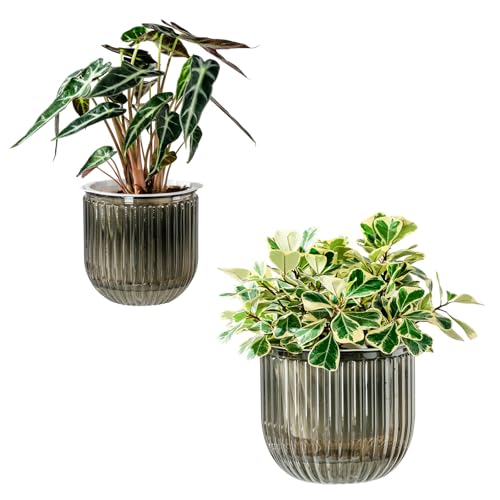
Fielda Self-Watering Planters 2 Pack, 8 Inch Indoor Pots
★★★★★ 4.5 / 5 Best mid-size indoor pair
Two matching 8 inch pots is a tidy pick for a pair of medium houseplants like a pothos or a peace lily that share a shelf. The reservoir sits under a lift out inner pot, so you water into the base and the soil wicks it up rather than the roots sitting in a puddle.
Size 8 in, 2 potsReservoir Under inner potWatering Fill the baseBest use Medium houseplants
- Matched pair suits a shelf or pair of plants
- Lift out inner pot makes refilling simple
- 8 inch size holds most medium plants
- Only one size in the pack
- No external water level window
Best for: a couple of medium indoor plants on the same shelf
KUGAZ Self Watering Pots 3 Pack, 12/10/8 Inch with Water Level Indicator
★★★★★ 4.5 / 5 Best for larger plants
The 12, 10 and 8 inch trio leans toward bigger plants, so it suits a floor standing fiddle leaf, a monstera or a large fern that drink more between fills. It carries the same water level indicator idea as our top pick and a deep reservoir, plus drainage holes so you can let excess run out if you overfill.
Sizes 8, 10, 12 inReservoir Deep with drainIndicator Water level floatBest use Large floor plants
- Bigger sizes for floor and statement plants
- Level indicator and deep reservoir
- Drainage holes prevent waterlogging
- Smallest pot is still 8 inches
- Large pots are heavy once filled
Best for: big floor plants that empty a reservoir quickly
Tinecio Self Watering Pots 5 Pack, 5 to 7 Inch with Mesh Drainage
★★★★★ 4.4 / 5 Best nested set
Five nested pots from 5 to 7 inches make this the set to grab when you are potting up a row of small to medium plants at once and want them to match. The multi mesh drainage holes and deep reservoir aim to wick water up steadily while still letting a heavy overfill escape rather than pooling.
Sizes 5, 5.5, 6, 6.5, 7 inReservoir Deep with meshDrainage Multi mesh holesBest use Small to medium plants
- Five graduated sizes in one box
- Mesh drainage helps wick and vent water
- Matching white finish for a tidy set
- All sizes are on the smaller side
- No external water level window
Best for: potting up several small plants in a matching set
Melphoe Self Watering Pots 2 Pack, 5.3 and 8.3 Inch with Drainage
★★★★★ 4.4 / 5 Best for small plants
One small 5.3 inch and one larger 8.3 inch pot cover a starter plant and a step up size in the same style. The listing points these at African violets and similar thirsty small plants, and the drainage design lets you skip the wicking and empty the base for succulents that hate constant moisture.
Sizes 5.3 and 8.3 inReservoir Base tankDrainage Yes, can run dryBest use Small thirsty plants
- Two sizes for a starter and a step up
- Drainage lets you run drier for succulents
- Well suited to African violets and small plants
- Only two pots in the pack
- Larger size still modest for floor plants
Best for: African violets and small thirsty houseplants
YNNICO Self Watering Planters 6 Pack, 5 to 8 Inch with Saucers
★★★★★ 4.4 / 5 Best value multipack
Six pots in graduated sizes with matching saucers is the pick when you have a whole shelf of plants to re home and want them all to match without buying several boxes. The saucers catch any runoff from the drainage holes, which helps on furniture where a leaking base would be a problem.
Sizes 5, 5.5, 6, 6.5, 7, 8 inReservoir With drainageExtras Matching saucersBest use A full shelf of plants
- Six sizes cover a whole collection
- Saucers catch runoff on furniture
- Drainage holes guard against overwatering
- No external water level indicator
- Largest pot tops out at 8 inches
Best for: kitting out a whole shelf of plants at once
QRRICA Self Watering Pots 5 Pack, 7 to 10 Inch Indoor Outdoor
★★★★★ 4.5 / 5 Best mid to large set
The 7 to 10 inch spread fills the gap between the small nested sets and the big floor pots, so it suits medium plants that have outgrown a starter pot. Five to a pack makes it a reasonable buy if you are moving several maturing plants up a size and want them to look consistent indoors or on a patio.
Sizes 7, 7.5, 8, 9, 10 inReservoir Bottom tankWatering Fill the baseBest use Medium plants, in or out
- Fills the mid to large size gap
- Five pots for a group of plants
- Works indoors or on a patio
- No external water level window
- Sizes overlap with smaller sets
Best for: medium plants that have outgrown a starter pot
A self watering pot keeps a reservoir of water in a base tank below the soil, and the plant draws that water up through a wick or the bottom of the soil as the roots need it. The practical payoff is even moisture and far fewer waterings, since you top up the reservoir every several days instead of watering the surface daily. That suits thirsty, moisture loving houseplants, but it is worth being clear from the start that it is the wrong home for succulents and cacti, which rot in constantly damp soil. The picks below range from small nested sets to large floor pots, some with a visible water level indicator, so you can match one to your plants.
How the wicking reservoir actually works
Inside a self watering pot there are two chambers: the soil above and a water reservoir below. The link between them is capillary action, the same effect that pulls water up a paper towel. Either a fabric or plastic wick dips from the soil into the reservoir, or the base of the soil column sits in contact with the water, and moisture climbs upward into the root zone as the soil dries. Because the plant only takes what it can wick, the soil stays evenly damp rather than swinging from soaked to dry. You refill the reservoir through a fill spout or the gap at the rim, and on pots like the Goproauto and KUGAZ sets a float indicator shows how much water is left so you are not guessing.
Indoor versus outdoor, and choosing a size
Most of these pots work in either place, but the setting changes what matters. Indoors, the priority is a saucer or reliable seal so a full reservoir never leaks onto furniture, which is why the YNNICO set ships with matching saucers. Outdoors, working drainage is the priority, because rain can overfill the reservoir and drown the roots, so you want holes that let the excess escape. For size, match the pot to the plant. A root ball wants roughly an inch or two of room around it, no more, since a pot that is too large holds a big volume of wet soil the small root system cannot use. The graduated sets here, from the 5 to 7 inch Tinecio pots up to the 8 to 12 inch KUGAZ trio, let you step a plant up one size at a time as it grows.
Water level indicators and how to use them
A water level indicator is a small float that rises and falls with the reservoir and reads through a window or a gauge on the side of the pot. It sounds minor, but it removes the single most common self watering mistake, which is refilling a reservoir that is still full and leaving the soil permanently sodden. The Goproauto and KUGAZ pots build this in. The habit that works best is to let the indicator drop to empty, then wait a day or two before refilling, which gives the lower soil a chance to breathe. On pots without an indicator, such as the Fielda and Tinecio sets, you can lift the inner pot or use a wooden skewer in the soil to check before topping up.
Which plants suit self watering, and which do not
Self watering pots are built for plants that like steady, even moisture, and that describes a lot of popular houseplants: pothos, peace lilies, ferns, spider plants, calatheas and African violets all do well when the soil never fully dries out. Fast growing leafy plants that drink heavily also benefit from the longer gap between fills. The important honest caveat is the opposite case. Succulents, cacti and other drought adapted plants are built to dry out completely between waterings, and sitting in constantly moist soil is the quickest way to rot their roots. If you want to use one of these pots for a succulent, leave the reservoir empty and rely on the drainage holes, treating it as an ordinary draining pot rather than a self watering one. Pairing a light, free draining mix with the right plant is what keeps a self watering pot healthy rather than waterlogged.
Questions people ask
How does a self watering pot actually work?
A self watering pot holds a reservoir of water in a base tank, separate from the soil above it. A wick, or the bottom of the soil column itself, sits in that water and draws it upward by capillary action, so the roots pull moisture as they need it rather than all at once. You top the reservoir up every so often instead of watering the surface daily, and the soil stays evenly damp in between.
Do self watering pots mean I never have to water again?
No. You still refill the reservoir, just less often, and how long a fill lasts depends on the plant, the pot size and the room. A small pot on a warm windowsill can empty in a few days, while a large reservoir on a slow grower can go a week or more. The point is even moisture and fewer waterings, not zero care, so check the level regularly until you learn each plant's pace.
What does the water level indicator do?
On pots like the Goproauto and KUGAZ sets, a float rises and falls with the water in the reservoir and shows through a small window or gauge, so you can see at a glance whether the tank is full or dry. It takes the guesswork out of refilling and helps you avoid topping up a reservoir that is still full, which is the main way self watering pots get overfilled.
Which plants suit self watering pots best?
Plants that like steady, even moisture do best, which covers a lot of common houseplants such as pothos, peace lilies, ferns, spider plants and African violets. These are the plants that suffer when the soil swings from bone dry to soaked, so a reservoir that keeps things consistently damp suits them well. Fast growing leafy plants that drink a lot also benefit from the longer gap between fills.
Can I put succulents or cacti in a self watering pot?
It is best to avoid it, or to use the pot without the reservoir. Succulents and cacti are adapted to dry out fully between waterings, and constantly moist soil is the fastest way to rot their roots. Several of the pots here, such as the Melphoe and YNNICO sets, have drainage holes, so you can leave the reservoir empty and treat them as ordinary draining pots for these plants.
Do self watering pots cause root rot?
They can if they are misused, but a well designed one is meant to prevent it by wicking water up rather than leaving roots submerged. Problems come from overfilling, using a heavy soil that stays sodden, or putting a drought loving plant in one. Using a light, free draining potting mix, letting the reservoir empty before you refill, and matching the plant to the pot keeps the risk low.
Indoor or outdoor, and what size should I pick?
Most of these pots work indoors or outdoors, though outdoor pots in rain need working drainage so the reservoir does not overflow and drown the roots. For size, match the pot to the plant's current root ball plus a little room to grow, roughly an inch or two wider. The graduated sets here let you step a plant up a size at a time rather than jumping straight to a pot that is too big.
How did we choose these self watering plant pots?
We compared reservoir depth and design, whether there is a water level indicator, the range of sizes in each pack, drainage, and the job each set suits, from small windowsill plants to large floor plants. Every product shown is a real listing, and these are our chosen picks based on those listings and their described features rather than any hands on testing claim.
The bottom lineSo which one?
The Goproauto 4 pack is our top choice for most homes, since the deep reservoir and water level indicator take the guesswork out of refilling and the 6 to 12 inch sizes suit a mixed collection. Step up to the KUGAZ 3 pack for large floor plants, reach for the Fielda 8 inch pair for a couple of medium plants, and pick the Tinecio 5 pack or YNNICO 6 pack with saucers to fit out a whole shelf. The Melphoe 2 pack suits small thirsty plants like African violets, and the QRRICA 5 pack covers the mid to large gap. Let plant size and whether you want a visible gauge lead the choice, and keep succulents and cacti out of a filled reservoir, since constantly wet soil rots their roots. Treat every pick here as our chosen recommendation based on its listing rather than a hands on test.