If you want one 240V electric tankless water heater to start with, our pick is the Rheem RTEX-24, a 24kW unit that stands out for feeding a full bathroom or a small home where the incoming water is not extremely cold. If your electrical panel has limited spare capacity, or you only need to supply a single sink or one shower, a 14kW model like the ORBEK is the more realistic choice. The right pick depends far more on your breaker capacity and how cold your incoming water is than on the brand printed on the box, so size the electrical load first and the shopping gets simple.
The short answer
For most people replacing a tank heater or adding whole bathroom hot water, we would choose the Rheem RTEX-24. Its listed 24kW rating gives more headroom to hold a usable temperature when two fixtures run at once, and Rheem is a long established plumbing brand with a large installed base, which makes parts and local service easier to find. The trade off is electrical: a 24kW unit at 240V pulls a large current, so it is only the right pick if your panel and wiring can actually carry it. If they cannot, do not force it. A 14kW unit such as the ORBEK or the gray sink and shower model is the honest choice for a single point of use, and it is far cheaper to wire. There is no universal best here; there is only the best match for your panel, your climate, and the number of taps you need to run at the same time.
When each pick is better
Rheem RTEX-24 (24kW): the all rounder. This is the one we would reach for when the unit has to serve more than a single tap, or when you live somewhere the groundwater runs cold in winter and you need the extra kilowatts just to keep the output warm. It asks the most of your electrical service in return.
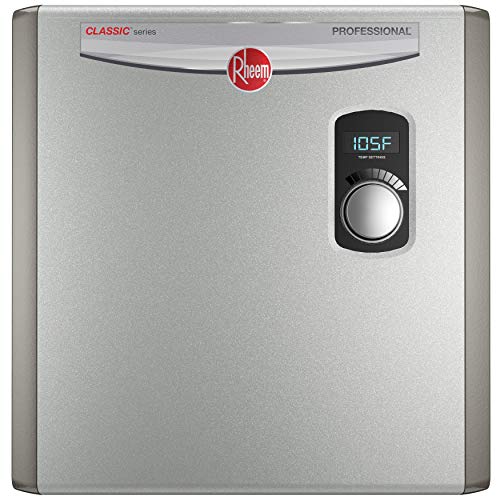
Rheem RTEX-24 24kW 240V Electric Tankless Water Heater
Our pick for whole bathroom or small home use. The listing rates it at 24kW, which gives more temperature headroom than the 14kW units, but it also draws the most current, so confirm your panel and wiring can handle it before you buy.
Check price on AmazonORBEK 14kW On Demand Heater (14kW, listed at 3.38 GPM): the point of use pick. A 14kW model is a sensible match for one sink, one shower, a cabin, a garage utility sink, or a remote bathroom far from the main heater. It draws roughly half the current of the 24kW Rheem, which usually means a smaller breaker and lighter wire, so the install is simpler and less costly. Treat the 3.38 GPM figure as the maker listing claim at an ideal temperature rise, not a guarantee in freezing weather.
the 14kW gray sink and shower model: the budget single fixture alternative. If you just need dedicated hot water at one location and the Rheem is more unit than you want to wire, this second 14kW option covers the same point of use job. We would decide between the two 14kW units on warranty, return policy, and the clarity of the installation manual rather than on the headline wattage, since both share the same listed 14kW rating.
What actually matters (and what to ignore)
The single most important number is not flow rate; it is the electrical load, because that is what decides whether the unit is even installable in your home.
Kilowatts, amps, breaker, and wire gauge. Watts divided by volts equals amps, so a 24kW unit at 240V draws roughly 100 amps of current, and a 14kW unit draws roughly 58 amps. Those are large loads. A 24kW heater commonly needs multiple double pole breakers and heavy gauge copper, and the heater plus everything else in the house has to fit inside your main panel rating. A 14kW unit is easier, but it still needs its own properly sized dedicated circuit. Do not guess the breaker size or wire gauge from a forum post. The correct breaker and wire gauge come from the unit manual and your local electrical code, sized by a licensed electrician for your exact panel.
Flow rate versus incoming water temperature. A tankless heater does not store hot water; it raises the temperature of water as it flows through, so its real output is a temperature rise at a given flow. The colder your incoming water, the fewer gallons per minute the same unit can heat to a comfortable shower temperature. A rating that looks generous in a warm climate can feel weak in a cold northern winter. So read any GPM number as a listing claim tied to ideal conditions, and mentally derate it for your coldest month before you decide a unit is big enough.
Install and permits. These are hardwired 240V appliances that also carry pressurized plumbing, so a mistake can mean electrical shock, fire, or water damage. Follow the maker instructions, wear appropriate protection, and check your local codes and permit requirements, which in many areas mean the electrical and plumbing work must be done or signed off by a licensed electrician and a licensed plumber. Permits are not red tape here; they are the step that gets an inspector to confirm the circuit and the water connections are safe.
What to ignore. Ignore phrases like endless hot water and the single biggest peak GPM number on the box. Those describe a best case at an easy temperature rise. Ignore the brand halo too: a famous name does not shrink the amperage the unit needs. Focus on wattage you can actually power and the temperature rise you need in winter.
How the three compare
All three are 240V electric tankless units, so they share the same basic concept and the same install discipline. The split is simply capacity. The Rheem RTEX-24 sits at a listed 24kW, so it is the one aimed at serving more than one fixture or at colder incoming water, at the cost of the heaviest electrical demand. The ORBEK and the gray sink and shower unit are both listed at 14kW, which positions them as point of use heaters for a single tap or a small space, with a noticeably lighter wiring job. Between the two 14kW models, the ORBEK listing calls out a 3.38 GPM figure, while the differences that will actually matter to you are warranty length, the quality of the install manual, and how the seller handles returns if a unit arrives faulty. None of the three will behave like a storage tank, and none of them will overcome a panel that cannot supply the amps, so compare them against your own electrical headroom first and against each other second.
Our honest verdict
If your panel can carry it, the Rheem RTEX-24 is our pick, because the extra kilowatts and the established brand support give you the most flexibility across seasons and fixtures. If your electrical service is tight, or you only need hot water at one sink or shower, a 14kW unit like the ORBEK is the smarter and cheaper answer, and there is no shame in sizing down to what you can safely power. Whatever you choose, treat every kW and GPM number as a maker listing claim, size the circuit with a licensed electrician, and pull the permits. For the full category, see our tankless water heater guides, and if you are weighing other formats, compare electric water heaters or look at water timers for controlling an existing system. Buy the unit your home can run safely, not the biggest number on the shelf.