Garden soil work is easier when the tool fits the job and your hands. The products in this roundup are small garden soil tools, and they are not all rakes. The set is a mix of hand rakes, hand cultivators, and stirrup or scuffle hoes. Each one is built for loosening soil, weeding, or cultivating in beds, borders, raised beds, and containers, and we have grouped them by what they actually do so you can match a tool to the task in front of you rather than to a label.
If you garden in tight spaces, a short handheld rake or claw cultivator gives you close control around plants. If you fight surface weeds across a larger bed, a loop or stirrup hoe on a longer handle lets you work standing up. Below are our picks, each chosen for a clear role, followed by a plain guide to choosing the right garden hand tool and a short note on safe use.
How we chose these garden hand tools
These picks are editorial selections based on current Amazon listings. We did not garden with these tools ourselves, so nothing here is a hands-on result. Instead we compared the listed tool type, the described head material and tine or blade design, the stated handle length and grip, and how each design matches common tasks such as weeding, loosening, and leveling. Claims about heavy-duty construction, steel strength, and rust resistance are listing claims from the makers, not measurements of ours. We looked for a sensible spread so that a hand rake, a cultivator, a scuffle hoe, a stirrup hoe, an ergonomic option, and a value pick are all represented, letting you pick by task and by budget rather than by brand alone.
Our top picks
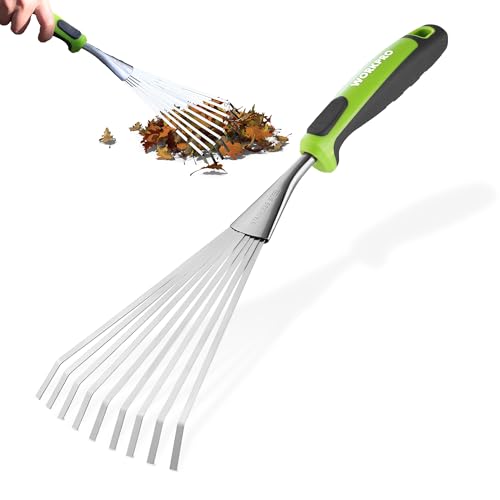
WORKPRO 16 inch Hand Rake, Soft Handle (Top Pick, Best Hand Rake)
Our top pick is a straightforward short-handle hand rake. At about 16 inches overall it is sized for close work, so you can rake, level, and clear debris right up against plants without swinging a full-size leaf or bow rake. The soft-grip handle is the headline feature here, aimed at comfort during repeated strokes. It is a single-purpose rake rather than a combo tool, which is exactly why it earns the top spot: it does one thing cleanly. The trade-off is reach, since a short handle means kneeling or bending for ground-level beds.
Hand Cultivator Claw Tool with Ergonomic Handle (Best Hand Cultivator)
This handheld cultivator uses curved claw tines to break into compact soil, pull shallow weeds, and cultivate around established plants. It is described as a heavy-duty hand cultivator with an ergonomic handle, and its small size makes it well suited to containers and raised beds where a long tool is awkward. Because it is handheld, the working width is narrow and the reach is short, so it is a precision tool for close cultivating rather than a bed-clearing hoe.
Scuffle Loop Action Hoe, Long Handle (Best Scuffle Hoe for Weeding)
For surface weeding across a bed, this loop-action scuffle hoe is the pick. The loop blade is designed to slice weeds at or just below the soil surface on both the push and the pull stroke, which makes quick work of young weeds between rows. The long handle, listed around 62 inches, lets you work standing up and cover more ground. It is a surface weeder, not a digging tool, and the long handle is less suited to tight container work.
Ihomepark Stirrup Hoe with Adjustable Handle (Best Stirrup Hoe)
This stirrup hoe stands out for its adjustable handle, listed from roughly 30 to 62 inches, so one tool can suit different heights and switch between standing weeding and closer cultivating. The stirrup blade rocks back and forth to cut weeds on the push and pull, and the listing pairs it with rake and tiller functions for loosening soil. The adjustable joints add parts to keep clean and tight over time, and like other stirrup hoes it is a surface tool rather than one for deep soil breaking.
Garden Guru Hand Rake and Soil Tiller, Ergonomic Handle (Best Ergonomic Handle)
If grip comfort is your priority, this handheld hand rake and soil tiller is built around an ergonomic handle, with a head the maker lists as strong carbon steel and rust resistant. It is pitched as a versatile tool for cultivating, loosening soil, spreading mulch, and raking flower beds, so it covers several close-up jobs with one head. The strength and rust-resistance claims come from the listing, and as a handheld tool its reach is short, so plan on working close to the ground.
WORKPRO Hoe and Cultivator with 14 inch Wooden Handle (Best Value)
Our value pick is a compact two-in-one with a hoe blade on one side and cultivator tines on the other, mounted on a short wooden handle of about 14 inches. Two heads in one tool make it a flexible choice for chopping weeds and loosening soil in raised beds and tight borders, and the short handle gives close control. The flip side is that a short handle means working low to the ground, and a wooden handle is best kept dry and stored indoors to last.
How to choose a garden hand tool
Hand rake vs cultivator vs scuffle hoe. A hand rake has short tines for leveling soil, clearing debris, and smoothing beds. A cultivator, often a claw, has curved tines that dig in to break and aerate compact soil and uproot shallow weeds around plants. A scuffle or stirrup hoe has a blade, usually a loop or stirrup shape, that slices weeds at the surface as you push and pull. Matching the tool shape to the task is the single biggest decision, so start by asking whether you mainly level, loosen, or weed.
Head material and tines. Most of these tools list metal heads, with some calling out carbon steel and rust resistance. Those are listing claims, but in general a solid one-piece or well-riveted metal head holds up better than a flimsy one, and the number and curve of the tines affect how aggressively a cultivator bites into soil. For hoes, a sharp, thin blade cuts weeds more cleanly than a thick, dull one.
Handle length and grip. Short handles, in the 14 to 16 inch range, give close control for containers, raised beds, and detailed work, at the cost of needing to kneel or bend. Long handles, in the 60 inch range, let you weed and cultivate standing up across bigger beds but are clumsy in tight spots. An adjustable handle splits the difference. Soft or ergonomic grips reduce hand fatigue during long sessions and are worth prioritizing if you garden for long stretches.
Soil type and task. Loose, worked soil responds well to light hand rakes and cultivators. Heavier or compacted soil needs a cultivator with strong curved tines to break it up. For weeding, a scuffle or stirrup hoe is usually faster than hand-pulling across an open bed, while a claw cultivator is better for picking weeds out from among plants. Think about whether you are weeding, loosening, or leveling before you choose.
Durability and care. Durability claims such as heavy-duty and steel are listed by the makers rather than measured here, so treat them as a guide, not a guarantee. Whatever you choose, the care routine is similar: knock off soil after use, rinse and dry metal heads to limit rust, keep edges clean, and store wooden handles somewhere dry. A little upkeep goes a long way toward making any of these tools last.
A note on safe use
Follow the maker's instructions for each tool, including any guidance on assembling adjustable handles and tightening fasteners before use. Wear sturdy gloves when weeding and cultivating to protect your hands from blades, tines, thorns, and grit, and keep hands and feet clear of the working head. These are hand tools for soil work, not pry bars, so use them for their intended tasks to avoid bending heads or snapping handles.
The bottom line
There is no single best garden hand tool, because a rake, a cultivator, and a hoe each do a different job. If you want one clean all-purpose rake for close work, the WORKPRO 16 inch hand rake is our top pick. For digging in and cultivating around plants, the claw hand cultivator is the one to reach for, while the loop scuffle hoe and adjustable stirrup hoe handle surface weeding across larger beds. Prioritize the ergonomic Garden Guru rake if grip comfort matters most, and the two-in-one WORKPRO hoe and cultivator if you want flexibility in a compact package. Match the tool to your soil and your task, wear gloves, and keep the heads clean, and any of these can earn a spot in the shed.