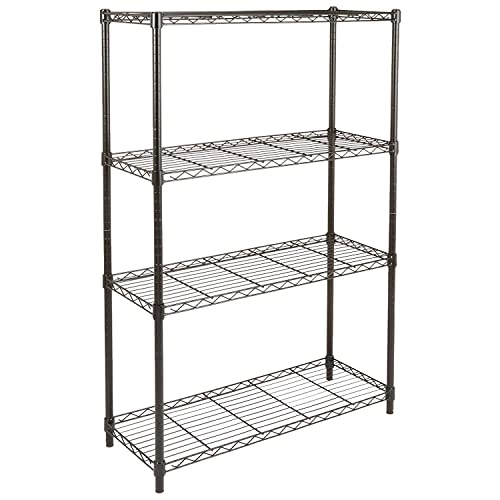
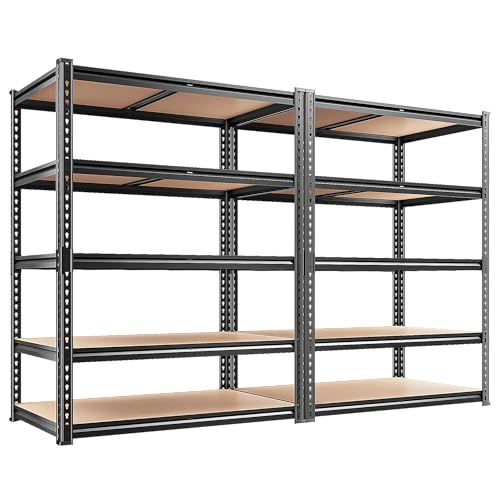
If you want garage shelving that disappears into the background and simply holds your gear season after season, the Amazon Basics 4-Shelf Steel Wire Shelving Rack is the unit we point most people to first. It goes together without tools, carries a strong load on every shelf, and its open wire design keeps dust and damp from settling the way they do on solid boards. The six picks that follow cover the rest of the garage, from a light plastic organizer for small parts to industrial steel racks built for engine components, full paint cans, and heavy power tools.
Garage shelving that earns its floor space
A garage is where weight goes to live. Bags of soil, boxes of holiday decorations, car fluids, cordless tool kits, and the overflow from every other room all end up stacked against the wall, and flimsy shelving gives out exactly when it is loaded hardest. Good garage shelving solves two problems at once. It lifts clutter off a floor you want for parking or projects, and it holds serious weight without sagging, racking, or tipping.
The units in this guide range widely on purpose. Some are tall five-tier steel racks rated for thousands of pounds across the whole frame. Others are modest plastic organizers meant for cleaning supplies and small bins. There is no single best rack for every garage, so we grouped our picks by the job they do best, from everyday light-duty storage to industrial loads, and we called out where each one fits so you can match a rack to your space and the things you actually need to store.
Our top overall pick, the Amazon Basics steel wire rack, lands in the middle of that range on purpose. It is strong enough for most household and workshop loads, simple enough that almost anyone can build it in an afternoon, and open enough that it works in a damp garage without trapping moisture against your belongings.
How we picked
We build these roundups by studying current Amazon listings closely rather than by claiming to have bench-evaluated every unit in a lab. That matters, so we will say it plainly. We have not physically assembled and load-checked each rack on this page. Instead, we compare the things a listing can actually tell you, the published weight capacity, the shelf count and spacing, the material and build, the footprint, the assembly method, and how the unit anchors or stands, and we weigh those details against the kind of storage most garages need.
From there we look for units that are specified honestly and sized sensibly. A rack that claims a huge capacity but ships with thin uprights and a tiny footprint tends to disappoint, so we favor racks whose dimensions and materials match their stated loads. We read how shelves adjust, whether assembly needs tools, and whether the design is freestanding or meant to be anchored to a wall. We also look at how each rack handles the realities of a garage, including moisture, uneven concrete, and the temptation to overload a single shelf.
Finally, we try to represent the whole range of real needs rather than crowning one rack for everyone. That is why a light plastic organizer and a five thousand pound steel frame can both earn a place here. Each pick is matched to a clear use case, and the comparison and buying advice are meant to help you choose the one that fits your garage, not simply the one with the biggest number on the box.
What to look for in garage shelving
Weight capacity per shelf is the number that matters most, and it is not the same as the total frame rating. A rack advertised at a few thousand pounds usually means the combined load spread evenly across every shelf, not what one shelf can safely hold. Plan around the per-shelf figure, keep the heaviest items low, and distribute the load rather than piling it in one spot. Always follow the manufacturer stated weight limits, and when in doubt, store heavy items on the bottom tiers.
Material sets the tone for everything else. Steel and metal wire racks handle the heaviest loads and shrug off the odd knock from a car door or a dropped tool, while resin and plastic units stay light, resist rust, and wipe clean, which makes them ideal for cleaning chemicals and smaller items. Wire shelves let air move and keep dust from collecting, while solid shelves give small parts a flat surface and stop little items from slipping through.
Adjustability decides how useful a rack stays over time. Shelves that move on a notched upright let you make room for tall bins one season and low boxes the next, and no-tool assembly means you can reconfigure without hunting for the right wrench. Footprint is the other half of that equation. Measure your wall and your ceiling height before buying, since a deep rack eats into parking space and a tall one can crowd a low garage ceiling.
Finally, think about stability. Tall, narrow racks carry a lot of weight up high, which raises the center of gravity and the risk of tipping, so heavy loads should be anchored to the wall or distributed low and evenly across the frame. Some units are designed to stand freely on leveling feet, while others include hardware to fasten the top to a stud. On uneven concrete, leveling feet or shims keep a rack from rocking, which protects both the frame and whatever is sitting on it.
The bottom line
For most garages, the Amazon Basics 4-Shelf Steel Wire Shelving Rack is the easiest unit to recommend, with no-tool assembly, adjustable shelves, and a strong per-shelf load in a design that survives a damp garage. If you only need to corral small items and cleaning supplies, the Plano plastic unit does the job without fuss, and if you are storing engine parts, bulk inventory, or heavy workshop gear, the REIBII and CCIOBTE steel racks give you far more headroom. Whatever you choose, match the rack to your real loads, respect the stated weight limits, and anchor anything tall and heavy. You can find more storage guides across our home improvement section and the rest of our garage shelving cluster.