A table that rocks on one corner or a cabinet that will not sit flush against the wall is usually not a furniture problem at all. It is a floor problem. Very few floors are perfectly flat, and tile, laminate, hardwood, and concrete all have small dips and high spots. Adjustable furniture levelers solve this by letting each leg extend or retract a few turns until the piece sits solid. The catch is that levelers are not one-size-fits-all. The thread size has to match the hardware already in your furniture, and the way the leveler attaches, whether it screws into a T-nut, threads directly into the leg, or presses on as a pad, decides whether it will fit at all.
Below are six adjustable furniture levelers chosen from current product listings, grouped so you can go straight to the thread size and mounting style that matches your project. Thread sizes, adjustment ranges, and load figures mentioned here are the claims printed on each listing, not numbers we verified ourselves.
How we chose these furniture levelers
This is an editorial selection built from current Amazon listings, not a hands-on lab comparison. We did not install or load-test these parts. Instead we read the manufacturer specifications and grouped the picks so each one answers a clear need: a reliable all-rounder, a heavy-duty option, a no-thread pad kit, a 1/4-20 thread match, a 3/8 thread match, and a higher-count value pack. For every pick we looked at the listed thread size, the insert or mounting method, the adjustment range, the base design, and how many pieces come in the pack. Where a listing does not state a number, we say so rather than guess.
The adjustable furniture levelers we recommend
1. MROCO 1/4-20 Leveling Feet with T-Nuts, 12 Pack (Top Pick)
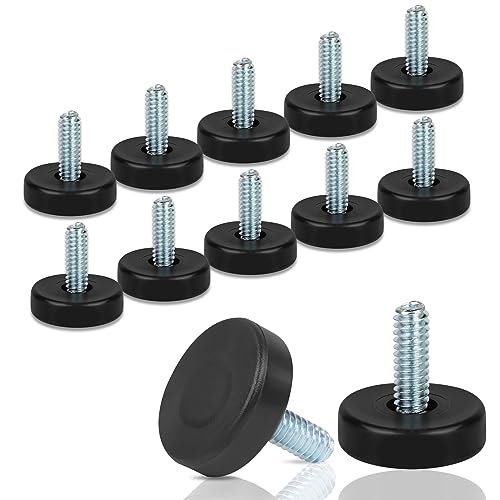
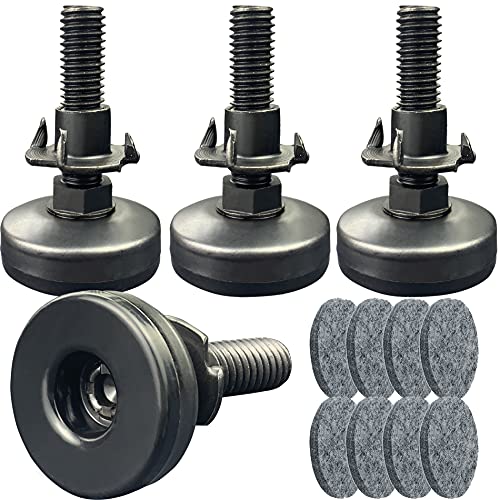
The MROCO set is our top pick because it ships as a complete kit: twelve leveling feet in the common 1/4-20 UNC thread plus matching T-nuts, so you get both halves of the connection in one box. T-nuts press into a drilled hole and give the foot a solid metal thread to turn against, which is a cleaner fit than screwing a foot straight into bare wood. With twelve pieces you can do three or four pieces of furniture at once. Confirm your legs use, or can accept, a 1/4-20 thread before buying, since the T-nut needs a correctly sized hole to seat in.
2. DkOvn Heavy-Duty 2-Inch Adjustable Leg Leveler
When a workbench, heavy dresser, or shop cabinet needs more than a few millimeters of correction, the DkOvn leveler is the one to look at. The listing describes it as a heavy-duty leg leveler with a 2-inch adjustable height, which is a much wider range than the small feet most levelers provide, and it is sold in 4, 8, and 16 packs so you can size the order to the job. Check the listing for the exact thread and mounting detail, and match it to your furniture before ordering, because a tall leveler like this is only an advantage if it threads in correctly.
3. PROPA 12-Piece Variety Shim Kit (Best Variety Kit)
Not every wobble needs a threaded foot. The PROPA kit is a set of twelve rubber shim pieces in a variety of sizes, meant to slip or stick under a leg to stop rocking and wobbling. Because there is no thread to match, this is the most flexible option for a quick fix under a table, dresser leg, or appliance where drilling and threading is not practical. The rubber also helps grip the floor and cushion the contact point. Treat it as a leveling and anti-wobble aid rather than a permanent adjustable foot.
4. COIDEA 1/4 Inch Thread Furniture Feet, 12 PCS (Best for 1/4-20)
If your furniture already uses 1/4 inch threaded inserts and you just need the feet themselves without extra T-nuts, the COIDEA 12-piece set is a straightforward match. Twelve adjustable feet is enough for several chairs or small cabinets, and keeping to one thread standard across the house means your spare feet stay interchangeable. As always, measure the existing thread or test-fit a foot before committing the whole set, since 1/4 inch hardware comes in more than one thread pitch.
5. TWIG 3/8-16 Threaded Leveling Feet, Large Base, 4 Pack (Best for 3/8 Thread)
For legs built around the larger 3/8-16 thread, the TWIG set is our pick. It is a four-pack of screw-on feet with a large base and a black finish, and the listing includes threaded inserts so you can add the receiving thread to a leg that does not already have one. The wider base spreads the contact area, which helps on softer or uneven surfaces. Four pieces cover one table, desk, or cabinet; order a second pack if you are doing more than one piece.
6. CSFMC 1/4-20 Leveler with PTFE Base, 8 Pack (Best Value)
The CSFMC set rounds out the list as a value-minded multipack for anyone who cares about the floor as much as the level. It uses a 1/4-20 shank with nut installation and a 28mm PTFE, or Teflon, bottom that is described as glide-friendly and floor protecting. Eight pieces is a sensible middle count for two or more pieces of furniture. If you slide chairs or small tables around on hard flooring, the PTFE base is the feature worth paying attention to here.
How to choose furniture levelers
Measure the thread size and type first. This is the step people skip and regret. The two most common furniture thread sizes are 1/4-20 and 3/8-16. Back out an existing foot or bolt and match the diameter and pitch, or take it to a hardware store to compare. A leveler with the wrong thread simply will not go in.
Know your mounting method: T-nut, direct screw-in, or push-in. A T-nut gets pressed into a drilled hole and gives metal threads for the foot to turn into, which is the sturdiest route for wood legs. A direct screw-in foot needs a leg that already has a matching threaded insert. A push-in or stick-on pad, like a rubber shim kit, needs no thread at all and is the easiest retrofit when you cannot or do not want to drill.
Match the adjustment range to the problem. Small feet correct a few millimeters, which is plenty for a minor floor dip. A tall leveler with a 2-inch range is for larger gaps or for raising a piece deliberately. More range than you need is harder to keep stable, so buy for the gap you actually have.
Check the load capacity claim. Heavier furniture, loaded cabinets, and appliances need levelers rated for the weight. Load figures on listings are manufacturer claims, so give yourself margin and do not run a foot at the top of its stated rating.
Look for a floor-friendly base. A nonslip or PTFE base protects hard floors from scratches and keeps the piece from sliding. On tile or hardwood this matters as much as the leveling itself.
Count the pack against the job. Most furniture needs four feet, so a 12-pack covers three pieces and a 4-pack covers one. Buy a larger count if you want spares or plan to do several pieces.
Furniture, appliances, and cabinets differ. Light tables and chairs are happy with small threaded feet or pads. Cabinets and appliances are heavier and often benefit from a larger base and a higher load rating. Built-in cabinets sometimes use taller cabinet-leg levelers rather than small feet, so confirm the form factor matches the gap under your piece.
A note on the specs
Thread sizes, adjustment ranges, load ratings, and base materials in this guide come straight from the product listings and are claims by each maker, not figures we measured. Before you buy, match the thread size and the insert type, whether that is a T-nut, a direct screw-in thread, or a push-in pad, to your own furniture, and follow the installation guidance that comes with the part. We cannot guarantee a specific result on your floor or your furniture; a leveler only works when it fits the hardware it is going into.
Bottom line
Pick by thread first, then by job. The MROCO 1/4-20 kit with T-nuts is the easiest complete starting point for most homes, the DkOvn covers big adjustments, the PROPA pad kit handles no-thread fixes, and the COIDEA, TWIG, and CSFMC sets let you dial in the exact 1/4-20 or 3/8 thread and pack count you need. Measure once, match the thread, and a rocking table becomes a two-minute fix.