The Uniclife 64 GPH Aquarium Air Pump is presented as a dual outlet aerator for freshwater and saltwater fish tanks, and this overview walks through what the current Amazon listing and published specifications actually claim. It is an editorial look at the product on paper rather than a hands on review, so treat every figure below as a manufacturer specification you should confirm on the live listing before you buy.
What it is
An aquarium air pump is a small electric device that pushes air through flexible tubing into your tank, where it escapes as a stream of bubbles through an air stone or a piece of air driven equipment such as a sponge filter. Those bubbles agitate the water surface and help circulate oxygen into the tank while helping move dissolved gases out. Surface movement is one of the main ways a tank exchanges gas with the room around it, which is why many keepers add a pump even when they already run a water filter.
The Uniclife 64 GPH model, identified by ASIN B01EBXI7PG, is described in its listing as a dual outlet pump rated at 64 gallons per hour of air output and suited to tanks in the 10 to 100 gallon range. The product name also references adjustable, quiet operation, which points to an airflow control dial and a design that aims to keep running noise low. Because this is an editorial summary built from the listing rather than first hand use, none of the behavior described here comes from a bench trial in our own tank. Everything reflects how the item is currently presented on Amazon, and listings do change, so the live page is always the final word.
Key features
Reading straight from the listing, the headline specifications are a 64 gallons per hour air output, a dual outlet body, adjustable airflow, and a stated focus on quiet running. The product name also lists a bundle of accessories packed in the box: an air stone, airline tubing, a check valve, and connector pieces. That accessory kit matters, because many air pumps ship as the pump alone and leave you to buy tubing and stones separately. Here the listing describes those parts as included, though bundle contents can be revised over time and should be confirmed before ordering.
The quoted 10 to 100 gallon range is broad, and the adjustable control is what makes a single unit span that spread. Turning the airflow down suits a small nano tank, while opening it up and splitting the flow across both outlets serves a larger or more heavily stocked setup. The two outlets also let you feed two separate pieces of equipment from one pump, for example an air stone at one end of the tank and a sponge filter at the other.
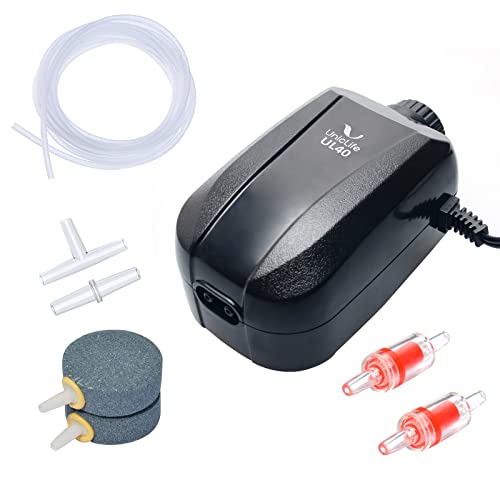
Uniclife 64 GPH Aquarium Air Pump with Dual Outlets Adjustable Quiet Fish Tank Air Pump with Air Stone Airline Tubing Check Valve and Connector Accessories for 10-100 Gallon Fish Tank
Dual outlet aquarium air pump listed at 64 gallons per hour of air for 10 to 100 gallon tanks, with adjustable airflow and a bundled accessory kit.
Check price on AmazonWho it is for
On paper this pump is aimed at aquarists who need steady aeration and surface agitation, and at anyone running air driven gear. That includes sponge filters, which rely entirely on a rising column of bubbles to pull water through their media, as well as bubble wands, air curtains, and bubbling ornaments or decorations that are powered by an air line. The dual outlet layout is a natural fit if you keep two tanks side by side or want to drive two accessories from one device.
It also suits keepers who want one pump that can grow with their hobby. Because the listed range stretches from a modest 10 gallon tank up to a 100 gallon one, and the airflow is adjustable, the same unit can start on a small aquarium and later move to a bigger one, or be dialed back for a quieter nighttime setting. If your only goal is a single gentle stream of bubbles in one small tank, a simpler single outlet pump may be all you need, which is worth weighing before you choose a dual outlet model.
Strengths on paper
The clearest listed strength is flexibility. Two outlets plus an adjustable valve mean you can run one line or two, and tune the pressure to the job rather than being stuck with a fixed output. The second is the stated tank range: a 10 to 100 gallon span covers most common home aquariums, so the specification suits a wide audience rather than a narrow one. The third is the bundled accessory kit. If the box arrives with the air stone, tubing, check valve, and connectors the listing describes, you have the core parts to get bubbling without a second order, and the check valve in particular is a useful inclusion because it is designed to stop water from siphoning back into the pump when the power is off.
The listing also leans on a quiet running claim, which is a common selling point for air pumps since the buzz of a cheap unit can be noticeable in a quiet room. Framed as a specification rather than a measured result, a low noise design is a reasonable thing to want, especially for a pump that may sit in a bedroom or living room and run around the clock.
Things to check
Before buying, confirm a few details directly on the product page. First, match the GPH rating and the tank size range to your own aquarium. The 64 gallons per hour figure and the 10 to 100 gallon span are listing claims, and real airflow needs rise with water depth, because a pump has to work harder to push bubbles down a tall column. A tank near the top of the range, or a deep one, deserves a closer look at whether the output is comfortable or near its limit.
Second, confirm the outlet count and the adjustment. This model is described as dual outlet with adjustable airflow, but if you only need one line, check that you can throttle or cap the unused outlet. Third, treat the quiet claim as relative. Noise depends heavily on placement; setting the pump on a hard shelf can transmit vibration, while a soft surface and a position below the water line, paired with the check valve, usually helps. Fourth, verify the accessories. The listing describes an air stone, tubing, a check valve, and connectors as included, but packaged contents can change, so read the current bullet points and photos to confirm what actually ships. When in doubt, let the live listing settle every one of these points rather than relying on this summary.
How it compares
The most useful comparison for a shopper is single outlet versus dual outlet, rather than one brand against another. A single outlet pump is simpler and typically smaller, pushing all of its air down one line. That is plenty for a single air stone or one sponge filter in a modest tank, and there is less to adjust. The trade off is that running a second accessory means either a splitter or a second pump.
A dual outlet pump like this Uniclife model takes the opposite approach. It gives you two independent lines from one body, and with an adjustable valve you can balance or reduce the flow to each side. That is handy for two tanks, for a tank with both a filter and a decorative bubbler, or for anyone who expects their setup to expand. The cost of that flexibility is a slightly larger unit and more to think about during setup. Neither approach is better in the abstract; the right pick depends on how many air lines you plan to run and whether you value room to grow. Because competing models vary in output, outlet count, and bundled parts, compare the specific figures on each live listing rather than assuming they match.
Verdict
As an editorial read of the specifications, the Uniclife 64 GPH Aquarium Air Pump lines up well for a keeper who wants a flexible, adjustable aerator with two outlets and a tank range that covers most home aquariums. The bundled accessory kit, if it matches the listing, is a practical touch that gets you running without a separate tubing and air stone purchase, and the check valve is a sensible inclusion. The main things to settle for yourself are whether the dual outlet design is more than you need, how the output suits your specific tank depth and volume, and exactly what ships in the box, since all of those are listing claims rather than measured outcomes. If the specification fits your plan, check the current listing to confirm the current details, accessories, and availability before deciding.
This is an editorial overview based on the current Amazon listing and published specifications, not a hands on review; we did not use or evaluate the unit ourselves. Details can change, so always confirm on the live listing. ProductPickly may earn a commission from qualifying purchases.