If you want to know exactly how much rain fell on your yard overnight, a simple analog gauge is still one of the most direct tools you can own. This editorial overview looks at the AcuRite 5 inch capacity easy to read magnifying rain gauge, model 00850A3, based on its current Amazon listing and published specifications rather than any hands on trial. The goal is to help you decide whether a basic manual gauge fits the way you track rainfall, without claiming anything the listing does not state.
What it is
This is a manual, analog outdoor rain gauge. According to the listing it is molded in clear acrylic, holds up to a 5 inch capacity, and uses a magnifying face so the water line is easier to read. There is no display, no battery, and no wireless sensor involved. You place it outside, rain collects in the clear column, and you read the level against the printed scale. The model number on the listing is 00850A3, which is useful to quote when you compare options or confirm you are looking at the same item.
Because it is a standalone physical gauge, the experience is deliberately low technology. It does not log history, it does not send a reading to a base station indoors, and it does not alert you to anything. It simply shows the current accumulation until you empty it. For a lot of gardeners that straightforward behavior is the entire appeal.
Key features
From what the current listing states, the headline points are a 5 inch capacity, an easy to read magnifying readout, and acrylic construction. The magnifying element is the part that sets it apart from a plain tube, since it is meant to make the water line clearer from a short distance rather than forcing you to crouch right next to the scale. Everything here is mechanical, so there is nothing to pair, charge, or update.
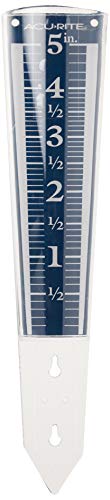
AcuRite 5" Capacity Easy-to-Read Magnifying Rain Gauge, Acrylic (00850A3)
A manual analog rain gauge with a magnifying, easy to read column, a 5 inch capacity, and clear acrylic construction, as described on the current listing.
Check price on AmazonTreat that summary as a starting point rather than a full spec sheet. Listings get revised, and the most reliable details are always the ones shown on the live product page at the moment you buy.
Who it is for
This style of gauge suits gardeners and lawn owners who want a direct reading of how much rain actually landed on their own ground. If you are managing beds, a vegetable patch, new seedlings, a compost pile, or a fresh lawn, knowing whether you got a light shower or a soaking helps you decide when to water and when to leave things alone. It also appeals to anyone who prefers not to deal with apps, batteries, or connectivity, and who is happy to walk outside to take a reading.
It is a weaker fit if you specifically want a reading you can see from indoors, automatic daily and seasonal totals, or data you can export. Those needs point toward a different category, which the comparison section below covers.
Strengths on paper
The clearest strength is simplicity. With no electronics there is nothing to fail electronically, no firmware, and no signal to drop. The acrylic column is transparent, so the water level is visible, and the magnifying readout is designed to make that level easier to read. A 5 inch range is generous enough to capture most individual rain events in one sitting, and upkeep is limited to emptying the gauge and cleaning it occasionally so the scale stays visible. For someone who wants a tool they can understand at a glance, that short list of strengths is often exactly the point.
Things to check
Before you buy, confirm a few details directly on the listing rather than assuming them. First, the capacity: the listing describes 5 inches, which is plenty for typical storms, but in a prolonged or very heavy multi day event the column can fill, so plan to empty it between readings to keep an accurate running record. Second, the readout: a magnifier helps, yet it is worth checking the viewing angle and whether glare or placement in direct sun affects how easily you can read the line in your spot.
Third, the mounting. The product title does not spell out exactly how the gauge is secured, so check the current listing to confirm whether it stakes into the ground, attaches to a post, or mounts on a fence or rail, and what hardware, if any, is included. Do not assume a mounting style that the listing has not stated. Fourth, the material: acrylic is clear and light, but like most clear outdoor plastics it can scratch or discolor over years of sun exposure, so factor in where you will place it and how exposed it will be. Finally, remember this is an analog gauge, not a digital or wireless station, which means every reading requires a trip outside to the gauge itself. Verify all of these points on the live listing, since manufacturers update specifications and packaging over time.
How it compares
The honest way to frame this product is analog versus wireless digital, as a category decision rather than a contest against one specific rival. A manual analog gauge like this one needs no batteries and no signal, gives you a direct physical reading you can trust, and keeps working as long as the plastic holds up. The trade off is that you must physically walk to it to read it, and it only shows the current accumulation until you empty it, with no memory of past days.
A wireless digital rain gauge flips those trade offs. It can send a reading to an indoor display, often tracks running totals and history, and saves you the walk outside in poor weather. In return it depends on batteries, a working wireless link, and electronics that can eventually fail, and it usually costs more to own over time. Neither approach is universally better. If you value remote convenience and data logging, lean digital. If you value a simple, dependable, battery free reading and do not mind checking it in person, a manual acrylic gauge like this one is the type of tool that fits. This comparison names no specific competing model on purpose, because the right rival depends on your own shortlist and what is in stock when you shop.
Verdict
On paper, the AcuRite 00850A3 reads like a sensible pick for anyone who wants an uncomplicated analog rain gauge with a magnifying readout and a clear acrylic body. It will not log your rainfall or beam it indoors, and it asks you to walk out and read it, but that is the nature of a manual gauge and, for many gardeners, the quiet reliability is the selling point. If remote readings and history matter more to you, a wireless digital unit is the better direction. If a direct, battery free reading is what you are after, this is a reasonable candidate. Before deciding, check the current listing to confirm the current capacity, readout, mounting, material, and availability for yourself.
This is an editorial overview based on the current Amazon listing and published specifications, not hands on testing. We have not used this product first hand and make no first hand performance claims. ProductPickly may earn a commission from qualifying purchases made through links on this page.