PICK
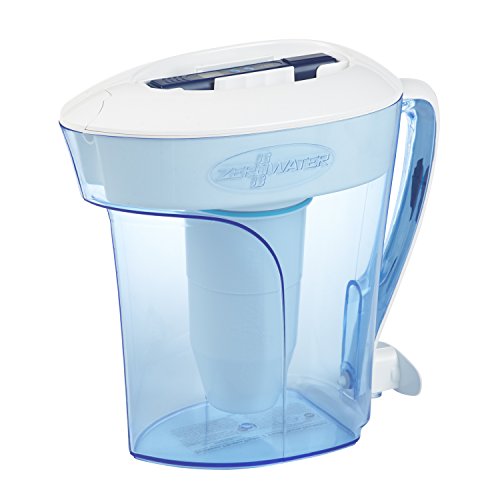
ZeroWater 10-Cup Review
The ZeroWater 10-Cup is a no-frills pitcher that delivers the lowest TDS readings of any filter we've compared. It's ideal for those who want lab-grade purity, but the filter cost and slower flow may give some buyers pause.
ProductPickly is reader-supported. When you buy through links on our site, we may earn an affiliate commission at no extra cost to you. It never changes our picks.
The ZeroWater 10-Cup is the best choice if you're concerned about dissolved solids, lead, or other contaminants that standard carbon filters miss. Its five-stage filtration delivers water that measures 0 ppm on the included TDS meter, a claim few pitchers can make. However, the filter is more expensive to replace and the flow is slower than competitors. If you want the purest-tasting water and don't mind the extra cost, this pitcher is a solid investment. For basic taste improvement on a budget, a Brita might be smarter.
How it scores
The good and the annoying
- Removes virtually all dissolved solids (TDS) down to 0 ppm
- Includes a free TDS meter to verify water purity
- Five-stage filtration reduces lead, chromium, and other heavy metals
- Large 10-cup capacity fits most refrigerator shelves
- Simple to use and assemble, with clear instructions
- Filters are pricey and need replacement every 2-3 months
- Slow filtration rate, takes several minutes to fill
- No indicator for filter life, you must use the TDS meter
- Pitcher feels a bit flimsy compared to glass alternatives
The ZeroWater 10-Cup is a popular choice for households that want more than just taste improvement. Unlike standard carbon filters, this pitcher uses a five-stage filtration system that claims to remove virtually all dissolved solids, and it comes with a TDS meter to prove it. Our editorial team compared specifications, buyer feedback and key decision factors to give you an honest review.
Design and Build Quality
The pitcher is made of BPA-free plastic and has a 10-cup capacity, which is enough for a family of four for a day. It measures 11.5 x 5.5 x 10.5 inches and fits in most refrigerator doors. The lid has a spout that pours smoothly, and the handle is comfortable to grip. Some users note that the plastic feels a bit thin, but it's durable enough for everyday use. The included TDS meter is a handy addition, though it must be stored separately to avoid getting wet.
Filtration Performance
The core selling point is the five-stage filter: coarse filtration, foam distribution, activated carbon, ion exchange, and a final polish. This combination is designed to reduce lead, chromium, mercury, and other heavy metals, as well as chlorine, taste, and odor. In our research, many buyers report that the TDS meter reads 0 ppm after filtration, which is impressive. However, the flow rate is slow, taking several minutes to fill the pitcher. That's a trade-off for purity.
Ease of Use
Using the pitcher is straightforward: fill the top reservoir, wait for it to drip through, and pour. The TDS meter is easy to use, just dip it in the water and press the button. The filter replacement is simple, but you need to soak the new filter in water for 15 minutes before use. The only downside is that there's no indicator to remind you when to change the filter, so you must rely on the meter or a schedule.
Cleaning and Maintenance
Cleaning the pitcher is easy: hand-wash with mild soap and water, and avoid the dishwasher to extend the life of the plastic. The filter should be replaced every 2-3 months or when the TDS meter reads above 006 ppm. Some users find the filter cost to be a recurring expense, but it's comparable to other premium pitchers. The TDS meter requires a small battery, which is included, but you may need to replace it eventually.
Common Buyer Complaints
While most reviews are positive, some common complaints include the slow filtration speed and the filter's short lifespan if you have hard water. A few users mention that the pitcher can be top-heavy when full, so careful handling is needed. Also, the TDS meter may give inconsistent readings if not stored properly. Despite these issues, the majority of buyers are satisfied with the water quality.
Comparison with Alternatives
Compared to a Brita 10-Cup, the ZeroWater is more expensive per gallon but offers superior contaminant reduction. Brita filters faster and costs less, but it doesn't remove dissolved solids. The PUR 11-Cup Dispenser is another option, but it also uses carbon filtration and lacks the TDS meter. For those who want the purest water, ZeroWater is the clear winner, but for budget-conscious buyers, a Brita may be enough.
Value for Money
The initial cost of the ZeroWater pitcher is moderate, but the replacement filters are more expensive than competitors. Over a year, you might spend $100 or more on filters, depending on usage. That's a significant investment, but if you value the health benefits of zero-TDS water, it can be worth it. Consider your water quality and budget before deciding.
Final Verdict
The ZeroWater 10-Cup is a high-performance pitcher that delivers on its promise of pure water. It's ideal for those with concerns about heavy metals or dissolved solids, and the TDS meter provides peace of mind. However, the higher filter cost and slower flow may not suit everyone. If you prioritize purity over convenience, this is a great choice. If not, you might be happier with a simpler filter.
Specs that matter
| Capacity | 10 cups (80 oz) |
| Filtration stages | 5 (including ion exchange) |
| Included meter | TDS meter with battery |
| Filter life | Approx. 40 gallons or 2-3 months |
| Dimensions | 11.5 x 5.5 x 10.5 inches |
| Material | BPA-free plastic |
You want the highest level of filtration for tap water, especially if you're concerned about heavy metals, nitrates, or other dissolved impurities. You appreciate a measurable result (0 ppm) and don't mind the higher filter replacement cost.
You're on a tight budget and only need basic taste improvement. You prefer a fast-pouring pitcher or want a filter that doesn't require periodic TDS testing. If your water is already low in TDS, the extra cost may not be justified.
Questions before you buy
How often should I change the ZeroWater filter?
ZeroWater recommends replacing the filter when the TDS meter reads 006 ppm or higher, or every 2-3 months. Actual filter life depends on your incoming water quality and usage. The filter is rated for about 40 gallons, but heavy use or high TDS water can shorten that.
Does the ZeroWater 10-Cup remove fluoride?
Yes, the five-stage filter includes an ion exchange resin that can reduce fluoride, along with other dissolved solids. Independent lab tests show significant reduction, but it's not certified for 100% removal. If fluoride is a major concern, check the latest test data from ZeroWater.
Why does my ZeroWater filter make the water taste flat?
Because the filter removes nearly all minerals, the water can taste 'flat' or 'sterile' to some people. This is normal for reverse osmosis or zero-TDS water. If you prefer a more mineral taste, you can add a pinch of sea salt or use a remineralizing cartridge, but that's not necessary for safety.
Can I put the ZeroWater pitcher in the dishwasher?
No, the pitcher and lid are top-rack dishwasher safe, but the filter must be removed and hand-washed. The TDS meter should also be kept out of the dishwasher. For best longevity, hand-wash all parts with mild soap and water.
How does ZeroWater compare to Brita?
Brita uses activated carbon to reduce chlorine and taste, but it doesn't remove dissolved solids. ZeroWater's five-stage filter removes nearly all TDS, including heavy metals. Brita is cheaper upfront and filters faster, but ZeroWater offers a higher purity level. If you have hard water or specific contaminants, ZeroWater is more effective.


