Vegetable Spiralizers
Best Vegetable Spiralizers for Veggie Noodles
7 picks compared
9 min read
ProductPickly is reader-supported. When you buy through links on our site, we may earn an affiliate commission at no extra cost to you. It never changes our picks.
The short answerFor most home cooks the best all-round pick is a countertop crank spiralizer with several blades, like the Brieftons 7-blade, because the handle powers through firm produce, the suction base keeps it steady, and the extra blades cover everything from angel-hair zoodles to thick ribbons. If you only spiralize the occasional zucchini, a handheld cone such as the Veggetti is cheaper and stores in a drawer. Cooks doing big batches or with limited hand strength should look at an electric model like the Hamilton Beach. Match blade count to the cuts you will actually make rather than the highest number on the box.
?How we pickedWe compare published specifications, safety certifications and thousands of verified owner reviews, and we do not physically test every unit. Read the full process in our review methodology.
Brieftons 7-Blade Countertop Vegetable Spiralizer and Veggie Noodle Maker
★★★★★ 4.6 / 5 Best overall
A crank-style countertop unit with seven interchangeable blades that cover everything from angel-hair zoodles to thick ribbons and half-moon slices. The suction base holds it in place while you turn the handle, though the blade cartridges do take a cupboard shelf to store.
Type Countertop crankBlades 7 interchangeableBase Suction cupCuts Noodles + slices
- Seven blades handle nearly any noodle or ribbon thickness
- Crank handle powers through hard carrots and beets
- Suction base keeps it steady on the counter
- Blade cartridges need their own storage space
- More parts to rinse than a handheld
Best for: cooks who want one tool for every cut
Veggetti Veggie Slicer, Dual Stainless Steel Blade Vegetable Cutter
★★★★★ 4.3 / 5 Best budget
A handheld cone you twist vegetables into, with a dual blade for thick or thin noodles depending on which end you use. It costs little and stores in a drawer, but you hold and turn the veg yourself, so long carrots and firm squash take some wrist effort.
Type Handheld coneBlades 2 (thick + thin)Size 6.3 in tallBest veg Zucchini, cucumber
- Tiny footprint fits in a utensil drawer
- Two noodle widths from one tool
- Quick rinse, very few parts
- You twist the vegetable by hand, which tires the wrist
- Leaves a chunky end nub on each vegetable
Best for: small kitchens and occasional zoodles
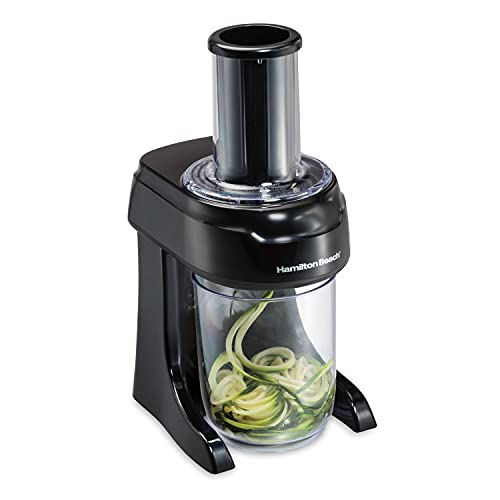
Hamilton Beach 3-in-1 Electric Vegetable Spiralizer and Zoodle Maker
★★★★★ 4.2 / 5 Best electric
A motorized spiralizer that feeds vegetables through three cutting cones for spaghetti, linguine and ribbons straight into a 6-cup bowl. It takes the arm work out of big batches, though it needs counter space, an outlet and more cleanup than a simple cone.
Type Electric motorCones 3 cuttingBowl 6 cupsCuts Spaghetti, linguine, ribbon
- Motor spiralizes large batches hands-free
- Catches noodles in a 6-cup bowl to reduce mess
- Good for anyone with limited hand strength
- Bulkier to store than manual tools
- More components mean a longer cleanup
Best for: high-volume cooking and meal prep
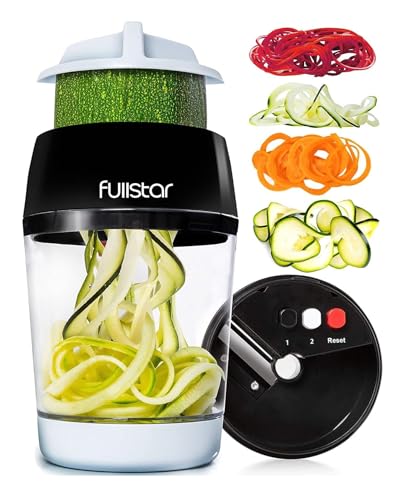
Fullstar Vegetable Spiralizer and Slicer, Veggie Noodle Maker Kitchen Gadget
★★★★★ 4.4 / 5 Best multi-tool
This one pairs a spiralizer with a slicing set and a catch container, so it doubles as a prep tool beyond just noodles. The container keeps the counter clean, and a hand guard protects your fingers, though the tray adds parts to wash.
Type Box + spiralizerInserts MultipleExtras Catch containerSafety Hand guard
- Spiralizes and slices from one compact set
- Catch container keeps noodles off the counter
- Hand guard keeps fingers clear of blades
- Multiple inserts to keep track of
- Container and guard add to washing up
Best for: prep beyond zoodles alone
WellToBe 6-Blade Vegetable Spiralizer Spiral Slicer with Stainless Steel Body
★★★★★ 4.3 / 5 Best build
A countertop spiralizer with a 304 stainless steel body and six blades for spaghetti, fettuccine and ribbon cuts. The metal frame feels sturdier than all-plastic rivals, but it is heavier and the steel body wants a careful dry to avoid water spots.
Type Countertop crankBlades 6 stainlessBody 304 stainlessCuts Low-carb noodles
- Stainless body resists staining and feels solid
- Six blades cover most common noodle shapes
- Suction foot steadies it during cranking
- Heavier than plastic-bodied units
- Steel needs drying to avoid water marks
Best for: buyers who want a metal, longer-lasting frame
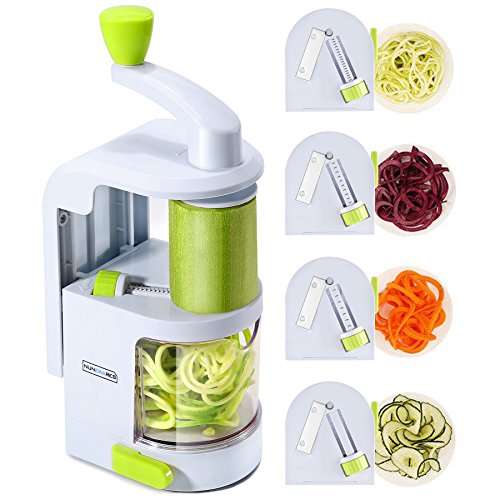
4-Blade Vegetable Spiralizer with Strong Suction and 500ml Bin
★★★★★ 4.2 / 5 Best value countertop
A compact crank spiralizer with four blades, a reinforced suction cup and a built-in 500ml bin to catch noodles as they come off. The strong suction is its selling point, though four blades give fewer cut choices than the seven-blade units.
Type Countertop crankBlades 4Bin 500 ml built-inBase Strong suction
- Reinforced suction grips the counter firmly
- Built-in bin catches noodles as you crank
- Compact for a countertop model
- Four blades limit the cut variety
- Small bin fills quickly on big batches
Best for: steady spiralizing without the bulk
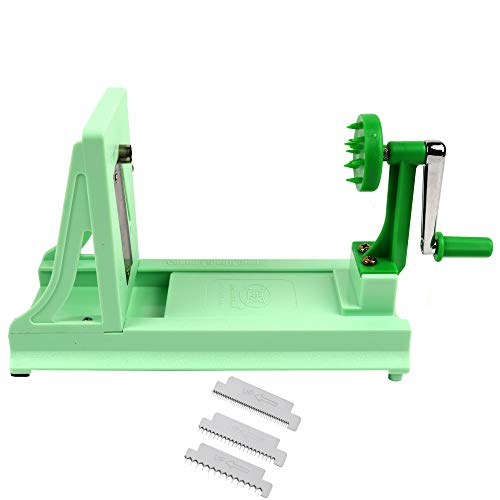
Vollum Vegetable Spiralizer with 4 Straight and Serrated Blades
★★★★★ 4.2 / 5 Best blade variety
A crank spiralizer that includes both straight and serrated blades, so you can vary the noodle edge and texture beyond the usual smooth cut. It handles firm produce well, but the mix of blade types means a bit more care sorting and storing them.
Type Countertop crankBlades 4 straight + serratedBase SuctionCuts Smooth + textured
- Serrated blades add texture options most units lack
- Handles firm vegetables like beets and squash
- Suction foot keeps it planted
- Fewer total blades than seven-blade rivals
- Serrated edges need careful cleaning
Best for: cooks who want varied noodle textures
The best vegetable spiralizer for most kitchens is a countertop crank model with several interchangeable blades, because it clamps or suctions in place and turns firm produce into noodles with far less effort than a handheld cone. Below we rank seven real options by style, blade count and the vegetables they handle, so you can match one to how you actually cook.
Handheld versus countertop crank versus electric
Spiralizers come in three broad styles, and the right one depends on how much you make. A handheld cone is the smallest and cheapest: you press a vegetable against a blade and twist it by hand, which is fine for the odd zucchini but tiring with carrots or squash. A countertop crank sits on the surface with a suction or clamp base while a handle drives the vegetable through the blade, so it stays steady and powers through firm produce with little arm strain. An electric spiralizer adds a motor, feeding vegetables through cutting cones hands-free, which pays off for big batches or anyone with limited grip, at the cost of more space and cleanup.
Blades and noodle thickness
Blade count decides how many cuts you can make. A single or dual blade tool gives you one or two noodle widths, which is enough for basic zoodles. Four blade sets typically cover fine spaghetti, thicker noodles, and flat ribbons, the three shapes most recipes call for. Six and seven blade kits add half-moon slices, angel hair, and sometimes textured or serrated cuts. Serrated edges, like those on the Vollum, add a rougher noodle surface that holds sauce well. More blades mean more versatility, but also more small parts to store and sort, so buy for the cuts you will genuinely use rather than the biggest number on the box.
Which vegetables actually work
Spiralizers reward firm, dense, roughly straight vegetables. Zucchini, carrots, cucumber, beets, sweet potato, daikon, and the solid neck of a butternut squash all spiralize cleanly into long strands. Firm apples and pears work for salads and garnishes. What fights back is anything soft, hollow, or very juicy: tomatoes, bell peppers, and overripe squash tend to slip, crush, or turn to mush. For the longest noodles, choose vegetables at least a couple of inches thick and trim the ends flat so they seat squarely against the blade. Zucchini in particular releases a lot of water, so salt and drain the noodles before cooking them fast over higher heat.
Cleaning and storage
The practical difference between models often comes down to upkeep. Handheld cones have the fewest parts and rinse in seconds, which is a real advantage if you spiralize rarely. Countertop and electric units trade that simplicity for catch bins, cones, and multiple blades that each need attention. Rinse blades right after use before pulp dries and hardens, and push stuck bits through with the supplied brush or hand guard rather than your fingers. Many parts are top-rack dishwasher safe, but hand washing keeps the cutting edges sharp longer. For storage, look for models that nest their blades into the body or a caddy, since loose blades are both a clutter and a safety issue in a drawer.
Questions people ask
What is the best vegetable spiralizer for most people?
For most home cooks a countertop crank spiralizer with several blades, like the Brieftons 7-blade, is the best all-round choice. The crank does the hard work, the suction base holds it steady, and the extra blades let you make thin zoodles, thick noodles and ribbons from one tool. Handheld cones are cheaper and smaller, but you supply the effort yourself.
Are handheld or countertop spiralizers better?
It depends on how often you use one and how much you make. Handheld cones are tiny, cheap and fine for the occasional zucchini, but you twist the vegetable by hand. Countertop crank models clamp or suction to the surface and use a handle, so they are steadier and far easier for firm produce and larger batches.
Do I need an electric spiralizer?
Only if you spiralize often or in big volume, or if hand strength is a concern. An electric unit like the Hamilton Beach feeds vegetables through motorized cones and fills a bowl hands-free. For a few servings a week, a manual crank does the same job with less to store and clean.
How many blades does a spiralizer really need?
Three or four blades cover the everyday cuts most people make: thin spaghetti, thicker noodles and flat ribbons. Six or seven blade sets add half-moon slices, angel hair and textured cuts. More blades mean more versatility but also more parts to store and keep track of, so match the count to how varied your cooking is.
Which vegetables work best in a spiralizer?
Firm, solid vegetables spiralize best: zucchini, carrots, cucumber, beets, sweet potato, butternut squash neck, daikon and firm apples. Soft or hollow produce like tomatoes, peppers and very ripe squash tend to mush or slip. For long noodles, pick straight vegetables at least a couple of inches thick.
How do you keep zucchini noodles from getting watery?
Zucchini holds a lot of water. After spiralizing, salt the noodles lightly, let them sit in a colander for ten to fifteen minutes, then press with a towel or paper towels. Cook them fast over higher heat rather than simmering, and avoid overcrowding the pan so the water evaporates instead of pooling.
Are vegetable spiralizers hard to clean?
Most are straightforward but blade-dependent. Rinse blades right after use before pulp dries on, and use the brush or hand guard to push bits through rather than fingers. Many parts are top-rack dishwasher safe, though hand washing keeps cutting edges sharper for longer. Countertop units with catch bins have a few more pieces to rinse.
Can a spiralizer replace a pasta machine?
No, they do different jobs. A spiralizer turns raw vegetables into noodle shapes for low-carb dishes, salads and garnishes. A pasta machine rolls and cuts dough into wheat pasta. A spiralizer is the right tool if your goal is vegetable noodles, not homemade dough.
The bottom lineSo which one?
The Brieftons 7-blade countertop spiralizer is the one we would hand most people, since it balances blade variety, a steady suction base and a crank that does the hard work for you. Choose the handheld Veggetti if space and budget matter more than volume, or the electric Hamilton Beach for hands-free batches. Whichever you pick, stick to firm, straight vegetables and drain watery ones before cooking.