Tower Fans
Best tower fans compared for real buyers.
23 posts in this topic
Shopping for a tower fan? Our tower fans guides compare airflow, oscillation, noise, controls so you can match the right tower fan to your kitchen and budget without the guesswork.
A tower fan does not lower a room's temperature. It creates a wind chill effect that makes you feel cooler. This works best when you sit close to the fan. For whole-room cooling, an air conditioner is necessary. Tower fans excel at targeted personal cooling.
Yes, some tower fans can be placed in a window, but most are not designed for it. They lack mounting hardware and proper sealing. Window use requires a fan with a wide base and adjustable height. Check dimensions and airflow direction first.
Tower fans pull air in through rear vents, spin it past curved blades inside a cylindrical housing, and push it out through front grilles. The narrow design accelerates airflow, creating a broad, consistent breeze. Most models oscillate to distribute air across a room. Unlike bladed fans, tower fans use a mixed-flow impeller for quieter operation.
Tower fans circulate air, but they do not lower room temperature. They create a wind chill effect that makes you feel cooler. For small rooms, they work well. For large spaces, they are less effective than air conditioners. Use them to supplement AC or for gentle airflow.
No, a tower fan uses very little electricity. Most models draw between 40 and 60 watts on high. That is less than a standard light bulb. Running one for eight hours costs a few cents. Compared to air conditioners, tower fans are energy misers. They move air, not cool it, so they use far less power.
Tower fans save floor space and look modern, but pedestal fans push more air for larger rooms. Choose a tower for tight spaces and quiet operation. Pick a pedestal for high airflow on a budget. Your room size and layout decide the winner.
A tower fan cannot truly cool a room. It moves air to create a wind chill effect, making you feel cooler. The room's temperature stays the same. For real cooling, you need an air conditioner or evaporative cooler. Tower fans work best as a supplement, not a replacement.
The quietest tower fans typically operate between 25 and 45 decibels. The Lasko Wind Curve T42950 and Dyson Pure Cool are frequent top picks for low noise. Quiet operation depends on fan speed, blade design, and motor quality. For the lowest sound, choose a fan with a dedicated sleep mode. Check decibel ratings in the product specifications before buying.
The best tower fan for a bedroom is the Lasko Wind Curve T42951. It delivers strong airflow, has a quiet nighttime mode, and includes a remote. Its tall design fits small spaces. For a budget option, consider the Honeywell QuietSet HYF290B.
A tower fan draws air in through side vents, passes it over a spinning blower wheel, and pushes it out through a narrow front slot. The motor turns the wheel, creating a steady, wide airflow. Most models oscillate to spread air across a room. They cool you by evaporating moisture on your skin.
Learn how to pick the right tower fan for your room. Compare airflow, noise, smart features, safety, and more with our practical buying guide and checklist.
Tower fans save space and look sleek, while pedestal fans move more air and cost less. Compare airflow, noise, safety, and style to pick the right fan for your room.


We compare specs, buyer feedback, and key decision factors for the Dyson Pure Cool (TP04/TP07). See if its bladeless design and smart controls justify the premium over cheaper tower fans.
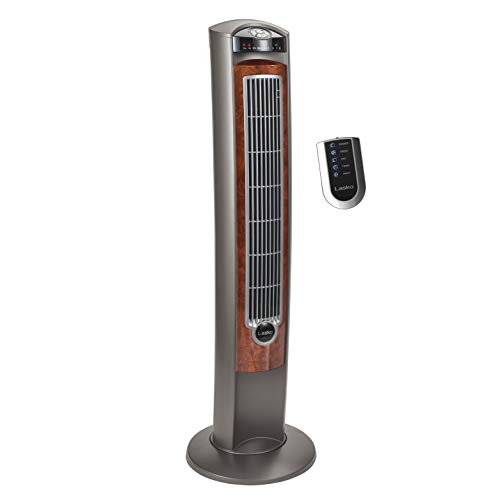
The Lasko Wind Curve is a popular tower fan known for its slim profile and powerful airflow. This review covers performance, remote control, timer, oscillation, assembly, noise, stability, and overall value to help you decide if it's the right fan for your home.
Check the oscillation button and remote. If they work, unplug the fan and inspect the gear assembly. A broken gear or jammed motor often stops rotation. Clean debris and lubricate moving parts. If the motor is dead, replace the fan.
Unplug the fan, remove the front grille if possible, and vacuum the blades and interior with a brush attachment. Wipe surfaces with a damp microfiber cloth. For deep cleaning, use compressed air or a soft brush. Reassemble and plug back in.
Use a vacuum with a brush attachment to remove dust from the grille and vents. Then wipe the exterior with a damp microfiber cloth. For deeper grime, use a soft brush or compressed air. Avoid water inside the motor.
First, unplug the fan and inspect the blades and housing for dust or debris. Clean them thoroughly. If the noise persists, check for loose screws or a wobbly base. Lubricate the motor if it's accessible. For persistent grinding, the motor bearings may be worn, and replacement is often cheaper than repair.
First, check the power outlet and cord. Plug another device into the same outlet. If that works, inspect the cord for damage. Next, replace the batteries in the remote or use the control panel. Many tower fans have a sleep timer or child lock that disables buttons. Reset the fan by unplugging it for 10 minutes.
Learn how to safely clean a tower fan with our step-by-step guide. From dusting to disassembly, filter washing, and reassembly, plus maintenance tips to extend fan life.
Tower fan not oscillating? Learn the common causes: gear wear, motor issues, remote sensor faults, or obstructions. Step-by-step fixes and when to call a pro.