Santoku Knives
Best Santoku Knives
7 picks compared
8 min read
ProductPickly is reader-supported. When you buy through links on our site, we may earn an affiliate commission at no extra cost to you. It never changes our picks.
The short answerFor most home cooks the imarku 7 inch santoku in Japanese high carbon stainless steel is the best all round pick, combining the classic 7 inch length with an edge holding steel from a popular brand. If food sticking to the blade is your problem, the Victorinox Swiss Classic is the one here that lists a Granton edge, the Cuisinart is the simplest low cost starter with a blade guard, and the Wusthof Classic is the premium buy once choice. We only state blade length, steel and Granton edge where the listing states them.
?How we pickedWe compare published specifications, safety certifications and thousands of verified owner reviews, and we do not physically test every unit. Read the full process in our review methodology.
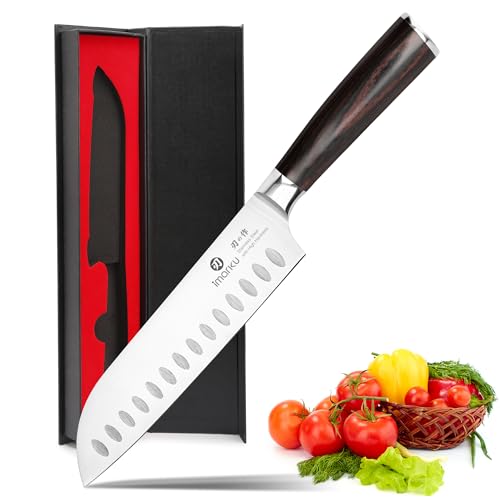
imarku Santoku Knife 7 Inch with Japanese High Carbon Stainless Steel
★★★★★ 4.7 / 5 Best overall
This is a single 7 inch santoku built from Japanese high carbon stainless steel, the classic all purpose blade length for slicing, dicing and chopping. It is our top overall pick because the length, steel type and popular imarku name make it an easy first santoku for most home cooks.
- Classic 7 inch all purpose size
- High carbon stainless steel holds an edge
- Well known imarku kitchen brand
- Sold as one knife, no sheath stated
- Handle material not stated in the listing
Best for: A first all purpose santoku for everyday prep
Victorinox Swiss Classic 7 Inch Santoku Knife with Granton Blade
★★★★★ 4.6 / 5 Granton edge pick
This Victorinox Swiss Classic santoku is the one knife here that lists a Granton blade, the row of scalloped dimples along the edge that help food release instead of sticking to the steel. It pairs that 7 inch Granton blade with a black handle and the long running Victorinox name.
- Granton dimples help release sticky food
- Established Victorinox Swiss brand
- Classic 7 inch santoku length
- Steel grade not stated in the listing
- Granton edge needs its own sharpening care
Best for: Cooks who want a Granton edge to stop food sticking
Cuisinart 7 Inch Stainless Steel Santoku Knife with Blade Guard
★★★★★ 4.4 / 5 Budget pick
The Cuisinart is the simplest way into a santoku here, a 7 inch stainless steel blade that ships with a blade guard to protect the edge in a drawer. It is a straightforward everyday santoku for a cook who just wants a usable blade without extra features.
- Blade guard protects the edge in storage
- Simple 7 inch all purpose size
- Familiar Cuisinart kitchen brand
- Steel grade not detailed beyond stainless
- Basic knife with no Granton edge
Best for: A low cost first santoku with edge protection
Wusthof Classic 7 Inch Santoku Knife
★★★★★ 4.6 / 5 Premium pick
The Wusthof Classic is the premium German made santoku on this list, a 7 inch blade from one of the best known knife houses. It is the pick for a cook who wants to buy once and keep a santoku for years rather than replace a budget blade.
- Long established premium German brand
- Classic 7 inch all purpose length
- Built as a long term kitchen knife
- Highest tier choice in this list
- Steel grade and hardness not stated in the listing
Best for: A buy once premium santoku for serious cooks
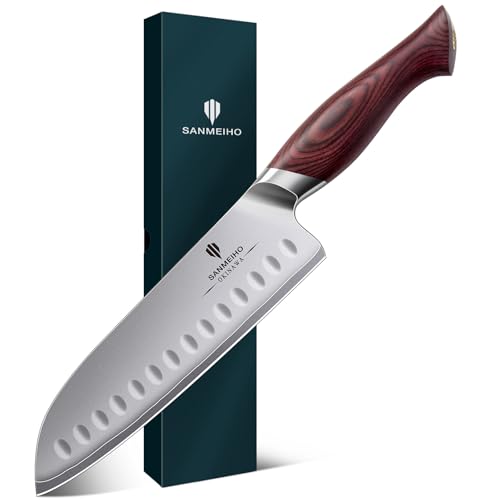
SANMEIHO 7 Inch Santoku Knife in High Carbon 10Cr15Mov Stainless Steel
★★★★★ 4.4 / 5 Named steel pick
The SANMEIHO is the only knife here that names its steel, listing high carbon 10Cr15Mov stainless, a common Japanese style cutlery stainless that balances edge holding and rust resistance. It is a 7 inch santoku for a buyer who wants to know exactly what the blade is made from.
- Steel grade is clearly named in the listing
- 10Cr15Mov balances edge and rust resistance
- Classic 7 inch santoku size
- Brand is less well known than the majors
- Handle material not stated in the listing
Best for: Buyers who want a clearly named stainless steel
Henckels Solution 2 Piece Santoku Knife Set, German Engineered
★★★★★ 4.5 / 5 Set pick
The Henckels Solution is a two piece santoku set that pairs santoku blades in one German engineered package, so you get more than a single knife in the box. It suits a kitchen that wants a matching pair rather than one standalone blade.
- Two matching santoku blades in one set
- Established Henckels name
- German engineered build
- Blade lengths not stated in the listing
- A set costs more than a single blade
Best for: Kitchens that want a matching pair of santokus
Cutluxe Santoku Knife, 7 Inch Meat and Vegetable Knife with Sheath
★★★★★ 4.3 / 5 Sheath pick
The Cutluxe is a 7 inch santoku aimed at meat and vegetable work and it ships with a sheath to cover the edge in a drawer. It is a practical standalone santoku for a cook who wants edge protection included without buying a whole block.
- Sheath included to protect the edge
- Classic 7 inch all purpose length
- Single blade, no block needed
- Steel grade not stated in the listing
- Less known brand than the majors
Best for: A standalone santoku that comes with a sheath
A santoku is a Japanese style all purpose knife, usually around 5 to 7 inches, that slices, dices and chops with a flat edge and a rounded tip. The picks below are drawn from current Amazon listings and chosen for blade length, the steel named in the listing, whether they carry a Granton edge and whether they ship as a single knife or a set, so you can match a santoku to how you cook.
What a santoku is and how it differs from a chef knife
The word santoku points to three uses, slicing, dicing and chopping, and the blade is built for exactly that kind of everyday prep. Compared with a Western chef knife, a santoku is usually shorter, with a flatter cutting edge and a sheepsfoot tip that curves down into the blade rather than rising to a point. That shape favours a straight downward push or chop instead of the rocking motion a chef knife uses on its curved belly. For most cooks the practical difference is feel: the santokus here are 7 inch blades that handle vegetables, boneless meat and fish on a daily board, and the Henckels option is a two piece set rather than a single knife. If you already own a chef knife, a santoku is a natural second blade, and if you do not, a single 7 inch santoku can cover most of the same tasks.
Steel types and hardness
Steel decides how well a santoku takes an edge, how long it holds it and how much it resists rust, so we only state what each listing actually names. The imarku lists Japanese high carbon stainless steel, the SANMEIHO names high carbon 10Cr15Mov stainless, a common Japanese style cutlery alloy that balances edge holding with rust resistance, and the Cuisinart lists plain stainless steel. The Wusthof Classic, Victorinox Swiss Classic and Cutluxe listings do not state a specific grade, so we treat those as stainless without a named alloy rather than guess a number. None of these listings states a Rockwell hardness figure, so we do not assign one; as a general rule a higher hardness holds an edge longer but can be more brittle, while a softer blade is easier to resharpen. When a listing names high carbon stainless, expect decent edge retention with everyday care.
Granton edge and handle
A Granton edge is the row of scalloped dimples ground along the side of the blade. Those hollows trap small pockets of air so slices are less likely to stick to the steel, which helps most with foods like potato, cucumber or cheese. In this list the Victorinox Swiss Classic is the single knife that states a Granton blade, so it is the one to choose if food sticking is your main frustration; the other picks use a plain flat grind. Handles matter just as much for daily comfort, but several of these listings do not state the handle material, so we have not described a handle where the listing is silent. The Victorinox lists a black handle, and where a handle is not described we leave it open rather than invent a material. Hold any new knife the way you cut to check the grip suits your hand.
Care and sharpening
A santoku lasts far longer with simple care. Hand wash and dry the blade rather than using a dishwasher, where heat and detergent dull and corrode an edge, and store it with a guard, a sheath or on a magnetic strip rather than loose in a drawer where it knocks against other tools. The Cuisinart ships with a blade guard and the Cutluxe and Home Hero style knives list a sheath, which covers that storage step for you. Japanese style santokus are often ground to a finer edge angle than Western knives, so sharpen on a whetstone or a sharpener that matches that angle, and hone lightly and often instead of waiting for the blade to go blunt. A Granton edge like the Victorinox is sharpened on its main bevel in the usual way, since the dimples sit above the cutting edge itself.
Questions people ask
What is a santoku knife used for?
A santoku is a Japanese style all purpose kitchen knife, usually around 5 to 7 inches, used for slicing, dicing and chopping vegetables, meat and fish. Its name points to three uses, and its flatter blade and rounded tip favour a straight up and down chopping motion rather than the rocking motion of a Western chef knife. The 7 inch santokus in this list cover that general everyday prep role.
How is a santoku different from a chef knife?
A santoku is generally shorter, with a flatter cutting edge and a sheepsfoot tip that curves down to the blade, while a Western chef knife is longer with a more curved belly and a pointed tip. The chef knife rocks on its curve for continuous slicing, and the santoku relies on a downward push or chop. Many cooks keep both, but a good santoku can handle most of the same daily tasks.
Which santoku knife is best for most people?
For most home cooks the imarku 7 inch santoku in Japanese high carbon stainless steel is our pick for a strong all round first knife, because it combines the classic 7 inch length with an edge holding steel from a popular brand. If food sticking to the blade bothers you, the Victorinox Swiss Classic is the one here that lists a Granton edge to help food release.
What does Granton edge mean on a santoku?
A Granton edge is the row of scalloped dimples ground into the side of the blade, which creates small air pockets so slices are less likely to cling to the steel. In this list the Victorinox Swiss Classic is the knife that states a Granton blade. It helps most with foods that stick, such as potatoes or cheese, though it does not replace good knife skills.
What steel are these santoku knives made from?
Several listings name the steel and some do not, so we only state what is given. The imarku and the Home Hero style blades list Japanese high carbon stainless, the SANMEIHO lists high carbon 10Cr15Mov stainless, and the Cuisinart lists stainless steel. The Wusthof, Victorinox and Cutluxe listings do not state a specific grade, so treat those as stainless without a named alloy.
What blade length should a santoku be?
Santoku knives usually run from about 5 to 7 inches, and 7 inches is the most common all purpose size, which is why most of the single knives here are 7 inch blades. A longer 7 inch blade gives more cutting edge for larger vegetables, while a shorter blade can feel more nimble for small hands or tight boards. Pick the length that matches your board size and grip.
Should I buy a single santoku or a set?
A single santoku such as the imarku, Victorinox or Wusthof covers most everyday cutting on its own, which is why many cooks start with one blade. A set like the Henckels Solution two piece santoku set makes sense if you want a matching pair in the kitchen. Buy a set only if you will use the extra piece, otherwise one good santoku is usually enough.
How do I keep a santoku knife sharp?
Hand wash and dry a santoku rather than putting it in the dishwasher, store it with a guard, sheath or on a strip rather than loose in a drawer, and hone or sharpen it regularly. Japanese style blades are often ground to a finer angle than Western knives, so use a whetstone or a sharpener that suits that angle. A Granton edge like the Victorinox is sharpened on the main bevel as usual.
The bottom lineSo which one?
Our top pick is the imarku 7 inch santoku, because its classic 7 inch length and Japanese high carbon stainless steel make it an easy and capable first santoku for most kitchens. Choose the Victorinox Swiss Classic when you want the Granton edge to keep food from sticking, the Cuisinart when you want the simplest low cost blade with a guard, and the Wusthof Classic when you want a premium knife to keep for years. The SANMEIHO names its 10Cr15Mov steel for buyers who want that detail, the Henckels Solution is the two piece set, and the Cutluxe adds a sheath. Match the pick to your budget, whether you want a Granton edge and whether you need one knife or a set.