Knives and Knife Sets
46 posts in this topic
For most vegetable cutting, a chef's knife or santoku is your best bet. These blades handle chopping, slicing, and dicing with ease. A paring knife is ideal for small, precise tasks like peeling or trimming. Choose based on your grip and cutting style.
Most chefs use a chef's knife, typically 8 to 10 inches, for cutting vegetables. Its curved blade allows a rocking motion for efficient chopping. For precision work, some prefer a nakiri or santoku. The best choice depends on your grip and cutting style.
For most home cooks, a chef's knife is the best choice for chopping vegetables. Its curved blade allows a rocking motion for efficient dicing. A santoku or nakiri also works well, especially for those who prefer a straight chop. Choose a knife that feels balanced and comfortable in your hand.
You really need three knives: a chef's knife, a paring knife, and a serrated bread knife. These cover most cutting tasks, from chopping vegetables to slicing bread. A honing steel helps maintain their edges. Skip bulky sets and invest in quality versions of these three.
The best kitchen knife steel balances edge retention, toughness, and ease of sharpening. For most home cooks, VG-10 offers a great mix. Professional chefs often prefer high-carbon steels like Aogami Super for sharpness. Stainless options like AUS-8 are easier to maintain.
No, you should not put kitchen knives in the dishwasher. The heat, moisture, and detergent can dull blades, damage handles, and cause rust. Hand washing with mild soap and warm water is safer. Dry knives immediately after washing.
Yes, most knife sets benefit from a honing rod. It maintains the edge between sharpenings. Without it, blades dull faster. A honing rod realigns the edge, not sharpens. It is essential for daily kitchen use. Some sets include one, but you can buy separately.
You really need three knives: a chef's knife, a paring knife, and a serrated bread knife. These cover most cutting tasks, from chopping vegetables to slicing meat and bread. A chef's knife handles the bulk of work. A paring knife is for small, precise cuts. A serrated knife tackles crusty bread and delicate tomatoes. Start with these three, then add specialty knives as needed.
For most vegetables, a chef's knife is the best choice. Its curved blade allows a rocking motion for efficient chopping. A santoku knife is a great alternative, especially for those who prefer a straighter edge. For small or detailed work, a paring knife is essential. Choose a knife that feels balanced and comfortable in your hand.
Sharpening kitchen knives at home involves removing metal to create a new edge. Use a whetstone, electric sharpener, or pull-through tool. Each method suits different skill levels and budgets. Honing realigns the edge but does not sharpen. Practice on a cheap knife first. Consistency matters more than speed.
A chef's knife is the best all-around choice for most vegetable cutting. Its curved blade allows a rocking motion for quick, precise dicing. For dedicated vegetable work, a nakiri or santoku offers a straight edge and ample knuckle clearance. Choose based on your grip and cutting style.
Neither is universally better. Santoku knives excel at precise, push-cut slicing of vegetables and fish. Chef's knives handle heavy chopping and rocking cuts with more blade length. Choose based on your dominant cutting tasks and hand size.
Professional chefs primarily use a chef's knife, a paring knife, and a serrated bread knife. The chef's knife handles most cutting tasks. A paring knife offers precision for small work. A bread knife slices through crusty loaves cleanly. Many chefs also own a boning knife for meat and fish.
Soak your whetstone in water for 10 minutes. Place it on a damp cloth. Hold the knife at a 15 to 20 degree angle. Slide the blade across the stone, edge first. Repeat on both sides, starting with coarse grit, then fine. Test sharpness on paper.
For most vegetable cutting, a chef's knife or santoku works best. Their broad blades let you slice, dice, and chop with a rocking motion. Use a paring knife for small, precise tasks. Choose based on your grip and cutting style.
Neither is universally better. Ceramic knives stay sharp far longer and resist corrosion, but they chip easily and can't handle bones. Steel knives are tougher, more versatile, and easier to sharpen. Choose ceramic for precision slicing of soft produce, steel for heavy-duty kitchen work.
Yes, you can put knives in the dishwasher, but it's not recommended. The heat, moisture, and harsh detergents can dull blades, corrode metal, and damage handles. Hand washing with mild soap and drying immediately preserves edge and longevity. Even dishwasher-safe knives benefit from hand washing.
For most vegetable cutting, use a chef's knife (8 to 10 inches) or a santoku (5 to 7 inches). The chef's knife rocks for chopping and slicing. The santoku excels at push cuts. For dedicated veggie work, a nakiri offers a straight blade and flat edge. Choose based on grip and cutting style.
Sharpening removes metal to create a new edge. Use a whetstone for the best control and sharpest result. Hold the blade at the correct angle, usually 15 to 20 degrees. Slide it across the stone in a sweeping motion. Finish with a honing rod to align the edge. Electric sharpeners are faster but remove more metal.

A good knife set can transform your time in the kitchen. But with dozens of options, choosing the right one is tough.

A good knife set can transform your cooking. But the market is flooded with options, making choice hard.
A good knife set can transform your cooking. But the market is flooded with options, from cheap stamped blades to premium forged sets.
A good knife set can transform meal prep. But the market is crowded with options that look alike yet perform very differently.

An honest look at the Farberware 15-Piece Knife Set: who it’s for, real specs, performance, cleaning, and how it compares to alternatives.

An honest look at the Zwilling Pro knife set: who it is for, standout features, real-world performance, and how it compares to close alternatives. No fake testing claims, just specs and buyer feedback.

An honest look at Material's 8-inch chef knife: design, performance, ease of use, cleaning, and how it stacks up against alternatives.

Dalstrong Gladiator knives combine rugged looks with serious performance. This review covers who they suit, real specs, performance, cleaning, and how they stack up against rivals.

An honest look at the Shun Classic Chef Knife: who it's for, real specs, performance, ease of use, and how it stacks up against the competition.
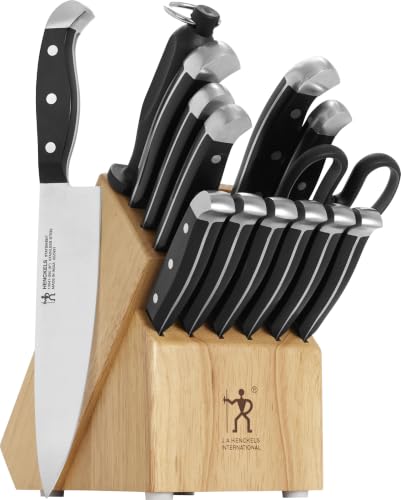
An honest look at the Henckels Statement knife set: who it's for, real specs, performance, ease of use, cleaning, and how it compares to alternatives.

An honest look at the Cuisinart 15-Piece Knife Set: who it’s for, standout features, real-world performance, and how it stacks up against alternatives.

An honest look at the Global G-2 Chef Knife: its lightweight design, razor-sharp edge, and who it suits best. We compare specs, buyer feedback, and alternatives.
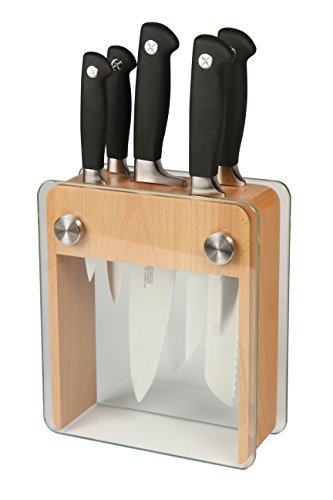
An honest look at the Mercer Culinary Genesis knife set: who it's for, standout features, real-world performance, ease of use, cleaning, value, pros and cons, and how it stacks up against close alternatives.
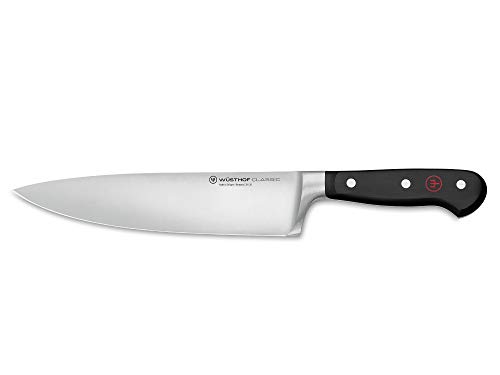
An honest look at the Wusthof Classic 8-inch chef's knife: who it's for, real specs, performance, cleaning, and how it stacks up against close rivals. No hype, no fake testing.
The Victorinox Fibrox 8-inch chef's knife is a no-nonsense workhorse that delivers professional-grade sharpness and comfort at a price that won't scare beginners. It's not flashy, but it's one of the most reliable kitchen tools you can buy.
Stop knives from dulling by using a wood or plastic cutting board, hand washing, and honing weekly. Avoid glass and stone surfaces. Store blades in a block or on a magnetic strip. Sharpen only when needed, using a whetstone or quality electric sharpener.
Use a fine abrasive like Bar Keepers Friend or baking soda paste. Rub along the grain, rinse, dry, and oil. For heavy rust, use fine steel wool or a rust eraser. Always dry and oil after cleaning.
A dull blade is the usual culprit. Tomatoes have soft skin and watery flesh, so they need a razor-sharp edge. Sharpen your knife with a whetstone or honing rod. If it still crushes, check for a bent blade or improper cutting technique.
To remove rust, scrub the blade with a paste of baking soda and water or a rust eraser, then rinse and dry. For deeper rust, use white vinegar or a commercial rust remover. Always oil the blade after cleaning.
To clean rust off a knife, soak the blade in white vinegar for 30 minutes, then scrub with a non-abrasive pad or brush. For stubborn spots, make a baking soda paste and rub gently. Rinse, dry completely, and apply a light coat of mineral oil to prevent future rust.
Your knife dulls because the edge rolls or chips from hard use, poor technique, and abrasive boards. Fix it by honing weekly, sharpening when dull, and cutting on wood or plastic. Upgrade to harder steel if it still fails.
Wash your chef's knife by hand with warm, soapy water immediately after use. Dry it completely with a towel. Never put it in the dishwasher. Store it in a block, on a magnetic strip, or with a blade guard. Hone it regularly and sharpen it when dull.
For light rust, make a paste of baking soda and water, apply it to the blade, and rub gently with a soft cloth or cork. For heavier rust, use a rust eraser or fine steel wool with oil. Rinse, dry, and oil the blade afterward.
Your knife won't hold an edge because of soft steel, a coarse or damaged edge, or improper use on hard surfaces. Sharpen it on a fine grit stone, then hone with a steel. Use a wooden or plastic board. Avoid glass, stone, and dishwasher. If it still dulls, the steel may be too soft; consider a harder blade.
To clean a rusty knife blade, wash it with warm soapy water, dry it, then rub the rust with a baking soda paste or a rust eraser. Work in small circles, rinse, dry, and oil the blade. For heavy rust, soak in white vinegar for a few minutes.
Use a paste of baking soda and water or a raw potato with dish soap to scrub off light rust. For heavier rust, soak in white vinegar, then scrub with a non-abrasive pad. Rinse, dry, and oil the blade to prevent future rust.
Knives dull fast because of poor technique, wrong cutting surface, or improper storage. Use a honing rod weekly, sharpen on a whetstone or electric sharpener every few months, and always cut on wood or plastic. Store blades in a block or on a magnetic strip.