The GASLAND Chef Collection 31.5 inch downdraft electric cooktop is a built in cooktop that puts four cooking zones and its own ventilation into a single counter cutout, so the smoke and steam from your pans are pulled down and away instead of relying on an overhead hood. This overview is written from the current Amazon listing and the published specifications rather than from first hand cooking, so treat it as a research summary that points you toward the numbers you need to confirm before you commit to a cutout and an electrician.
What it is
This is a built in electric downdraft cooktop. In plain terms, that means two things are combined in one unit. The first is the cooktop itself, a flat surface with four burners, or cooking zones, that drops into a counter opening. The second is the downdraft vent, an extraction channel that sits level with or just behind the cooking surface and draws cooking air downward rather than sending it up to a wall or ceiling hood. Because it is a built in appliance rather than a portable plug in unit, it is designed to be wired into your kitchen permanently and framed into cabinetry or an island. The listing describes a 31.5 inch width and a four burner layout, which places it in the common range for a four zone electric cooktop. The exact heating method, whether radiant elements under a glass surface or another electric element type, along with the power of each zone, is the kind of detail you should read directly from the current listing rather than assume.
Key features
On paper the headline features are straightforward. You get a 31.5 inch cooking surface sized to fit a standard counter cutout, four separate cooking zones for running several pans at once, and an integrated downdraft extraction system so the unit handles its own ventilation. The downdraft design is the defining feature here, because it removes the need for a bulky hood suspended over the cooktop. Beyond those points, the controls, zone power levels, boost settings, timers, residual heat indicators, and any child lock behavior vary by model, so confirm each of those against the listing and the product manual before you decide it matches how you cook.
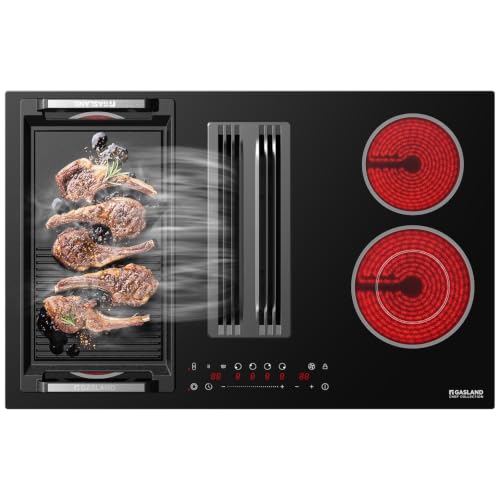
GASLAND CHEF COLLECTION 31.5 Inch Downdraft Electric Cooktop, 4 Burner
A built in 31.5 inch electric cooktop with four cooking zones and an integrated downdraft vent. Confirm the voltage, amperage, wiring, cutout size, and venting type on the listing before you buy.
Check price on AmazonWho it is for
This style of cooktop earns its place in a few specific situations. The clearest is a kitchen remodel built around an island or a peninsula where there is no practical way to hang an overhead hood, or where the homeowner simply does not want one breaking the sight lines. A downdraft unit keeps the ceiling clear and the island looking clean, which is often the whole reason people choose it. It also suits open plan kitchens where a large canopy hood would dominate the room, and smaller kitchens where ducting up to an exterior wall above the cooktop is difficult. If you already have a strong, well placed overhead hood and no design reason to remove it, a downdraft cooktop is less compelling, because a good overhead hood generally captures rising steam more easily than any system that pulls air downward.
Strengths on paper
The strengths that stand out from the listing are mostly about integration and layout freedom. Combining the cooktop and the ventilation into one cutout simplifies an island design and frees the space above the counter. A four zone electric surface gives you flexibility for everyday cooking without the footprint of a six burner range. A flat electric cooktop is also typically easy to wipe down once it has cooled, with no grates to scrub if the surface is a smooth glass type, though you should confirm the surface material on the listing. For anyone whose main goal is a clean island with no hood overhead, the appeal is obvious, and the four burner count covers most everyday households without crowding the surface.
Things to check
Because this is a built in, permanently wired appliance, the research you do before buying matters more than it would with a countertop gadget. Confirm the following directly on the current listing and in the manufacturer documentation. First, the electrical requirements: the voltage, the amperage, and the wiring the unit needs. A built in electric cooktop of this size typically calls for a dedicated high voltage circuit, and the exact figures decide whether your existing panel and wiring can support it or whether you need new circuit work. Second, the cutout dimensions: the width, the depth, and the required clearances below and behind the unit, since the downdraft mechanism needs space that a plain cooktop does not. Third, the number of cooking zones and their individual power, so you know the four burner layout actually matches your pans and your habits. Fourth, the downdraft venting type: whether it ducts to the outside or recirculates through a filter, because that choice changes both the performance and the installation path. Finally, plan for professional installation. This is not a do it yourself plug in unit. A qualified electrician and installer should handle the circuit, the connection, and the cutout, and they can confirm the unit is compatible with your home before anything is cut. Nothing in this overview should be read as a safety guarantee; the listing, the manual, and a licensed professional are the authorities on whether this cooktop can be installed safely in your kitchen.
How it compares
The honest comparison is not against another specific model but against the whole idea of a standard cooktop paired with a range hood. A conventional setup puts a cooktop in the counter and a hood on the wall or ceiling above it. That arrangement usually captures rising heat and steam more effectively, because it works with the natural upward movement of hot air, and overhead hoods often offer higher extraction rates. The trade off is the visible hardware overhead and the ducting it needs. A downdraft cooktop like this GASLAND Chef unit flips that trade: you gain a clean, open counter and island with no hood in sight, and you accept a ventilation system that has to pull air down and sideways, which can be less effective for tall stockpots and for vigorous frying. Neither approach is simply better than the other. The right choice depends on your kitchen layout, your tolerance for overhead hardware, and how much heavy, smoky cooking you actually do.
Verdict
The GASLAND Chef Collection 31.5 inch downdraft electric cooktop is a sensible candidate if your kitchen design calls for a four zone electric surface with built in ventilation and no overhead hood, particularly on an island or in an open plan space. The appeal is real and specific, and the four burner, hood free layout is exactly what many remodels are looking for. The caution is equally specific: this is a built in appliance with real electrical and installation demands, and its published specifications, especially the voltage, amperage, wiring, cutout size, and venting type, should be verified before you buy and before anyone cuts your counter. If those numbers line up with your kitchen and a qualified installer signs off, it is worth a close look, so check the current listing for the current details and confirm the specifications for yourself.
This is an editorial overview based on the current Amazon listing and published specifications, not hands on testing. ProductPickly may earn a commission from qualifying purchases.