Freezers
Best Freezers: Chest and Upright Picks for Extra Frozen Storage
7 picks compared
9 min read
ProductPickly is reader-supported. When you buy through links on our site, we may earn an affiliate commission at no extra cost to you. It never changes our picks.
The short answerFor most households the Midea 3.5 Cu. Ft. Convertible Chest Freezer is the standout choice, because its convertible dial lets it run as a deep freezer or switch to fridge temperatures, the 3.5 cubic foot chest holds real bulk for a compact size, and an interior light makes the bottom easier to see. If you prefer fridge-style front access, the Whynter CUF-210SS upright is our pick with shelves and a keyed lock, while the Frigidaire 2.0 Cu. Ft. chest is the one to choose for a garage thanks to its garage-ready build and defrost drain. For a roomy chest you can roll out to clean, the EUHOMY 3.5 Cu. Ft. adds wheels, the BANGSON 2.1 Cu. Ft. upright is the budget front-loader for a dorm or office, the EUHOMY 1.1 Cu. Ft. is the most compact upright for tight spaces, and the Kismile 3.2 Cu. Ft. is the simple budget chest. Choose by how you access food and how much you store rather than by brand alone.
?How we pickedWe compare published specifications, safety certifications and thousands of verified owner reviews, and we do not physically test every unit. Read the full process in our review methodology.
Midea 3.5 Cu. Ft. Convertible Chest Freezer
★★★★★ 4.6 / 5 Best overall
This is the freezer we would point most households to first because the convertible dial lets you run it as a deep freezer or flip it to fridge temperatures, which is genuinely useful if your needs change from season to season or party to party. The 3.5 cubic foot chest layout holds a fair amount of bulk food for a compact footprint, and the interior LED light is a small touch that saves you digging blind, though a chest design still means the top-down access that suits stacking more than daily grabbing.
Style Chest, convertibleCapacity 3.5 cubic feetDefrost ManualExtras Interior LED light
- Converts between freezer and fridge use
- Interior light makes the bottom easier to see
- Compact chest footprint for the capacity
- Chest access means reaching down to the bottom
- Manual defrost as with most chest models
Best for: a flexible freezer that can double as a fridge
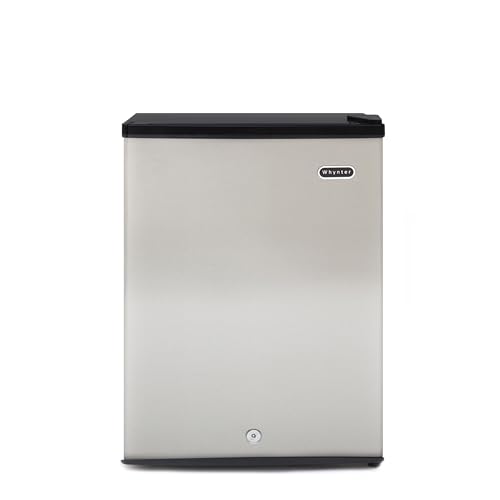
Whynter CUF-210SS 2.1 Cu. Ft. Upright Freezer
★★★★★ 4.4 / 5 Best upright
For anyone who hates bending into a chest to fish out a bag of peas, this upright is our pick because the front door and interior shelves let you see and grab items the way you would in a normal fridge. The stainless finish looks tidier than plain white plastic, and the keyed lock is a real plus in a shared kitchen or office, though the 2.1 cubic foot cabinet is on the small side and the upright layout gives up some of the raw storage efficiency a chest offers.
Style Upright, front doorCapacity 2.1 cubic feetDefrost ManualExtras Keyed lock, shelves
- Front access with shelves for easy grabbing
- Keyed lock suits shared or office use
- Stainless look is neater than plain white
- Small cabinet at just over two cubic feet
- Manual defrost still required
Best for: people who want fridge-style front access
Frigidaire 2.0 Cu. Ft. Garage-Ready Chest Freezer
★★★★★ 4.5 / 5 Best for the garage
If the freezer is headed for a garage or an unheated utility room, this small Frigidaire chest is the one we would choose because it is built to keep holding temperature when the surrounding air swings hot or cold, which many indoor-only units struggle with. It comes with a removable wire basket to organize the top layer and an easy-defrost drain to make the annual thaw less messy, so the trade-off is simply that two cubic feet is a modest amount of space best treated as overflow storage.
Style Chest, garage-readyCapacity 2.0 cubic feetDefrost Manual, with drainExtras Removable wire basket
- Built to run in a hot or cold garage
- Defrost drain makes thawing cleaner
- Removable basket organizes the top layer
- Two cubic feet is overflow-only space
- Still a manual-defrost chest
Best for: an overflow freezer for a garage or shed
EUHOMY 3.5 Cu. Ft. Chest Freezer With Wheels
★★★★★ 4.4 / 5 Best chest for capacity
This EUHOMY chest matches the larger 3.5 cubic foot capacity but leans into a different strength, the casters on the base, which make it easy to roll out for cleaning or to shift between rooms without emptying it first. The black finish hides marks better than white in a basement or garage, and a top-opening chest like this holds cold well when the lid stays shut, so the honest caveats are the usual chest ones of top-down digging and a manual defrost cycle.
Style Chest, top doorCapacity 3.5 cubic feetDefrost ManualExtras Rolling casters
- Wheels make cleaning and moving simple
- Roomy 3.5 cubic foot chest layout
- Dark finish hides scuffs in a garage
- Top-down access buries lower items
- Manual defrost needed periodically
Best for: a roomy chest you can roll out to clean
BANGSON 2.1 Cu. Ft. Upright Mini Freezer
★★★★★ 4.3 / 5 Budget upright
For a wallet-friendly upright that still gives you front-loading convenience, this BANGSON unit is a sensible pick for a dorm room, home office, or a spare corner where a full chest would not fit. The single-door cabinet and removable shelf keep small frozen items in view rather than buried, and while it will not match a chest for bulk storage or long-term efficiency, the compact size and simple controls make it an easy secondary freezer for everyday extras.
Style Upright, single doorCapacity 2.1 cubic feetDefrost ManualExtras Removable shelf
- Front access in a compact footprint
- Fits a dorm, office, or spare corner
- Simple to set up and use
- Limited space for bulk storage
- Manual defrost like most minis
Best for: a compact upright for a dorm or office
EUHOMY 1.1 Cu. Ft. Upright Mini Freezer
★★★★★ 4.3 / 5 Most compact
When space is the real constraint, this 1.1 cubic foot EUHOMY is about as small as a standalone upright freezer gets, small enough to tuck onto a shelf or under a counter in a tight kitchen or a studio. The reversible door lets you set the hinge to open toward whichever side the room allows, which matters more than it sounds in a cramped spot, so the obvious trade is that a cabinet this size is for ice, a few frozen meals, and small extras rather than a week of groceries.
Style Upright, single doorCapacity 1.1 cubic feetDefrost ManualExtras Reversible door hinge
- Very small footprint for tight spaces
- Reversible hinge suits either side
- Front access despite the tiny size
- Only enough room for small extras
- Manual defrost required
Best for: the smallest spaces and light frozen needs
Kismile 3.2 Cu. Ft. Chest Freezer
★★★★★ 4.3 / 5 Budget chest
For a plain, no-frills chest that focuses spending on storage rather than features, this Kismile holds a useful 3.2 cubic feet and keeps the design simple with an adjustable thermostat dial and a hanging basket for the items you reach for most. It skips the convertible mode and light that the higher picks include, which is exactly why it lands as the budget chest here, and it shares the same honest chest caveats of top-down access and periodic manual defrosting.
Style Chest, top doorCapacity 3.2 cubic feetDefrost ManualExtras Hanging basket
- Good storage for a simple design
- Adjustable thermostat dial
- Hanging basket keeps small items handy
- No convertible mode or interior light
- Top-down chest access and manual defrost
Best for: a simple, spacious chest without extras
The best standalone freezer for you comes down to two honest questions, how you want to reach your food and how much of it you store, so before comparing brands it helps to picture whether you will stack bulk buys in a chest or grab daily items from an upright. The picks below span both styles and a range of sizes, from a 1.1 cubic foot mini to roomy 3.5 cubic foot chests, including a convertible model, a garage-ready unit, and locking uprights, so you can match the freezer to your space rather than the other way around.
Chest versus upright: space and access
The first fork is the freezer's shape, because it decides how you live with it day to day. A chest freezer opens from the top and gives you one deep, open cavity, which uses space efficiently and holds cold well since the cold air settles and stays when you lift the lid. The cost is access, as you stack items and often have to lift the top layer to reach the bottom, which is why baskets like those on the Frigidaire and Kismile matter. An upright such as the Whynter or the compact BANGSON works like a small fridge, loading from the front with shelves so everything is in view. It is far easier for daily grabbing and fits a narrow floor space, but you generally get a little less usable room for the footprint, and opening a front door lets more cold air spill out than lifting a chest lid.
Capacity in cubic feet for your household
Freezers are measured in cubic feet, and picking the right number saves both money and frustration. A useful starting point is roughly one and a half to two cubic feet per person, then adjust upward if you batch cook, buy meat in bulk, or freeze garden harvests. In practice, a 1.1 cubic foot mini like the small EUHOMY upright is for ice, a few meals, and single-person extras, a 2.0 to 2.1 cubic foot unit such as the Frigidaire or the uprights suits overflow storage for a small home, and a 3.2 to 3.5 cubic foot chest like the Midea, the larger EUHOMY, or the Kismile is where a family gains real breathing room. It is usually wiser to size up slightly than to run out of space, but only to the capacity you will actually keep reasonably full.
Manual versus automatic defrost
Almost every compact freezer in this class, including all of the picks here, is manual defrost, which means frost slowly builds inside and you clear it yourself once or twice a year by emptying and thawing the unit. It is a modest chore rather than a burden, and features like the Frigidaire's defrost drain make the cleanup tidier by giving the meltwater somewhere to go. Automatic or frost-free freezers spare you that task but tend to appear on larger, pricier appliances and can dry stored food a touch faster due to their cycling. For a small secondary or garage freezer, manual defrost is the norm and generally the sensible trade, so plan for a short annual thaw rather than expecting a hands-off machine.
Garage readiness and energy use
Where you put the freezer matters as much as which one you buy. A garage or unheated room swings between hot and cold, and a freezer that is not rated for those extremes can lose temperature or run non-stop trying to cope, which is why a garage-ready model like the Frigidaire is worth seeking out for those spots. Indoor-only units are happier in a kitchen, basement, or utility room that stays closer to room temperature. On running costs, compact freezers are relatively modest users, and a few habits keep any of them efficient, such as keeping the unit reasonably full so the cold mass holds, placing it away from ovens and direct sun, and not leaving the lid or door open while you decide what to grab. A well-sealed chest generally holds cold longest between cycles, while an upright trades a little of that for the convenience of front access.
Questions people ask
Is a chest freezer or an upright freezer better?
Neither is better outright, it depends on how you store food and where the freezer goes. A chest freezer like the Midea or the EUHOMY holds more usable space for its size and tends to keep cold well because cold air sinks and stays put when the lid opens, but you access it from the top and end up stacking. An upright such as the Whynter loads from the front with shelves, so you see and grab items easily, at the cost of a little storage efficiency and usually a higher footprint per cubic foot.
How many cubic feet of freezer space do I need?
A rough guide is around one and a half to two cubic feet of freezer space per person in the household, then add more if you batch cook, buy in bulk, or store garden produce. A 1.1 cubic foot mini like the EUHOMY upright suits ice and a few frozen meals for one person, a 2.0 to 2.1 cubic foot unit works as overflow for a small home, and a 3.2 to 3.5 cubic foot chest handles bulk buys for a family more comfortably.
What does manual defrost mean, and is it a problem?
Manual defrost means the freezer does not automatically melt away frost, so once or twice a year you empty it, switch it off, and let the ice build-up thaw before wiping it dry. Most compact chest and upright freezers, including all of the picks here, are manual defrost. It is a minor chore rather than a dealbreaker, and models with a defrost drain, like the Frigidaire, make the cleanup less messy.
Can I keep a freezer in a garage?
You can, but only some freezers are built for it. A garage or unheated room swings hot and cold, and a freezer that is not rated for that can struggle to hold temperature or run constantly. The Frigidaire in this guide is described as garage-ready for exactly that reason. If you plan to put a freezer somewhere unconditioned, choosing a garage-rated model is the safer path than hoping an indoor-only unit copes.
Do these freezers use a lot of energy?
Compact freezers in the one to four cubic foot range are relatively modest users, and a well-sealed chest tends to hold cold longer between cycles because opening the lid lets less cold air escape than swinging a front door. Keeping the freezer reasonably full, placing it away from heat sources, and not leaving the door or lid open helps any model run efficiently. Check the individual listing for the specific energy details of the unit you choose.
What is a convertible freezer?
A convertible unit, like the Midea chest, can run as a freezer or be switched over to fridge temperatures using a dial or setting. That flexibility is handy if your needs change, for example running it as a freezer most of the year and flipping it to a drinks fridge for a gathering. If you only ever need frozen storage, a standard freezer is simpler, but the convertible option adds a second use without buying a second appliance.
Why choose an upright freezer for a dorm or office?
Uprights like the BANGSON and the small EUHOMY load from the front and take up a smaller floor area, which suits a dorm room, office, or tight kitchen where you cannot open a lid upward or spare much floor space. Some, such as the Whynter, add a keyed lock, which is useful when the freezer is in a shared space. The trade-off is less raw capacity than a chest of a similar price.
How were these freezers chosen?
These are our picks based on comparing the freezer styles, capacities, defrost method, and features like convertible modes, locks, wheels, and garage ratings against common real-world needs, from a garage overflow unit to a compact dorm freezer. Every product shown is a real listing, and the selection reflects that comparison rather than any hands-on lab claim, so use the specs and your own space and storage needs to make the final call.
The bottom lineSo which one?
The Midea 3.5 Cu. Ft. Convertible Chest Freezer is our top choice because it pairs a genuinely useful convertible mode with a roomy chest layout and an interior light, giving one appliance two jobs without asking much in return beyond the usual top-down access and manual defrost. If front access matters more to you, the Whynter upright earns the nod with its shelves and lock, and if the freezer is headed for a garage, the garage-ready Frigidaire is the safer bet than any indoor-only unit. Let your space, your access preference, and how much you actually store lead the decision, and size the capacity to what you will keep reasonably full rather than the biggest box that fits.