Electric Kettles
Best electric kettles compared for real buyers.
57 posts in this topic
Shopping for a electric kettle? Our electric kettles guides compare capacity, temperature control, boil speed, material so you can match the right electric kettle to your kitchen and budget without the guesswork.
Stainless steel is the safest material for an electric kettle. It resists corrosion, does not leach chemicals, and handles high heat well. Glass is a close second, but it is fragile. Plastic kettles may release microplastics, especially when heated. Choose food-grade 304 stainless steel for the best safety and durability.
For most coffee lovers, a gooseneck kettle with variable temperature control is best. It offers precise pouring and accurate brewing temperatures. The Fellow Stagg EKG is a top choice. For budget, the Cosori gooseneck kettle works well. Standard kettles suit drip machines.
Electric kettles are efficient for boiling water. They typically use 1500 to 3000 watts. Boiling a liter takes about 3 to 4 minutes. That's roughly 0.1 kWh per boil. Compared to a microwave or stovetop, they use less energy. So no, they don't use a lot of electricity for the task.
The fastest electric kettles use high wattage, typically 1500W or more, and have a concealed heating element. Models like the Breville IQ Kettle and the COSORI Speed-Boil Kettle reach boiling in under two minutes for small amounts. Larger capacities take longer, so consider your typical volume.
Yes, you can boil milk in an electric kettle, but it's risky. Milk scalds and boils over quickly, creating a mess and potential damage. The heating element can burn milk, leaving stubborn residue. Most manufacturers advise against it. For safer results, use a microwave or stovetop instead.
Yes, you can cook pasta in an electric kettle, but it works best for small portions like ramen or macaroni. Most kettles boil water fast, but they lack temperature control and may switch off before pasta is done. Use a kettle with a keep-warm function for better results.
For most tea drinkers, a variable temperature kettle with a gooseneck spout is best. It heats water to the exact degree your tea needs. Look for models with preset temperatures for green, white, and black teas. A gooseneck spout gives precise pouring control. This combination improves flavor and brewing consistency.
Yes, electric kettles can cook certain foods, but they are not full replacements for stovetops. They excel at boiling water, making tea, and quick tasks like ramen or oatmeal. Most kettles lack temperature control and precise simmering, so complex recipes are difficult. Stick to simple, water-based dishes for best results.
Most electric kettles boil a full liter of water in 3 to 4 minutes. Higher wattage models can do it in under 2 minutes. Actual time depends on wattage, water volume, starting temperature, and altitude. A 1500W kettle typically takes 3 to 4 minutes for one liter. Smaller amounts boil faster, often in 1 to 2 minutes.
Yes, you can boil eggs in an electric kettle. The process is simple: place eggs in the kettle, cover with water, and boil. Many models have an auto shutoff, so you must time it manually. Use a separate kettle for eggs to avoid flavor transfer.
Most electric kettles boil a full 1.7L of water in 3 to 5 minutes. Smaller 1L kettles often finish in under 3 minutes. Actual time depends on wattage, starting water temperature, and altitude. Higher wattage generally means faster boiling.
Yes, you can boil water in an electric kettle. It heats water to a rolling boil quickly and safely. Most kettles have automatic shutoff. Use it for tea, coffee, or cooking. Always follow the manufacturer's instructions.
The easiest electric kettles to clean have wide mouths, hidden heating elements, and smooth stainless steel or glass interiors. Look for models with removable limescale filters and boil-dry protection. The COSORI Electric Kettle stands out with its wide opening and brushed stainless steel interior.
Electric kettles use a concealed heating element at the base to boil water quickly. When you switch it on, electricity flows through a resistive coil, generating heat. A thermostat senses boiling steam and automatically cuts power. This makes them faster and more efficient than stovetop models.
For plastic-free boiling, choose a kettle with a stainless steel or glass interior and no plastic in the water path. Look for models with a fully metal or glass lid, spout, and interior. Avoid kettles with plastic filters or heating elements. Check the product description for materials like 304 stainless steel or borosilicate glass. Popular safe options include the Fellow Stagg EKG and the COSORI Glass Kettle.
Yes, you can boil milk in an electric kettle, but it's risky. Milk scorches and boils over quickly. It can damage the heating element and leave burnt residue. Cleanup is tough. For best results, use a kettle with temperature control or a milk frother. Otherwise, use a saucepan.
Yes, it is generally safe to leave water in an electric kettle for a short time, but not for days. Stagnant water can harbor bacteria and promote limescale buildup. For best taste and safety, empty the kettle after each use and refill fresh before boiling.
Yes, electric kettles usually boil water faster than stovetop kettles. They heat directly with an immersed element, losing less energy. Most electric models boil a liter in under four minutes. Stovetop kettles depend on your stove's power and take longer. Induction stoves can narrow the gap.
Yes, most modern electric kettles are safe to leave plugged in, but unplugging is smarter. They auto-shut off when boiling, yet standby power still flows. Older or faulty units pose fire risks. Always check the cord and base. Unplug when not in use for peace of mind.
The best electric kettle for pour-over coffee is a gooseneck model with variable temperature control. A gooseneck spout gives you precise pouring control, which is essential for even extraction. Variable temperature lets you hit the ideal brewing temperature, usually between 195°F and 205°F. Look for a kettle with a built-in thermometer or digital display. The Fellow Stagg EKG is a top choice, but budget options like the Cosori gooseneck also work well.
Yes, you can boil water in an electric kettle for pasta. It heats water faster than a stove. Pour the boiling water into a pot, then cook pasta normally. Avoid adding pasta to the kettle itself.
The best electric kettle for tea is one with variable temperature control and a keep-warm function. The Cuisinart CPK-17 PerfecTemp stands out for its six preset temperatures and one-hour hold. It suits most tea drinkers. For a budget pick, the Mueller Ultra Kettle offers reliable performance without presets.
An electric kettle heats water using a metal heating element at its base. Electricity flows through the element, converting electrical energy into heat. A thermostat monitors water temperature and switches off the kettle when boiling. This direct heating makes kettles faster and more efficient than stovetop models.
Learn how to descale and deodorize your electric kettle using vinegar, citric acid, or lemon juice. Step-by-step instructions, frequency tips, and safety precautions included.
Choosing the right electric kettle means balancing material, capacity, wattage, and safety features. This guide breaks down stainless steel, glass, and plastic options, plus must-have features like auto shut-off and temperature control.


The Breville IQ Kettle delivers precise temperature control and fast boiling for tea and coffee enthusiasts. But does its premium price justify the performance? Our editorial team compared specifications, buyer feedback and key decision factors.
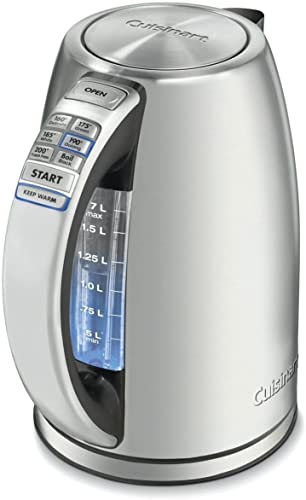
The Cuisinart CPK-17 PerfecTemp offers six precise temperature settings, a convenient keep-warm feature, and excellent build quality. Our editorial team compared specifications, buyer feedback and key decision factors to help you decide if this kettle is right for your kitchen.
Mix one part lemon juice with two parts water, fill the kettle halfway, boil, then let it sit for 30 minutes. Pour out the solution, rinse thoroughly, and boil fresh water twice. Wipe the interior clean. Repeat monthly if you have hard water.
First, unplug the kettle and check the base and bottom for limescale or debris. Clean the heating plate and contacts with a soft brush or vinegar. If the kettle still stops boiling, check the lid seal and the auto shut-off switch. Resetting the kettle by unplugging for 10 minutes often fixes a tripped thermal fuse.
First, unplug the kettle and let it cool completely. Then inspect the base, spout, and lid seal. Most leaks come from a loose lid gasket or mineral buildup. Tighten or replace the gasket. Descale with vinegar or citric acid. If the body cracks, replace the kettle.
Fill the kettle halfway with equal parts water and white vinegar. Boil, let it sit for 20 minutes, then pour out. Rinse thoroughly and boil fresh water twice to remove any vinegar taste.
Unplug the kettle and check the lid and base for mineral buildup, which often jams the thermostat. Descale with vinegar or citric acid, then test. If it still boils dry, the thermostat or switch may be faulty, so replace the kettle.
Mix one to two tablespoons of citric acid with water, fill the kettle, boil, let it sit for 20 minutes, then rinse thoroughly. Repeat if scale remains. This dissolves limescale safely without harsh chemicals.
Your kettle likely shuts off early because of limescale buildup on the heating element, a faulty thermostat, or a loose base connection. Descale it first with vinegar or citric acid. If that fails, check the base and cord. Replace the kettle if it still trips.
First, descale your kettle with a citric acid or vinegar solution. Limescale buildup is the most common cause of popping and rumbling. If the noise persists, check the heating element for damage. A loose lid or a faulty thermostat can also cause rattling. Replace the kettle if the base wobbles or the noise is accompanied by sparks.
Fill the kettle halfway with equal parts water and white vinegar, or use 2 tablespoons of citric acid per liter of water. Boil, let it sit for 20 minutes, then rinse thoroughly. Repeat if scale remains.
To stop an electric kettle from whistling, first check the lid and spout for steam leaks, then clean the spout and lid seal, and ensure the lid is closed tightly. If the whistle persists, descale the kettle to remove mineral buildup that can alter steam flow.
Descale your kettle weekly with a 50/50 white vinegar and water solution, boil, let sit for 30 minutes, then rinse thoroughly. For daily prevention, use filtered or distilled water, empty the kettle after each use, and wipe the interior dry. These steps stop scale before it bonds.
First, unplug the kettle and check the base and cord for damage. Test a different outlet. If it still won't heat, the heating element or thermal fuse may be faulty. Replacing a thermal fuse is possible, but a broken element usually means a new kettle.
First, unplug the kettle and let it cool. Check the lid gasket and base seal for debris or wear. Tighten any loose screws. If the leak is from the spout, descale it. For a cracked body or damaged heating element, replace the kettle.
To stop rust, descale weekly with white vinegar or citric acid, dry the interior after each use, and avoid leaving water standing overnight. Replace the kettle if rust persists, as it can leach into your drinks.
First, check the power base and outlet. Ensure the kettle is seated correctly. If it still won't boil, inspect the heating element for scale buildup. Descale with vinegar or citric acid. If that fails, the thermostat or element may be faulty. Then, consider replacement.
To stop rust, switch to a stainless steel kettle with a plastic or hidden heating element. Clean it weekly with vinegar or citric acid, and dry it completely after each use. Avoid leaving water sitting in it overnight. If rust appears, scrub with a soft brush and rinse thoroughly. Replace if pitting occurs.
The quickest fix is to fill the kettle with equal parts water and white vinegar, boil, let it sit for 30 minutes, then rinse thoroughly. For stubborn scale, use citric acid. Repeat monthly if you have hard water. This removes existing limescale and prevents future buildup.
Unplug the kettle and let it cool. Check the lid seal and ensure it's closed tightly. Inspect the thermostat or steam sensor for mineral buildup. Descale with vinegar or citric acid. If the problem persists, the thermostat may be faulty and needs replacement.
Unplug the kettle immediately and let it cool. Check the lid seal and the auto shut-off sensor. Clean any limescale with vinegar. If the switch still fails, replace the kettle. Never refill a hot kettle.
Fill the kettle with equal parts water and white vinegar, boil, let sit for 20 minutes, then rinse thoroughly. For heavy buildup, use citric acid instead. Repeat if needed. Boil fresh water twice to remove any aftertaste.
First, unplug the kettle and let it cool. Check the lid seal, the base connection, and the water level indicator for cracks or loose parts. Tighten any screws, replace a worn gasket, or descale if mineral buildup is the cause. If the body is cracked, replace the kettle.
Most electric kettle noise comes from limescale buildup or trapped air bubbles. Descale regularly with vinegar or citric acid. If noise persists, check the heating element for damage. Replace the kettle if it's old or leaking.
Fill the kettle halfway with equal parts water and white vinegar, or use 2 tablespoons of citric acid per liter of water. Boil, let it sit for 20 minutes, then rinse thoroughly. Boil fresh water twice to remove any residue.
To stop rust, switch to a stainless steel kettle with a plastic or hidden heating element. Clean it weekly with vinegar or citric acid. Dry it completely after each use. If rust persists, replace the kettle to avoid ingesting metal flakes.
Fill the kettle halfway with equal parts water and white vinegar. Boil, let it sit for 20 minutes, then rinse thoroughly. Boil plain water once or twice to remove any vinegar taste. This dissolves limescale and mineral buildup.
First, check the power source and the kettle's base connection. Ensure the kettle is seated correctly and the switch is in the 'on' position. If it still won't turn on, inspect the power cord and outlet. For persistent issues, check the thermal fuse or heating element, which may need replacement.
Is your electric kettle dead? Learn the common causes like a faulty power cord, blown fuse, stuck switch, or internal wiring issues. Step-by-step troubleshooting guide to fix it or know when to replace.
Is your electric kettle making a loud whistling noise? Learn why steam escaping through the spout or mineral buildup causes this sound and how to fix it with simple descaling, lid seal checks, or spout adjustments.