Coffee Grinders
Best coffee grinders compared for real buyers.
51 posts in this topic
Shopping for a coffee grinder? Our coffee grinders guides compare burr vs blade, grind settings, capacity, consistency so you can match the right coffee grinder to your kitchen and budget without the guesswork.
An expensive coffee grinder is worth it if you value consistent grind size and durability. Cheap blade grinders produce uneven particles, leading to bitter or sour coffee. Burr grinders, especially with steel or ceramic burrs, offer precision. For drip or French press, a mid-range burr grinder suffices. Espresso demands high-end grinders for fine adjustments. Assess your brewing method and budget before spending.
Burr grinders are better for most coffee drinkers. They crush beans between two surfaces, producing uniform particles. This consistency improves flavor extraction. Blade grinders chop unevenly, leading to bitter or sour cups. Choose a burr grinder for pour-over, espresso, or French press. Pick a blade grinder only for very tight budgets or occasional grinding.
The best grind size for French press is coarse, roughly like sea salt or breadcrumbs. This size prevents over-extraction and keeps grounds out of your cup. Use a burr grinder for consistent particles. Adjust based on brew time and bean freshness.
Yes, you can use a coffee grinder to grind spices, but results vary by grinder type. Blade grinders handle most whole spices, while burr grinders suit dry, hard spices. Clean thoroughly between uses to avoid flavor transfer. Dedicate a grinder to spices for best results.
A burr grinder crushes coffee beans between two abrasive surfaces, called burrs. One burr rotates while the other stays fixed. The gap between them sets the grind size. This produces uniform particles, unlike blade grinders that chop unevenly. Consistent grind size leads to better extraction and flavor.
Burr grinders are better for consistent particle size and flavor, while blade grinders are cheaper and fine for drip coffee. Choose burr for espresso or French press. Choose blade for occasional use or tight budgets.
Yes, you can use a coffee grinder to grind spices, but it depends on the grinder type. Blade grinders work well for most spices, while burr grinders may struggle with oily or fibrous ones. Clean thoroughly between uses to avoid flavor transfer. Dedicated spice grinders are better for frequent use.
Clean your coffee grinder every two to four weeks if you use it daily. Blade grinders need more frequent cleaning than burr grinders. Wipe the hopper and remove oily residue monthly. Deep clean with rice or grinder cleaner tablets monthly. Check for stale odors or slower grinding as signs.
Yes, you can grind coffee beans in a blender, but the grind will be uneven. A blender's blades chop rather than crush, producing a mix of fine powder and coarse chunks. This works for French press or cold brew, but not for espresso. Use short pulses and shake the blender for better consistency.
Yes, a burr grinder is better for most coffee drinkers because it produces uniform particle sizes. Consistent grounds lead to even extraction and better-tasting coffee. Blade grinders chop unevenly, causing bitter and sour flavors. Burr grinders cost more, but the upgrade in cup quality justifies it for regular coffee drinkers.
Yes, a burr grinder makes a significant difference. It produces uniform coffee grounds, which leads to even extraction and a better-tasting cup. Blade grinders chop unevenly, causing bitter and sour flavors. For most coffee drinkers, upgrading to a burr grinder is the single best improvement.
Adjust the grind size by turning the adjustment ring or dial while the grinder runs. Start coarse and grind finer in small steps until your brew tastes balanced. Always adjust with the hopper empty or running to avoid jamming. Check the manual for your specific model.
Yes, you can grind spices in a coffee grinder, especially if it's a blade grinder. Burr grinders work too, but they may retain flavors. Clean thoroughly between uses. Dedicated spice grinders are best for frequent spice grinding.
For pour over coffee, a burr grinder is essential. It produces uniform particles for even extraction. Look for one with many grind settings. A conical burr grinder suits most home brewers. The Baratza Encore is a top choice.
Yes, a burr grinder is worth it if you care about coffee flavor. Blade grinders chop beans unevenly, causing bitter and sour shots. Burr grinders crush beans uniformly, extracting balanced flavors. Even budget burr models outperform blades. For drip, pour-over, or espresso, the upgrade is noticeable. If you drink instant coffee, skip it.
The best coffee grinder for French press is a burr grinder with a coarse setting. It produces uniform grounds, preventing over-extraction and sludge. Look for a model with 40+ settings and a sturdy build. We compared top sellers to highlight the best options.
The best espresso grinder depends on your budget and workflow. For most home baristas, the Baratza Sette 270 offers consistent, stepless adjustment. For a quieter, more durable option, the Eureka Mignon Specialita excels. Budget buyers should consider the Baratza Encore ESP. Each grinder suits different needs, so match the grinder to your routine.
Yes, a burr grinder makes better coffee than a blade grinder. It produces uniform particle sizes, which leads to even extraction and a cleaner, more flavorful cup. Blade grinders chop unevenly, causing bitter and sour notes. For most coffee drinkers, the upgrade is worth it.
Yes, you can grind coffee beans in a blender, but the grind will be uneven. Use short pulses and shake the blender to get a more consistent texture. It works best for coarse to medium grinds, like for French press. For espresso, a dedicated burr grinder is far better.
Yes, a burr grinder is worth it for most coffee drinkers. It delivers uniform particle sizes, which improves extraction and flavor. Blade grinders chop unevenly, causing bitter and sour tastes. Burr grinders cost more but last longer. For espresso and pour-over, they are essential. For French press and drip, they still make a noticeable difference.
Yes, you can grind spices in a coffee grinder, but blade grinders work best for small batches. Burr grinders can trap oils and flavors. Clean thoroughly between uses. Dedicated spice grinders avoid cross-contamination. Choose based on your spice volume and cleaning effort.
Yes, but only up to a point. Finer grounds expose more surface area, so water extracts compounds faster. That raises strength if you keep brew time constant. Over-extraction turns bitter, not stronger. Adjust grind size with your brew method for balanced flavor.
Yes, you can use a coffee grinder for spices, but it depends on the grinder type. Blade grinders work well for most whole spices. Burr grinders are better for oily spices like nutmeg. Clean thoroughly between uses to avoid flavor mixing.
For espresso, a burr grinder is essential. Blade grinders produce uneven particles that ruin extraction. Choose a model with fine, stepless adjustments. The Baratza Encore ESP and Fellow Opus are top picks for home use. They balance price, consistency, and ease of use.
The best coffee grinder for home use is a burr grinder, not a blade model. Burr grinders produce uniform particles, which improves flavor extraction. For most home brewers, the Baratza Encore offers reliable performance and easy maintenance. Espresso drinkers should consider the Sette 270. Budget buyers can start with the Capresso Infinity.
Learn how to clean both burr and blade coffee grinders with rice, bread, or cleaning tablets. Follow our step-by-step guide and frequency recommendations to maintain flavor and performance.
Choosing the right coffee grinder is the single most important step to better coffee. This guide covers burr vs blade, manual vs electric, grind settings, brew method compatibility, budget considerations, and maintenance tips to help beginners make an informed decision.
Find the perfect coffee grinder for your brew method and budget. This guide compares burr vs blade, grind settings, motor power, build material, and noise level to help you make an informed choice.
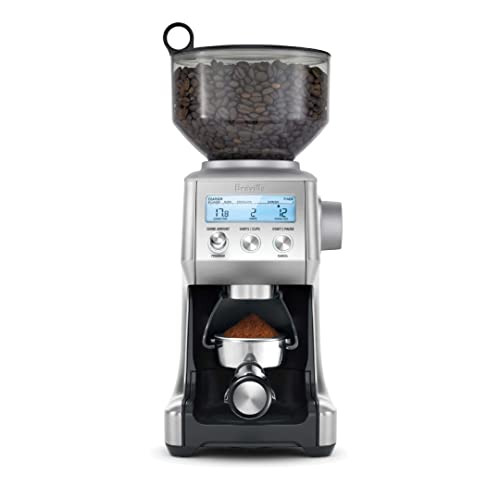
The Breville Smart Grinder Pro offers 60 precise grind settings, a digital timer, and consistent dosing for both espresso and drip coffee. Our editorial team compared specifications, buyer feedback and key decision factors to evaluate its performance against the Baratza Sette 270.

The Baratza Encore is a legendary entry-level burr grinder praised for consistent grind quality, easy adjustability, and long-term durability. But does it live up to its stellar reputation for drip and pour-over coffee? Our editorial team compared specifications, buyer feedback, and key decision factors to bring you an honest assessment.
Burr grinders crush beans between two abrasive surfaces for uniform particles, while blade grinders chop beans with a spinning blade, leading to inconsistent size and heat buildup. For serious coffee, choose burr; for occasional use, blade works.
Burr grinders deliver consistent grounds and preserve flavor, while blade grinders are budget-friendly but can produce uneven particles and heat. This guide breaks down grind consistency, noise, maintenance, and more to help you choose based on your coffee style and budget.
To stop a coffee grinder from being too loud, first place it on a rubber mat or towel to absorb vibration. Then, check for loose burrs or blades and tighten them. If it still roars, consider a quieter model with lower decibel ratings, like a manual grinder or an electric one with sound-dampening features.
The quickest rice-free fix is to grind a handful of white bread cubes. The bread absorbs oils and crumbs, then you discard it. For deeper cleaning, use commercial grinder cleaning tablets or wipe the burrs with a dry brush. Never use water on electric grinders.
Most likely, beans are jammed between the burrs or the hopper is blocked. Unplug the grinder, remove the hopper and burrs, and clear any stuck beans. If it still won't grind, check for a dull burr or a tripped thermal protector.
Unplug the grinder, remove the hopper and burr, and brush out the chute with a stiff brush. Use dry rice or grinder cleaner to absorb oils. Grind coarser for oily beans. Clean weekly to prevent buildup.
Inconsistent grinding usually comes from dirty burrs, stale beans, or a worn grinder. Clean the burrs, use fresh beans, and check for alignment. If the grind size still varies, the burrs may need replacing or the grinder is beyond repair.
First, unplug the grinder and check the power cord for damage. Test the outlet with another device. If the outlet works, inspect the safety interlock switch, which often fails when the lid or hopper isn't seated. Clean any stuck coffee grounds blocking the switch. If it still won't turn on, the motor or switch may need replacement.
To stop the mess, grind into a static-free container, use a funnel, and clean the burrs regularly. For blade grinders, pulse instead of running continuously. Anti-static grinders or a drop of water on beans can reduce static cling. Always grind with the lid on and wipe the chute after use.
Unplug the grinder, remove the hopper and burrs, and clear the chute with a brush. Oily beans or too-fine grounds often cause jams. Grind coarser and add a little rice to clean. If it still jams, check for broken burrs or a worn motor.
Your coffee grinder likely won't grind due to a jammed burr, a clogged chute, or a tripped thermal overload. Unplug it, remove the hopper and burrs, and clear any debris. Check for a blocked exit chute. Let a hot motor cool for 30 minutes. If it still won't grind, inspect the switch or motor.
Stop coffee grinder clogging by grinding in short pulses, not continuous runs. Clean the chute and burrs weekly. Use dry, medium-roast beans. Avoid oily beans and stale grounds. If clogged, unplug, remove the hopper, and brush out the chute with a stiff brush.
First, unplug the grinder and check the hopper and burrs for jammed beans or debris. Then inspect the power cord, switch, and thermal fuse. Clean any clogged chute. If it still won't run, the motor may be burnt out, requiring replacement or professional repair.
Unplug the grinder, remove the hopper and burr, and clear the obstructing bean or debris. Check for a stuck foreign object. If the burrs are misaligned, reseat them. Reassemble and test with a few beans. For motor issues, call a professional.
Uneven grinding usually means your burrs are dull, misaligned, or dirty, or you're grinding too fine for your machine. Clean the burrs, check alignment, and adjust to a coarser setting. If problems persist, replace the burrs or consider a new grinder.
Unplug the grinder and remove the hopper and burrs or blade chamber. Brush out loose grounds, then wipe with a dry cloth. For deep cleaning, run a bit of uncooked rice or grinder cleaner through, then wipe again. Avoid water on electric grinders.
Oily beans, wrong grind size, and debris cause grinder jams. Learn how to clean, adjust burrs, use rice, and lubricate to fix clogs and prevent future issues.
If your coffee grinder has stopped grinding, common causes include jammed burrs, motor issues, overheating, or a faulty switch. This guide provides step-by-step troubleshooting for Baratza, Breville, and Cuisinart models, plus advice on when to replace vs repair.
Is your coffee grinder clogging or jamming? Learn why it happens and get step-by-step fixes to clear blockages and prevent future jams.
Is your coffee grinder jammed, overheating, or producing uneven grounds? Learn DIY fixes for common issues and know when to call a pro or replace the unit.