Water Filters
Best Water Filters for Home: Top Picks for Clean Drinking Water
5 picks compared
8 min read
ProductPickly is reader-supported. When you buy through links on our site, we may earn an affiliate commission at no extra cost to you. It never changes our picks.
The short answerThe Aquasana Rhino Whole House Water Filter is our top pick for whole house filtration. For drinking water, the Berkey Light countertop filter offers exceptional contaminant removal. Under sink, the APEC ROES-50 reverse osmosis system is a bestseller. For budget-friendly faucet filters, PUR PLUS faucet mount is excellent.
?How we pickedWe compare published specifications, safety certifications and thousands of verified owner reviews, and we do not physically test every unit. Read the full process in our review methodology.
Aquasana Rhino Whole House Water Filter
★★★★★ 4.8 / 5 Best overall
The Aquasana Rhino is a whole house water filter that removes 97% of chlorine, heavy metals, and other contaminants. It has a 1,000,000 gallon capacity and requires minimal maintenance. Ideal for homes wanting clean water from every tap.
Capacity 1,000,000 galFlow rate 7-12 GPMFiltration Carbon + UV (optional)Installation Professional recommended
- Whole house coverage
- Long filter life
- Reduces chlorine, lead, pesticides
- UV option for bacteria
- Higher upfront cost
- Requires plumbing modifications
- Professional install recommended
Best for: Homes wanting comprehensive whole house filtration
Buy it if: Homeowners with well water or city water concerns
Skip it if: Renters or those on a tight budget
Alternative to consider: Pelican PC1000 whole house filter
Berkey Light Water Filter
★★★★★ 4.7 / 5 Best countertop
The Berkey Light is a gravity-fed countertop filter that removes viruses, bacteria, and parasites. It uses Black Berkey purification elements and can filter up to 6 gallons per hour. No electricity required, perfect for emergencies.
Capacity 2.25 galFlow rate 6 GPHFiltration Carbon + ion exchangeElements 2 Black Berkey elements
- Removes pathogens
- Long-lasting elements (3,000 gal)
- No electricity
- Portable
- Slow flow rate
- Large footprint
- Replacement elements expensive
Best for: Off-grid, emergency prep, or those wanting high purity
Buy it if: Campers, preppers, families wanting extra safety
Skip it if: Those needing fast flow or small counter space
Alternative to consider: Alexapure Pro countertop filter
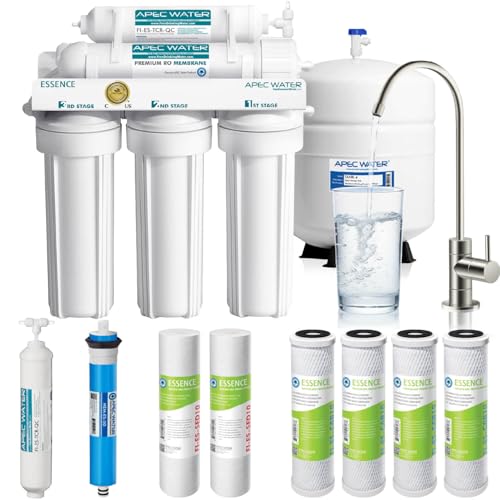
APEC ROES-50 Reverse Osmosis System
★★★★★ 4.6 / 5 Best under sink
The APEC ROES-50 is a 5-stage under sink reverse osmosis system that removes up to 99% of contaminants including lead, fluoride, arsenic, and TDS. It produces 50 gallons per day and comes with a brushed nickel faucet.
Capacity 50 GPDStages 5Filtration Sediment, carbon, RO, DITank 4 gal
- High contaminant removal
- Dedicated faucet
- Easy DIY installation
- Long filter life
- Wastes water (3:1 ratio)
- Requires under sink space
- Slow production
Best for: Pure drinking water for cooking and drinking
Buy it if: Those concerned about fluoride, lead, or TDS
Skip it if: Those wanting to keep minerals in water
Alternative to consider: iSpring RCC7 under sink RO
PUR PLUS Faucet Mount Water Filter
★★★★★ 4.5 / 5 Best faucet filter
The PUR PLUS faucet mount filter reduces 70+ contaminants including lead, mercury, and chlorine. It has a MineralClear filter that leaves beneficial minerals. Easy to install with no tools, and has a switch for filtered or unfiltered water.
Capacity 100 gal per filterFlow rate 0.5 GPMFiltration Carbon + ion exchangeMount Faucet mount
- Affordable
- Easy installation
- MineralClear retains minerals
- Filter change indicator
- Slows flow rate
- May not fit all faucets
- Small capacity
Best for: Renters or those wanting a budget-friendly option
Buy it if: Apartment dwellers, first-time filter users
Skip it if: Those needing high flow or whole house
Alternative to consider: Brita Complete Faucet Filter
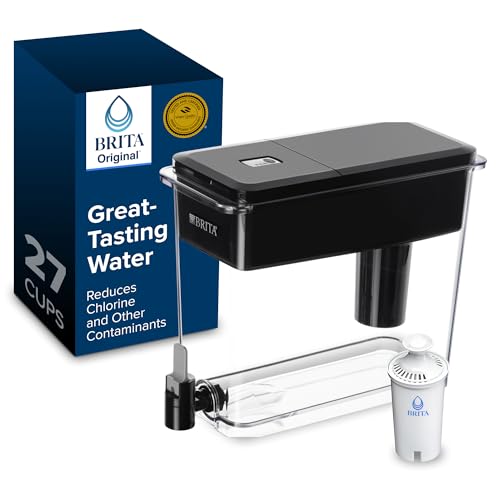
Brita UltraMax 27 Cup Water Dispenser
★★★★★ 4.4 / 5 Best pitcher
The Brita UltraMax is a large 27-cup water dispenser with a built-in filter that reduces chlorine taste and odor, copper, and mercury. It fits in the fridge and has a spigot for easy pouring. The filter lasts 2 months or 40 gallons.
Capacity 27 cupsFilter life 40 gal / 2 monthsFiltration CarbonDispenser Spigot
- Large capacity
- Fridge-friendly
- Spigot for easy pouring
- Widely available filters
- Only reduces taste/odor
- Not for lead or cysts
- Plastic construction
Best for: Families wanting improved taste at low cost
Buy it if: Budget-conscious families, office use
Skip it if: Those needing serious contaminant removal
Alternative to consider: ZeroWater 30 cup dispenser
Clean drinking water is essential for health, but tap water can contain chlorine, lead, pesticides, and other contaminants. With so many water filters on the market, choosing the right one can be overwhelming. Our editorial team compared specifications, buyer feedback, and key decision factors to help you find the best water filter for your home. Whether you need whole house, under sink, countertop, or faucet filtration, we have top picks from brands like Brita, PUR, Aquasana, and Berkey.
Types of Water Filters
Water filters come in several forms, each suited to different needs. Whole house filters treat water at the point of entry, providing filtered water to every tap. Under sink filters are installed under the kitchen sink and often use reverse osmosis. Countertop filters sit on the counter and are gravity-fed or connected to the faucet. Faucet mount filters attach directly to the faucet. Pitcher filters are the simplest and most affordable.
Filtration Methods Explained
Activated carbon filtration is the most common method. It uses carbon to adsorb chlorine, taste, odor, and some organic compounds. Carbon filters are effective for improving taste but do not remove dissolved solids or pathogens. Reverse osmosis (RO) uses a semipermeable membrane to remove up to 99% of contaminants including lead, fluoride, arsenic, and nitrates. RO systems often include carbon pre-filters and post-filters. Ultraviolet (UV) filtration uses UV light to kill bacteria and viruses. UV is often used in combination with other methods. Some filters use ion exchange to reduce heavy metals and scale.
Key Buying Factors
When choosing a water filter, consider your water quality. If you have city water, a carbon filter may be sufficient. For well water or specific contaminants like lead or bacteria, consider RO or UV. Filter capacity is important: pitcher filters have small capacity, while whole house systems can filter hundreds of thousands of gallons. Installation complexity varies from no tools (faucet mount) to professional installation (whole house). Replacement filter costs add up over time, so factor that in. Certification by NSF or WQA ensures the filter meets performance claims.
Common Mistakes to Avoid
One common mistake is buying a filter that doesn't target your specific contaminants. Test your water first. Another mistake is neglecting filter replacement. An expired filter can become a breeding ground for bacteria. Also, don't assume all filters remove fluoride or lead. Check the product specifications. Finally, avoid undersizing: a small pitcher filter won't meet a large family's needs.
Top Brands Compared
Brita and PUR are household names for pitcher and faucet filters. They are affordable and widely available but have limited contaminant removal. Aquasana specializes in whole house and under sink filters with high capacity and certification. Berkey is known for countertop gravity filters that remove pathogens, ideal for emergencies. APEC and iSpring are top choices for under sink reverse osmosis systems. Each brand has strengths, so match the brand to your needs.
Questions people ask
What is the best water filter for a whole house?
The Aquasana Rhino Whole House Water Filter is our top pick for whole house filtration. It removes 97% of chlorine, heavy metals, and other contaminants, with a 1,000,000 gallon capacity. For a more affordable option, consider the Pelican PC1000.
What is the difference between carbon filtration and reverse osmosis?
Carbon filtration uses activated carbon to absorb chlorine, taste, and odor, and some heavy metals. Reverse osmosis uses a semipermeable membrane to remove up to 99% of total dissolved solids, including fluoride, arsenic, and nitrates. RO systems typically include carbon pre-filters and post-filters.
Do water filters remove bacteria and viruses?
Most carbon filters do not remove bacteria or viruses. For microbiological protection, look for filters with UV light, ultrafiltration, or reverse osmosis. The Berkey Light with Black Berkey elements is certified to remove 99.999% of viruses and bacteria. Some whole house systems offer UV add-ons.
How often should I replace water filter cartridges?
Replacement frequency depends on the filter type and usage. Faucet mount filters typically last 2-3 months (100 gallons). Pitcher filters last 2 months or 40 gallons. Under sink RO filters need annual membrane replacement and 6-12 month pre-filter changes. Whole house filters may last 6-12 months or up to 1,000,000 gallons for high-capacity systems.
Can I install a water filter myself?
Many water filters are DIY-friendly. Faucet mount and pitcher filters require no tools. Under sink RO systems often come with step-by-step instructions and can be installed by a handy homeowner. Whole house filters typically require professional installation due to plumbing modifications. Always check the manufacturer's instructions.
The bottom lineSo which one?
The Aquasana Rhino Whole House Water Filter is our top overall pick for comprehensive home filtration. For drinking water, the Berkey Light offers unmatched purity. If you need an under sink RO, go with APEC ROES-50. For budget-friendly faucet filtration, choose PUR PLUS. Consider your water quality, budget, and installation preferences when making your decision.