A bottom-freezer refrigerator puts the food you reach for most at eye level and tucks frozen items into a pull-out drawer below, so you bend less and see more. This guide rounds up a range of current bottom-freezer models, from full-size stainless units to a compact apartment fridge, and explains how to match one to your kitchen. Every pick below is an editorial selection built from live product listings. We have not tried these units in a kitchen, so each capacity and dimension is a listing claim you should confirm on the product page before you buy.
How we chose
We looked for a spread that covers the real ways people shop for a bottom freezer: an all-round family unit, a counter-depth option for a flush look, a large-capacity model, a value finish choice, a stainless pick and a compact unit for small spaces. We favoured widely serviced brands and conventional layouts, because a refrigerator is a long-term purchase where parts and service matter. We did not rank by price, and we do not quote prices here. Instead we focus on fit, capacity and finish, the things that decide whether a unit will actually work in your room.
The picks
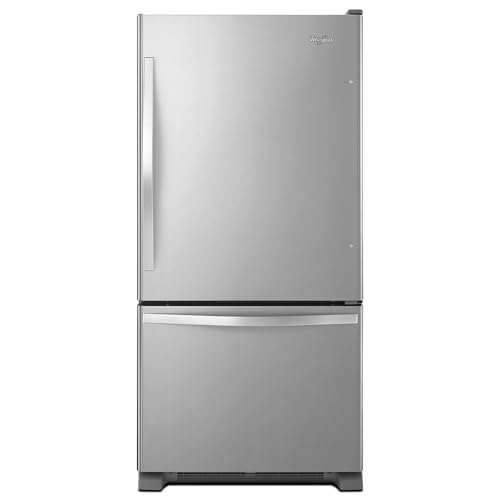
Top Pick, Whirlpool 18.5 cu ft stainless. This is the one we would point most families to first. The listed 18.5 cu ft capacity suits everyday shopping, the bottom drawer keeps frozen food easy to reach, and Whirlpool is a brand most technicians can service. The stainless finish fits modern kitchens, and the conventional layout makes shelves and parts easy to find.
Best Counter-Depth, VEVOR 18.9 cu ft. If you want the fridge to sit closer to flush with your cabinets, this counter-depth French door over a frost-free bottom freezer is the choice. You trade a little depth for a cleaner sightline, which helps in a narrow kitchen. Measure the alcove and the door swing before ordering.
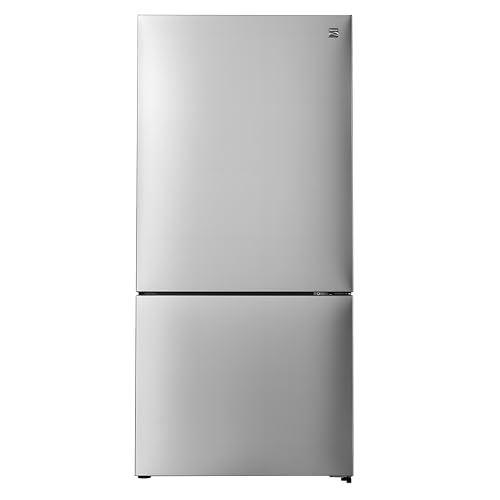
Best Large Capacity, Kenmore 22.3 cu ft. Batch cooks and big households will want the largest listed capacity in the group. The 31 inch listed width is generous, so it needs a wide opening, and the fingerprint-resistant stainless keeps a large door looking tidy.
Best Value, Whirlpool 18.5 cu ft white. This is the same proven Whirlpool platform as our top pick in a classic white finish. For a kitchen that does not need stainless, it is the sensible, no-frills choice, and white hides smudges well in a busy home.
Best Stainless, Kenmore 17.8 cu ft. For a clean stainless look without the biggest box, this Kenmore pairs a fingerprint-resistant panel with a slightly tidier listed capacity. It shares the 31 inch listed width, so it still wants a wide gap, but it suits kitchens that do not need 22 cu ft.
Best Compact, BANGSON 7.1 cu ft. For a studio, office or utility room, this apartment unit gives you a real bottom-freezer layout in a small footprint. It will not hold a big-family shop, so set expectations around the compact capacity, but it fits where a full-size box cannot.
How to choose a bottom-freezer refrigerator
Why a bottom freezer. The main draw is ergonomics. Fresh food, which you open many times a day, sits at eye level, while frozen food, which you reach for less often, lives in a lower drawer. If you have back or knee concerns, or you simply want your produce and leftovers where you can see them, this layout makes daily life easier than a top freezer.
Counter-depth versus standard depth. A standard-depth unit holds more front to back but stands proud of your cabinets. A counter-depth unit sits closer to flush for a built-in look and easier traffic flow, at the cost of some storage room. Decide which matters more in your kitchen before you shortlist a model.
Capacity for your household. Capacity is a listing claim, measured in cubic feet. As a rough guide, a smaller household can live with a mid-size box, while large families and batch cooks lean toward the biggest listed capacity. A compact apartment unit is right for one or two people or as a second fridge. Match the number to how you actually shop, not to the largest option on the shelf.
Measuring the opening and clearances. Before anything else, measure the width, height and depth of the space, then add clearance for the door to swing fully and for air to circulate behind and above the unit. A 31 inch wide model will not drop into a 30 inch gap, and a unit with no breathing room will run hot. Also measure the path through your doorways and hallways so the appliance can actually get to the kitchen.
Ice, water and the water line. Some bottom freezers include or support an ice maker, and a dispenser needs a dedicated water line. If you want ice or filtered water, confirm the feature on the listing and plan for a water hookup near the install spot. Many compact units skip ice entirely, which is fine for a small space.
Shelving and crispers. Look at how the fridge section is laid out: adjustable shelves, humidity-controlled crispers and door bins decide how usable the stated capacity really is. A well-organised interior often beats a slightly larger box with awkward fixed shelves.
Finish and fingerprints. Stainless looks sharp but shows smudges unless it is a fingerprint-resistant coating. White and black finishes hide marks better and can suit a kitchen that does not need the metal look. Pick the finish that matches both your cabinets and your tolerance for wiping down a door.
Energy. Running cost adds up over a refrigerator's long life, so check the energy rating on the listing and look for an ENERGY STAR mark where it is offered. We do not quote running costs here, but an efficient unit is worth confirming on the product page.
Install and fitment note
This is a large appliance, so plan the install before you order. Confirm the width, the depth, standard versus counter-depth, and the height all fit the space, and leave room for the door to swing fully open and for ventilation clearance behind and above the unit. The refrigerator needs a standard outlet, and any ice or water feature needs a water line run to the install spot. Remember that capacity in cubic feet is a listing claim, not a verified figure. For a unit this size, have it delivered and installed by the maker or a qualified installer rather than wrestling it into place yourself.
Bottom line
For most kitchens, the Whirlpool 18.5 cu ft stainless is the safe, sensible starting point. Step to the VEVOR counter-depth unit for a flush look, the Kenmore 22.3 cu ft for maximum listed room, the white Whirlpool to save on finish, the Kenmore 17.8 cu ft for fingerprint-resistant stainless, or the BANGSON 7.1 cu ft for a tight space. Measure twice, confirm every listed spec on the product page, and let the maker handle delivery and installation. As an affiliate we may earn a commission from qualifying purchases, at no extra cost to you.