Indoor cardio equipment is heavy, it vibrates, and it sheds sweat. All three are rough on a floor. The Cycleclub Exercise Bike Mat is a simple answer to that problem: a 6mm protective pad that sits between your bike or trainer and the surface underneath it. This review is editorial and spec based. We have not used or handled the mat, so everything below is drawn from the Amazon listing and the published product details, framed as what the mat is designed to do on paper rather than what we measured ourselves.
The aim here is to help you decide whether a dedicated equipment mat like this one fits your setup, what the listing actually promises, and which details are worth confirming for your own room and gear before you commit.
What it is
The Cycleclub Exercise Bike Mat is a 6mm thick protective floor mat intended to be placed under exercise equipment. According to the listing it is built for stationary indoor spin bikes, bike trainers, and similar cardio machines, and it is described as suitable for both hardwood floors and carpet. The mat is black and rectangular, the standard shape for this category, and it is positioned as general gym equipment protection rather than a specialty product tied to one machine.
In practical terms, a mat in this class does three jobs. It puts a buffer between hard equipment feet and the floor so the surface underneath is not scratched or dented. It gives vibration somewhere to go, which can cut down on noise transmitted into the floor. And it catches sweat and debris in one wipeable zone instead of letting it soak into carpet or pool on wood. The Cycleclub listing frames the product around exactly these use cases.
Key features per listing
Here are the headline specifications and claims as they appear on the product page. Treat the dimensions and material descriptions as listing claims rather than independently confirmed figures.
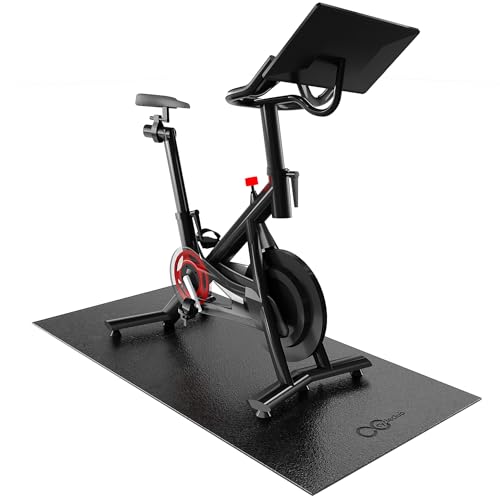
Cycleclub Exercise Bike Mat (6mm Thick Under Bike Trainer Mat)
A 6mm black equipment mat designed to protect hardwood and carpet under stationary spin bikes, trainers, and treadmills, per the listing.
Check price on Amazon- Thickness: 6mm, thick enough to cushion equipment feet and absorb some vibration while staying low profile, according to the listing.
- Intended use: under stationary spin bikes, indoor bike trainers, and comparable cardio equipment, with the listing also referencing treadmill style placement.
- Surface compatibility: described as suitable for hardwood floors and carpet, so it is pitched as a general purpose protector rather than a single surface product.
- Material and texture: the mat is presented as a durable equipment mat with a non-slip texture intended to keep both the mat and the machine from sliding during use.
- Cleaning: the listing positions the surface as waterproof and easy to wipe clean, which matters most under a bike where sweat is a constant.
- Color: black, which hides scuffs and sweat marks better than lighter finishes.
What the listing does not spell out in a way you should rely on is the exact overall footprint in every size variant, the precise material compound, and any odor or off-gassing behavior when new. Those are the areas where a buyer should read the current size options and recent buyer feedback rather than assume.
Who it is for
This mat is aimed at home gym owners who want to protect a floor they care about. If your bike or trainer lives on hardwood, laminate, tile, or an expensive engineered floor, a mat like this is designed to stop the equipment feet from marking or denting the surface over months of use. If the machine sits on carpet, the goal shifts slightly: the mat gives a firmer, flatter base, keeps sweat out of the fibers, and makes cleanup far easier.
It also suits anyone training in a shared or multi level home who wants to reduce the thump and buzz that a spin bike or trainer sends into the floor. A 6mm pad will not make a machine silent, but it is built to take the edge off vibration and keep hardware from walking across a smooth floor. Renters who need to protect a floor they do not own, and anyone who does sweaty interval work indoors, are squarely in the target audience.
It is less relevant if your equipment already sits on a thick rubber gym floor, or if you specifically need a very large full room surface. In those cases a different format may serve you better, which the comparison section covers.
Strengths on paper
On the strength of the listing alone, a few things stand out. The 6mm thickness is a sensible middle ground for a single machine: enough to cushion and dampen without turning into a trip hazard or feeling spongy under a bike that needs a stable base. The dual surface pitch, hardwood and carpet, means the mat is flexible about where it goes rather than locking you into one room.
The non-slip texture claim addresses the single most important job of an equipment mat, which is staying put while a machine pushes and pulls against it. The waterproof, wipe clean surface is well matched to indoor cycling specifically, where sweat is heavy and frequent, and a sealed top layer is far easier to maintain than carpet or bare wood. The black color is a practical choice that hides marks. None of these are exotic features, but together they describe a focused, fit for purpose product rather than an over promised one.
Things to check
Before buying, confirm a handful of details that the listing cannot settle for your specific situation.
- Size versus your equipment footprint: measure the distance between the outermost feet or stabilizers of your bike or treadmill, then check the mat dimensions for the variant you are buying. You want the whole base of the machine, plus a margin for sweat drips, to land on the mat.
- Hard floor versus carpet behavior: on hard floors, grip and anti scratch protection are the priorities. On carpet, firmness and the mat staying flat matter more. The listing says it works on both, but think about which job you are actually asking it to do.
- Odor and off-gassing when new: many rubber and foam equipment mats carry a smell for the first days or weeks. Plan to unroll it and air it out, ideally in a ventilated space, before it goes into a closed room.
- Thickness for stability: 6mm is a reasonable cushioning depth, but if you do hard out of the saddle sprints, make sure a thinner mat does not let the bike feel bouncy. Thicker is not always better for a machine that needs a planted base.
- Current variant and shipping condition: listings in this category often offer multiple sizes, and mats can arrive rolled with a curl. Check which size you are selecting and allow time for it to flatten.
How it compares
There are three common ways to protect a floor under cardio equipment, and they suit different needs. A dedicated equipment mat, like this Cycleclub one, is a single sealed sheet sized for one machine. Its advantages are a clean wipeable surface, a non-slip top, and a shape meant to sit neatly under a bike or trainer. It is the most direct answer when you have one machine and want sweat and scratch protection in one place.
Interlocking foam tiles are the modular alternative. They let you cover an arbitrary area and are easy to expand, but the seams can trap sweat and shift under a machine that vibrates, and foam can compress over time under concentrated point loads like bike feet. They shine when you are flooring a whole workout corner, less so as a precise single bike pad.
A rug or old carpet is the improvised option. It costs nothing extra and adds some grip on hard floors, but it soaks up sweat, is hard to clean, offers little real protection against dents, and can bunch up. For a sweaty spin session it is the weakest of the three. Against that backdrop, a purpose built equipment mat is the specialist tool: narrower in use than tiles, but better matched to the specific job of sitting under one bike or trainer and shrugging off sweat.
Verdict
On paper, the Cycleclub Exercise Bike Mat is a straightforward, correctly specified equipment mat. The 6mm thickness, non-slip texture, dual surface compatibility, and waterproof wipe clean top all line up with what a home cyclist actually needs under a stationary bike or trainer, and the listing does not reach for claims it cannot back up. The sensible next steps for any buyer are to measure the equipment footprint, pick the right size variant, and plan to air the mat out when it arrives. If those boxes are checked and you want a dedicated pad to protect a floor from one machine, it is a logical fit. You can review the current size options, images, and buyer feedback for this Cycleclub bike mat on Amazon.
Disclosure: This is an editorial, specification based review built from the Amazon listing and published product details. We have not personally used or handled this product, and the dimensions and material descriptions above are listing claims. As an Amazon Associate we may earn from qualifying purchases made through links on this page, at no extra cost to you.