If you want one stepper machine that comes closest to the stair climber at a commercial gym, the Goimu T1 Stair Stepper Machine is our top pick. It pairs a true stepmill motion with a high weight capacity, fifteen resistance levels, and an LED screen, so it suits steady beginners and people chasing a hard climb alike. The rest of this guide lays out six more picks, from quiet magnetic units to compact minis, so you can match a machine to your space, your budget, and how hard you plan to push.
Our top picks: stepper machine
Stepper machines cover a wide range of shapes and goals. At one end you have full stepmills, tall climbers with a moving step belt that recreate the feeling of walking up an endless staircase. At the other end are mini steppers, small floor units with two pedals and often a pair of resistance bands, made for a light daily session in a corner of a room. In between sit magnetic climbers and continuous climbers that borrow the longer stride of a stepmill while keeping a smaller footprint.
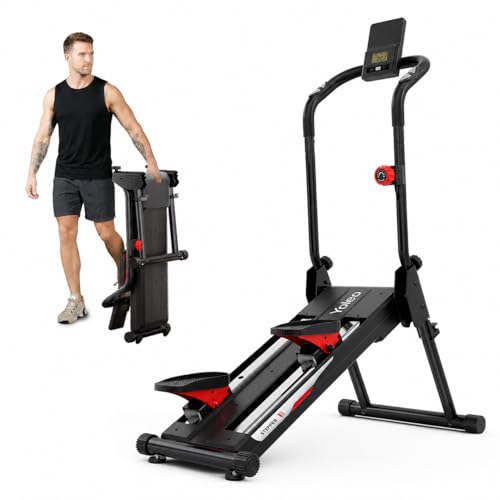
Our list is built around that range on purpose. The Goimu T1 and the JELENS are the serious stepmills for anyone who wants a gym style climb and has the floor space for it. The YOLEO brings magnetic resistance and a quieter run for shared homes and apartments. The Signature Fitness SF-C2 is a sturdy continuous climber for steady lower body work. The Aidoly and the Sweetcrispy are the compact, low commitment minis, and the HXD-ERGO is a folding middle ground with a handlebar for people who want a little extra balance. There is no single best machine for everyone here, only the best machine for how you intend to train.
A quick note before you start on any of these. Warm up for a few minutes first, keep every session within your current ability, and build the effort gradually rather than going as hard as possible on day one. Stepping is low impact but it is still real cardio, so if you have any heart, joint, or balance concerns, it is worth checking with a professional before you begin. Nothing here is a medical device and no stepper on its own guarantees a result, your consistency does the work.
How we evaluated these products
We build these roundups by studying what is actually on sale right now. We read current Amazon listings closely, compare the stated features and specifications, and weigh how each design fits different homes, budgets, and training goals. For stepper machines that means looking at the type of motion, the resistance system and how many levels it offers, the stated user weight capacity, the footprint and whether the frame folds, and any extras such as a handlebar, a display, or included resistance bands. We also look at how honest and consistent a listing is about what the machine can and cannot do.
What we do not do is pretend to have put every unit through weeks of use in a lab. We have not physically tested every machine in this guide, and we will never invent a number, a measurement, or a review to make a pick look stronger than it is. Every specification we quote is drawn from the listing itself. When we point out a drawback, it comes from the design of the machine, a mini stepper simply cannot offer the same climb as a tall stepmill, and a heavy commercial frame simply cannot fold away as neatly as a compact unit. Our job is to translate the listings into plain guidance so you can choose with your eyes open, then make your own call.
We also try to spread the picks across real use cases rather than ranking by one number. A compact mini and a commercial stepmill are not really competing for the same buyer, so we note who each machine is for and let you weigh that against your own space and plans.
What to look for in stepper machine
Start with the type of machine, because it shapes everything else. A full stepmill gives the most complete climb and the hardest ceiling, but it is tall, heavy, and needs a dedicated spot. A mini stepper is the opposite, easy to store and easy to start with, but limited in how hard it can get. Magnetic and continuous climbers sit in the middle, offering a longer, smoother stride and a quieter run without the full size of a stepmill. Decide which of those three groups fits your room and your goals before you compare anything else.
Resistance is the next thing to weigh. More levels give you more room to progress, which matters if several people will share the machine or if you plan to keep training over months. Magnetic resistance tends to be the quietest, which is worth a lot in a flat or a shared house. Look at the stated user weight capacity too, as a higher rating usually points to a sturdier frame that will feel more stable underfoot, not only to a higher limit.
Then think about the practical details. Is there a handlebar or rail to hold, and do you need one for balance and confidence? Does the frame fold so you can reclaim the floor between sessions? Is there a display, and will you actually use the numbers it shows? Do the included resistance bands matter to you, or are they a bonus you will set aside? None of these points is make or break on its own, but together they decide whether a machine stays in daily use or ends up pushed into a cupboard.
Finally, be honest with yourself about intensity. If you want a gentle daily habit, a mini or a twist stepper is plenty and will not intimidate you. If you want to train hard and keep progressing, lean toward a magnetic climber or a full stepmill with plenty of resistance levels and a strong frame. Matching the machine to the effort you will realistically put in is the single best way to get your money's worth.
The bottom line
For most people who want a real stair climb at home and have the space for it, the Goimu T1 is the pick that does the most. If you need a quieter machine for an apartment, the magnetic YOLEO is the smarter buy, and if you are just building the habit or working with a tight corner, the compact Aidoly or Sweetcrispy will get you stepping today. Browse the rest of our stepper machine guides or the wider health and fitness hub to compare these against other cardio options, then pick the one you will actually use day after day.