Travel Cable Organizers
Best Travel Cable Organizers for Tidy Tech on Trips
6 picks compared
9 min read
ProductPickly is reader-supported. When you buy through links on our site, we may earn an affiliate commission at no extra cost to you. It never changes our picks.
The short answerFor most travelers the best all-round cable organizer is a structured double-layer case like the MATEIN, because its semi-firm shell holds its shape in a packed bag, the elastic loops keep cords from tangling, and the mesh pockets take a charger, a power bank and small adapters without hunting. If you carry only a couple of cables and a wall plug, a slim soft pouch such as the FYY takes up almost no room and slides flat against a laptop. The two things that decide the right organizer for you are how much gear you actually carry, since a light pouch and a large tool-style bag are built for very different loads, and where it rides, because a rigid case protects better in a checked bag while a flat pouch suits a daily backpack. Below are our picks across structured cases, roomy pouches, a water-resistant bag and large-capacity rolls, so you can match one to your kit and your bag.
?How we pickedWe compare published specifications, safety certifications and thousands of verified owner reviews, and we do not physically test every unit. Read the full process in our review methodology.
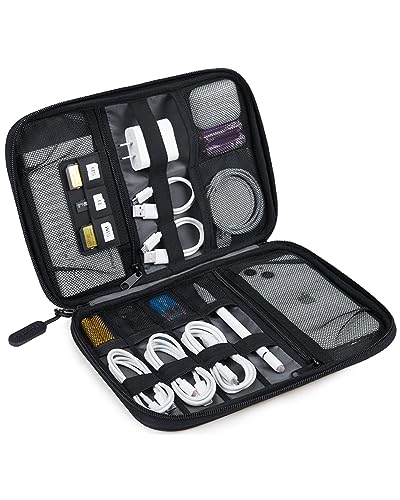
MATEIN Electronics Organizer Travel Case, Cable Organizer Bag, Black
★★★★★ 4.5 / 5 Best overall
This MATEIN case is the format most travelers reach for first, with a semi-firm shell that keeps its shape in a crowded bag and two layers of elastic loops and mesh pockets that stop cords from knotting. It swallows a wall charger, a power bank, USB cables and small adapters while staying slim enough to slide into a backpack or a carry-on.
Type Structured double layerClosure Full zip shellStorage Elastic loops, mesh pocketsBest load Cables, charger, power bank
- Semi-firm shell holds shape when packed
- Two layers organize a full day kit
- Slim enough for a carry-on or daypack
- Not fully waterproof, only shower resistant
- Fixed layout suits small items more than large ones
Best for: travelers who want one dependable case for everyday tech
BAGSMART Large Electronic Organizer Travel Case for Tech Accessories, Black
★★★★★ 4.4 / 5 Best for lots of gear
When one small pouch will not hold everything, this larger BAGSMART case opens wide into two padded layers with room for a tablet or a hard drive alongside your cords. The extra depth and the padded panels make it the pick for anyone traveling with a fuller kit rather than a single charger and a couple of leads.
Type Large structured caseLayers Two padded compartmentsOpening Wide clamshell zipBest load Cables, tablet, drives, plugs
- Roomy enough for a full tech kit
- Padded layers protect a tablet or drive
- Wide opening makes packing easy to see
- Bulkier than a slim pouch when full
- Larger footprint eats into bag space
Best for: travelers who carry a tablet, drives and many cables
FYY Electronic Organizer, Travel Tech Pouch Bag, Cable Organizer, Black
★★★★★ 4.4 / 5 Best slim pouch
The FYY is a soft flat pouch built for a light load, with layered elastic bands that hold cables, a wall plug and a couple of small accessories without adding bulk. Because it stays flat it slides neatly beside a laptop in a slim bag, which is exactly what you want if you carry the essentials rather than a full kit.
Type Soft flat pouchClosure Zip aroundStorage Layered elastic bandsBest load A few cables and a plug
- Stays flat and slides beside a laptop
- Light and takes little room in a bag
- Elastic bands keep short cords in place
- Soft sides give little impact protection
- Too small for a large charger or drives
Best for: minimal packers who carry only the essentials
NISHEL Electronics Travel Organizer Cord Case, Charger Cable Tech Bag
★★★★★ 4.4 / 5 Best mid-size case
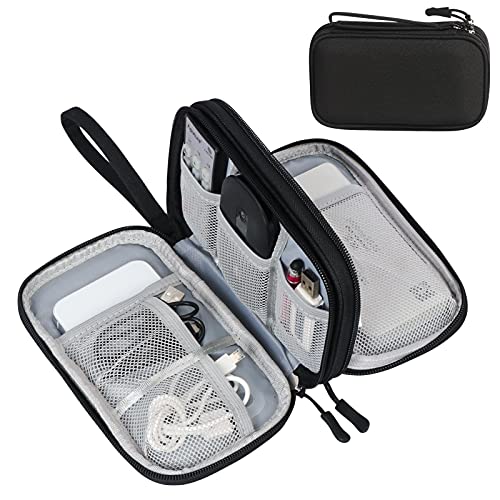
The NISHEL sits between a slim pouch and a large case, with a double-layer interior of mesh pockets and elastic loops that handles a daily set of cords, a charger and a mouse. It is a sensible everyday size that is not so big it wastes space, which makes it easy to grab for both trips and the office.
Type Soft structured caseLayers Double layer interiorStorage Mesh pockets, elastic loopsBest load Cords, charger, mouse
- Balanced size for daily carry
- Double layer keeps items separated
- Fits a backpack or a work bag easily
- Soft shell flexes under pressure
- Not built for a tablet or large plugs
Best for: commuters who want one everyday cord case
FANBODTA Electronic Organizer, Portable Waterproof Cable Storage Bag
★★★★★ 4.3 / 5 Best water resistant
This FANBODTA pouch uses a coated fabric that sheds splashes and light rain, which is reassuring for outdoor trips or a bag that sees damp weather. It holds cables, a mouse, a USB drive, a power bank and a charger in a compact shape, so it earns its place when you want a little more protection from moisture than a plain pouch gives.
Type Water-resistant pouchMaterial Coated fabricClosure Zip aroundBest load Cables, mouse, power bank
- Coated fabric sheds splashes and rain
- Compact shape fits most bags
- Handles a mix of small tech items
- Water resistant, not fully submersible
- Simple interior with fewer dividers
Best for: outdoor and travel bags that meet damp weather
MATEIN Cable Organizer Bag, Large Travel Storage Bag, Sturdy Tool Case
★★★★★ 4.3 / 5 Best large capacity
For bulky cords, chargers and accessories that overflow a normal case, this large MATEIN bag borrows a tool-case shape with a roomy main space and a sturdier build. It is the pick for a home base or a longer trip where you consolidate a lot of tech in one place rather than carry a slim daily pouch.
Type Large tool-style bagCapacity Roomy main compartmentBuild Sturdy structured shellBest load Bulky cords, chargers, adapters
- Holds a large mix of cords and gear
- Sturdier build than a slim pouch
- Keeps everything in one place at home
- Too large for a light daily carry
- Adds real bulk to a packed bag
Best for: longer trips or a home base with lots of tech
A travel cable organizer does one useful thing well: it gathers your cords, chargers and small accessories into one place so they stop tangling, hiding and getting left behind. The catch is that these bags differ in ways that matter the moment you pack them, mainly whether the shell is hard or soft, how much they hold, how well they resist water, and whether they fit a carry-on or a daily bag. This guide sorts our picks by those real differences so you can match one to your kit and your bag rather than to a headline size.
Hard-shell case, soft roll or slim pouch
The first choice is the format, and it follows how much you carry and where the bag rides. A structured or semi-firm case keeps its shape when your bag is packed tight, holds small items in layers and shields them from being crushed, which suits a full daily kit of cables, a charger and a power bank. A soft roll or tool-style bag flexes to fit its contents and scales up for bulky cords, so it works as a home base or for a longer trip. A slim flat pouch is the lightest option, made for a few cables and a plug that slide flat against a laptop. Choose a structured case for protection and organization, a soft bag for a large or awkward load, and a slim pouch when you carry the least.
Capacity for cables, chargers and a power bank
Capacity is where most people guess wrong, so count what you actually carry before you buy. A slim pouch typically manages a handful of short cables and a small wall plug, and it starts to bulge the moment you add a chunky charger or a power bank. A mid-size or structured double-layer case is the sensible floor for a real daily set, since it separates cords from bulkier items and still has mesh pockets for adapters, a mouse and a USB drive. A large tool-style bag is for consolidating a lot of tech at once, from multiple chargers to thick cords. Pick the size that holds your usual items with a little room to spare, because a case packed to bursting is as hard to use as a loose pile of cables.
Protection and water resistance
Two kinds of protection matter, and they are not the same. Impact protection comes from a semi-firm or padded shell that keeps a case in shape so cords and small electronics are not crushed under other gear, which is why a structured case beats a floppy pouch for a fuller kit. Water resistance comes from the fabric and how it is coated: most zip cases will shrug off a light splash but are not sealed, while a plain fabric pouch offers little against rain. If you expect damp weather or outdoor use, choose a bag with a coated water-resistant fabric and still keep it out of standing water, since none of these are true dry bags. Decide which risk your travels carry more of, a knock in a packed bag or a wet day, and weight your choice accordingly.
Size for a carry-on versus a daily bag
The last practical question is where the organizer lives. For a carry-on or a personal item, a slim pouch or a mid-size case is easy to fit, sliding flat against a laptop or slotting into a side pocket without stealing space from clothes. For a daily backpack or work bag, a mid-size soft case is the comfortable dual-use pick, roomy enough for a commute kit yet not so big it wastes room. A large tool-style bag is really a travel or home-base tool, better suited to a checked bag or a longer stay where you keep all your tech in one place. Think about the bag you carry every day first, since an organizer that will not fit it neatly is the one you leave at home.
Questions people ask
What size cable organizer do I actually need?
Match it to the gear you carry, not to the biggest case. If you travel with a couple of cables and a wall plug, a slim flat pouch is enough and keeps your bag light. For a charger, a power bank, a mouse and several cords, a mid-size or structured double-layer case is the right floor. Only move up to a large tool-style bag if you consolidate a lot of tech or carry a tablet and drives as well.
Hard case or soft pouch, which is better?
It depends on where it rides and how much it holds. A structured or semi-firm case keeps its shape in a packed bag, protects small items and organizes them into layers, which suits a full daily kit. A soft pouch is lighter and slimmer, slides flat against a laptop and fits a minimal load. Choose a structured case for protection and a fuller kit, and a soft pouch for the fewest items in the least space.
Will a cable organizer keep my cords from tangling?
Yes, that is the main job. Look for elastic loops that grip each cable at one end and mesh pockets or dividers for plugs and small accessories. Loop each cord and secure it rather than coiling everything loose in one pocket. A double-layer case separates cables from bulkier items like a charger or a power bank, which is what keeps the whole thing from turning into a knot.
Are these organizers waterproof?
Most are water resistant at best, not waterproof. A structured case with a zip will shrug off a light splash but is not sealed, and a plain fabric pouch offers little against rain. If you expect damp weather or outdoor use, choose a bag with a coated water-resistant fabric like the FANBODTA, and still avoid submerging it. For real waterproofing you would need a sealed dry bag, which trades away easy organization.
Will a cable organizer fit in a carry-on?
A slim pouch or a mid-size case fits easily in a carry-on or a personal item and can sit flat against a laptop or slot into a side pocket. A large tool-style bag takes real space and is better for a checked bag or a longer stay where you keep gear in one place. If carry-on space is tight, size down and carry only what you use on the trip.
How many cables can these hold?
It varies with the format. A slim pouch typically manages a handful of short cables plus a small plug. A structured double-layer case holds a fuller daily set of cords along with a charger, a power bank and a mouse. A large tool-style bag is built for a bigger mix of bulky cords, multiple chargers and adapters. Count the items you carry most often and pick the size that fits them with a little room to spare.
Can I use one for a daily bag as well as travel?
A mid-size soft case such as the NISHEL is a good dual-use pick, since it is roomy enough for a commute kit but not so big it wastes space in a work bag. A slim pouch works for a light daily carry, while a large bag is really a travel or home-base tool. If you want one organizer for both, a balanced mid-size case is the safest middle ground.
What should I keep in a cable organizer besides cables?
Beyond charging leads and data cables, most people add a wall charger, a power bank, a USB drive, a small mouse, adapters and dongles, and spare earbuds. Structured cases with mesh pockets are handy for the loose small parts that otherwise scatter, and a double layer lets you keep flat items on one side and bulkier plugs on the other so everything has a place.
The bottom lineSo which one?
For most travelers the best starting point is a structured double-layer case like the MATEIN, because it balances protection, organization and a slim profile that still fits a carry-on. If you carry more, the BAGSMART large case adds room and padding for a tablet and drives, while the large MATEIN tool-style bag is the choice when you consolidate a lot of bulky cords in one place. Minimal packers are well served by the flat FYY pouch, the NISHEL is the easy mid-size everyday pick, and the FANBODTA earns its spot when damp weather is likely. Match the size to the gear you actually carry and where the case will ride, and any of these will keep your tech tidy on the move.